
To set up recurring card payments, connect your membership software to a processor that supports authorized card-on-file billing. Then configure billing schedules, secure payment collection, cancellation controls, and failed-payment recovery before enrolling members.
For gyms, clubs, and professional associations, this creates predictable collections without the administrative burden of chasing every renewal. A reliable setup starts with clear permission and keeps payment activity connected to each member’s account.
Key Takeaways
- Obtain explicit consent before saving a card for recurring billing, and retain the accepted terms.
- Display the amount, billing frequency, first charge date, and cancellation process before enrollment.
- Use tokenized payment storage rather than keeping card details in business records.
- Build separate workflows for temporary declines, card updates, cancellations, and billing disputes.
How Recurring Card Payments Work
Recurring card payments let your business charge a member’s credit or debit card on an authorized schedule. When the stored method is a credit card, this process is called recurring credit card payments. Unlike a one-time payment, that permission covers later charges within the agreed terms.
In the UK, this arrangement is also called a continuous payment authority, or CPA.
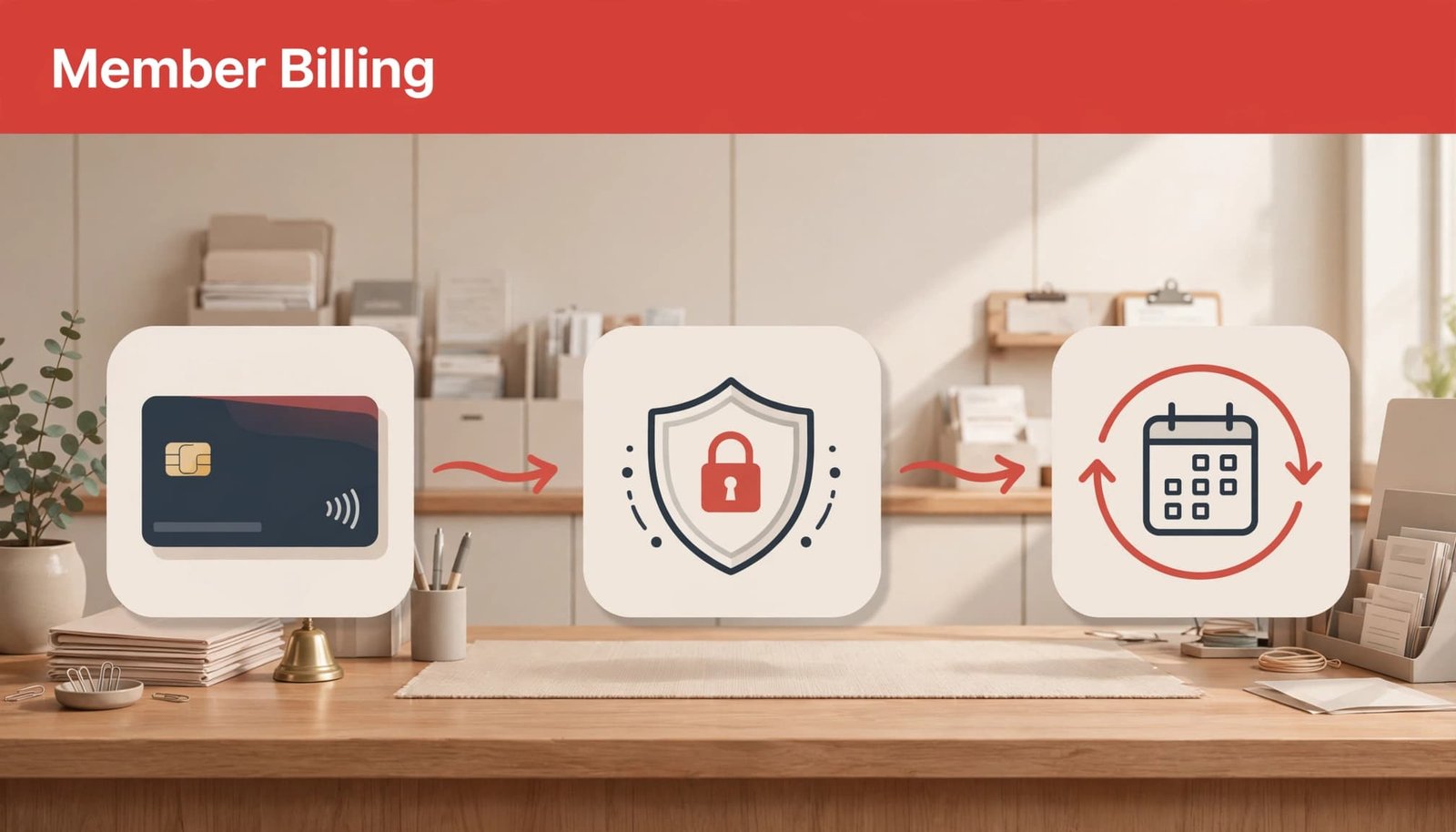
Your payment system stores a secure payment reference and submits each scheduled transaction. The card issuer still evaluates each charge, so an active membership doesn’t guarantee approval.
This distinction matters operationally: your system must track membership status, payment authorization, and transaction results separately.
1. Choose a Processor That Fits Your Membership Model
Choose a payment processor and payment gateway that integrate with your membership software. Together, they should connect enrollment, billing, member access, and accounting. Our guide to choosing merchant card services explains how business requirements should shape processor selection.
Match capabilities to your billing rules
Look for recurring schedules, automatic payments, tokenized card storage, automatic receipts, secure card updates, and cancellation controls. Your membership software should also handle pauses, upgrades, prorated charges, and annual renewals if your plans include them.
Compare gateway, software, transaction, updater, and dispute fees together. A low processing rate doesn’t reveal the full cost of managing memberships. Include funding schedules and any reserve terms in your comparison, because scheduled revenue isn’t necessarily available cash.
Compare cards with bank-based payments
These methods collect authorized payments through different systems.
| Payment method | Where funds come from | Main operational difference |
|---|---|---|
| Recurring card payment | Credit or debit card | Each charge needs issuer approval; card details can change. |
| U.S. ACH debit | Bank account | Separate debit authorization and return-handling rules apply. |
| UK Direct Debit | Bank account | Covered by the Direct Debit Guarantee. |
Cards offer familiar enrollment, while bank debits provide another collection option. Recurring card payments aren’t covered by the UK’s Direct Debit Guarantee.
2. Obtain Clear Consent and Explain Every Billing Term
A member should understand the financial commitment before submitting payment details. Clear enrollment language supports customer confidence and gives your team a reliable record of customer consent when questions arise.
Make recurring billing an explicit choice
Use an affirmative acceptance step, such as an unchecked authorization box beside the recurring-payment terms. Avoid hiding permission inside a general privacy policy.
Display the membership price, billing frequency, amount and date of the first recurring charge, applicable enrollment fees, and whether the agreement renews automatically. For a trial, state when it ends and what the first paid charge will be.
Explain how variable charges are calculated and what limits apply. Don’t treat permission for a fixed monthly membership as permission for unrelated purchases.
Keep the agreement accessible
Send a confirmation containing the accepted billing terms, cancellation instructions, and customer-service contact. Retain the consent record, timestamp, applicable terms version, and subsequent changes in an approved system.
Disclosure, renewal-notice, and cancellation obligations depend on applicable law, enrollment channel, and network or processor requirements. These practices provide an operational baseline, not a universal legal checklist.
Payment-method rules also differ. For covered U.S. recurring consumer ACH debits, an amount change outside an agreed range can require at least 10 calendar days’ advance notice. That isn’t a blanket rule for recurring card charges.
3. Protect Payment Data and Support Secure Card Updates
Secure billing reduces exposure while making account maintenance easier for members. Build protection into enrollment rather than relying on staff to handle sensitive information correctly every time.
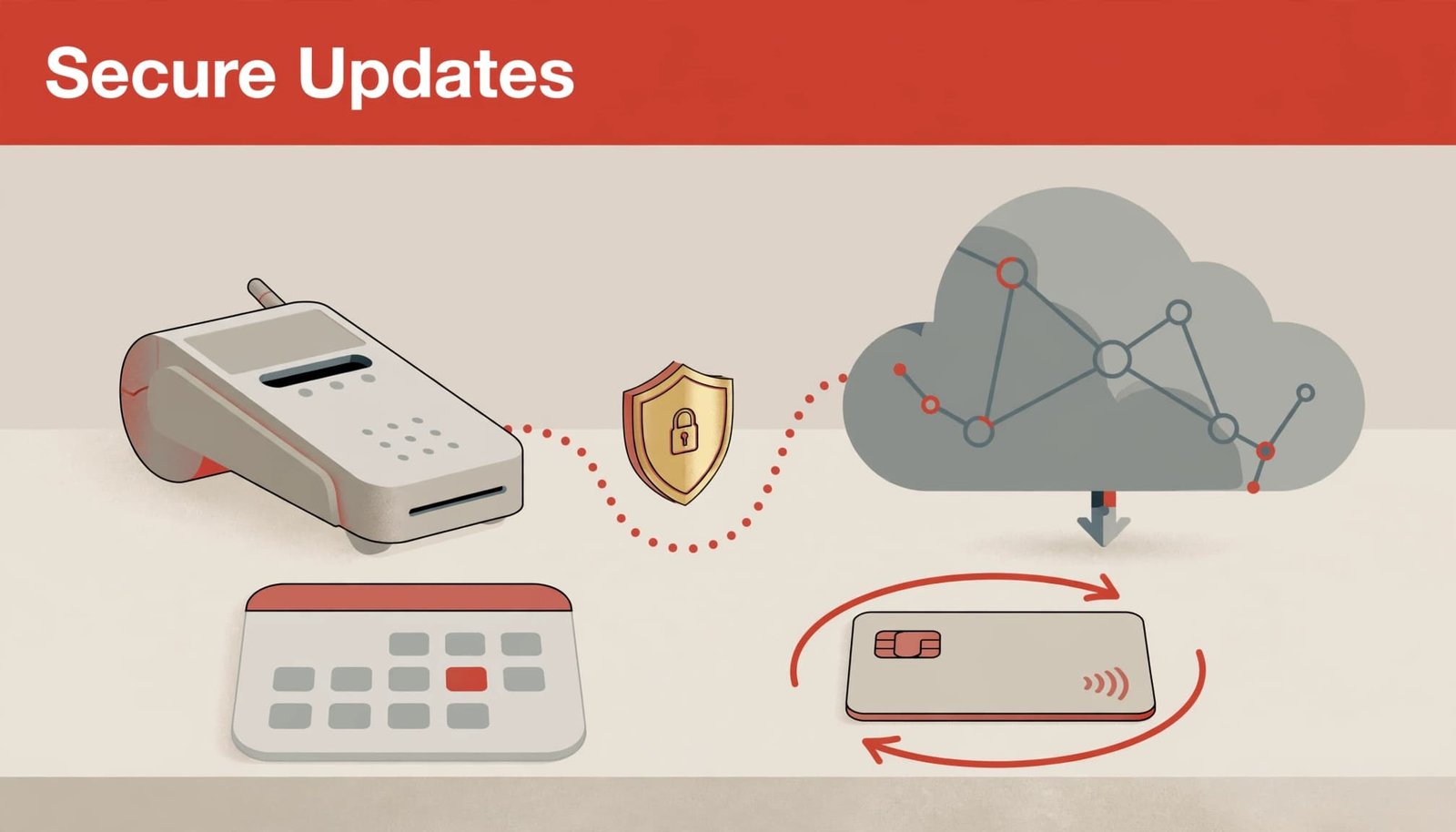
Keep card details out of business records
Use provider-hosted payment forms or approved payment components that send sensitive data directly to the payment provider. Store the resulting token or reference in your membership platform.
Never collect full card details through email or spreadsheets. PCI DSS prohibits retaining card verification codes after authorization, even for recurring billing.
Require multi-factor authentication for payment dashboards, limit staff access by role, and maintain required PCI DSS validation. Outsourcing payment collection reduces exposure but doesn’t remove every merchant responsibility.
Enable account updater services
Visa Account Updater allows participating issuers, acquirers, and qualified merchants to exchange updated card credentials. Its batch option can retrieve available updates before scheduled billing.
Mastercard Automatic Billing Updater also supports account-change communication for recurring payments.
Availability depends on participation and provider support. Updaters don’t fix insufficient funds, restore revoked permission, or replace a secure member-facing update process.
4. Recover Failed Payments Without Frustrating Members
Failed payments can interrupt otherwise healthy memberships. A structured recovery process helps protect revenue without turning a temporary billing problem into an unnecessary cancellation.
Respond to the decline reason
Separate temporary problems, such as insufficient funds, from situations requiring new payment information or an investigation. Follow the processor’s response-code guidance and applicable retry restrictions.
Don’t repeatedly submit a declined transaction without understanding its status. A lost or stolen card response, revoked authorization, or suspected unauthorized charge needs a different workflow.
Before creating another transaction, confirm that an earlier attempt hasn’t already succeeded. Duplicate charges create avoidable refunds and damage customer trust.
Give members a simple recovery path
Send a respectful notice identifying your business, the unpaid amount, and a secure link to update payment information. Never request a replacement card number by email.
Explain your grace period and when access may pause under the membership agreement. Keep billing recovery separate from voluntary cancellation so members don’t receive collection reminders for charges that shouldn’t occur.
Track recovery rates and involuntary churn, which measures memberships lost after payment failures. Track broader customer churn separately as a retention measure. Compare results within your business, not against broad industry benchmarks.
5. Test the Complete Billing Cycle Before Launch
A successful first charge is only one part of a reliable membership workflow. Use the provider’s test environment to walk through the full billing cycle.
- Enroll a member and confirm that consent, billing dates, and accepted terms are recorded.
- Test a successful renewal, a decline, and a secure payment-method update.
- Process a pause, upgrade, cancellation, and refund without creating duplicate charges.
- Confirm that receipts display a recognizable business name and useful support details.
- Reconcile transactions, fees, refunds, and payouts with accounting records.
Assign responsibility for exception alerts and daily reconciliation. A payment marked submitted or pending isn’t necessarily money available in your bank account.
Clear transaction descriptions and accessible records also help prevent credit card chargebacks when members question a renewal.
Handle Cancellations According to the Applicable Rules
Make instructions to cancel subscription renewals easy to find, record each request, and confirm what happens next. Stop future card billing when a member revokes authorization, while handling any separate contractual balance through the appropriate process.
UK members have specific CPA rights
Under FCA recurring-payment guidance, customers must request cancellation by the end of the business day before the next payment is due.
They can contact either the business or their card issuer. The issuer must stop payments when asked, even if the customer hasn’t contacted the business.
Payments taken after cancellation are unauthorised transactions, and the issuer must refund them and related charges. Cancelling the payment authority doesn’t end the underlying membership contract or remove money owed under that agreement.
U.S. credit-card billing disputes follow different rules
Don’t present UK CPA rights as U.S. requirements. U.S. cancellation obligations depend on applicable subscription laws, the agreement, and payment-network requirements.
For covered credit-card billing errors, including some unauthorized charges, FTC dispute guidance says the issuer must receive a written dispute within 60 days after sending the first bill containing the error.
The issuer generally must acknowledge it within 30 days unless already resolved. Keep consent, cancellation, and transaction records available so your team can investigate and respond promptly.
Frequently Asked Questions
Is a credit card a good option for memberships?
Credit cards offer convenient enrollment and familiar payment protections. Members may also receive card rewards, but carrying a balance can create interest costs.
For your business, the practical priorities are total processing costs, approval rates, security, and recovery tools. Offer payment choices that fit your members and operating model.
Does replacing a card cancel every recurring payment?
No. Participating account updater services can supply replacement credentials, allowing authorized recurring charges to continue.
Members should cancel the relevant payment authority or subscription rather than relying on card replacement. Your business should never use an updater to bypass a cancellation request.
Should a declined payment immediately end membership access?
Your published agreement should define any grace period and access restrictions. A temporary decline can be recoverable, so immediate termination may create unnecessary customer loss.
Apply the policy consistently and explain the next step clearly.
Build Membership Billing Around Trust
Reliable recurring billing combines clear authorization, secure payment handling, and consistent follow-through. Members should understand their charges and have a straightforward way to manage their accounts.
Before launch, test the entire membership cycle, including failures and cancellations. That preparation gives your team better control over collections and gives members a more dependable experience.