
Payment tokenization replaces a customer’s card number with a substitute identifier, so your business can process transactions without storing the full number. That reduces card-data exposure while supporting convenient features such as saved cards, subscriptions, and repeat purchases.
For merchants, the advantage is practical: less sensitive information in business systems and fewer opportunities for stolen data to become payment fraud. Understanding where the payment reference is created, stored, and used helps you build a more secure checkout experience.
Key Takeaways
- Payment tokens replace full card details, but authorized payment systems maintain the connection needed to process transactions.
- Gateway tokens and network tokens have different restrictions, capabilities, and portability.
- Tokenization can reduce PCI compliance scope, but secure access, protected checkout pages, and ongoing protective controls remain necessary.
What Is Payment Tokenization?
Payment tokenization replaces sensitive payment information, usually the primary account number (PAN), with a surrogate value called a token. Many cards have a 16-digit PAN, although card-number lengths vary.
A typical gateway-issued reference identifies one stored payment method for a single payment gateway account. It’s often a random string of characters that your software can retain instead of the original number. The reference is placeholder data, not the underlying card details.
For vault-based tokenization, a provider stores the relationship between the reference and card data in a protected vault. Your business submits the reference when it needs an authorized payment action.
The PCI SSC’s tokenization product guidance addresses safeguards for these systems. Their value depends on protecting the reference service and underlying card data, plus maintaining access controls.
How Payment Tokenization Works During a Transaction
Consider a customer saving a card during an online purchase. The checkout can create a reusable payment reference without putting the full card number into your customer database.
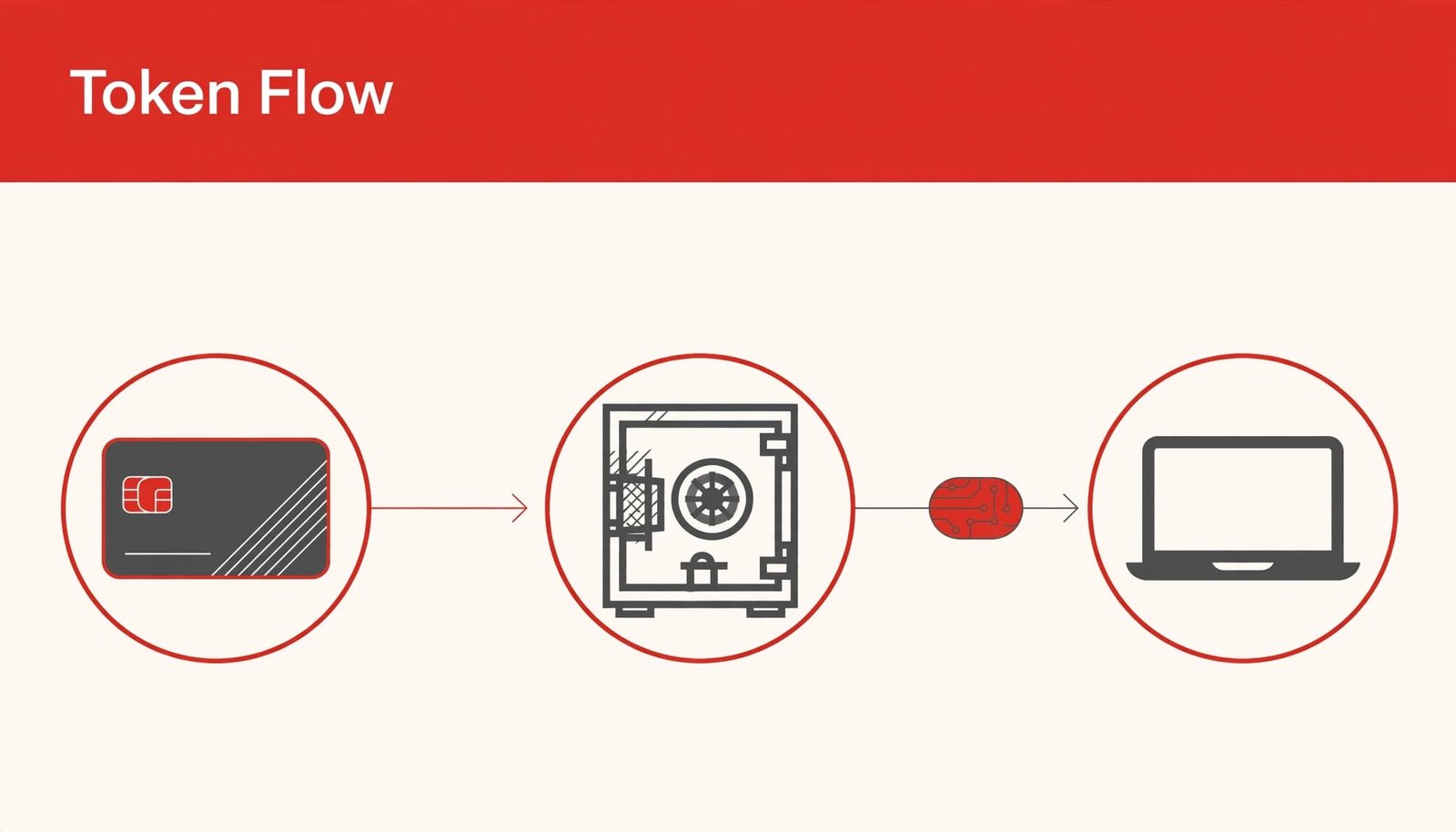
- The customer enters payment details into a provider-hosted page or payment fields.
- The payment data travels through an encrypted connection to the payment provider.
- The provider creates a token and maintains its relationship with the card information.
- Your checkout receives the payment reference, transaction result, and permitted display information, such as the last four digits.
- For a later authorized purchase, your software submits the saved reference rather than requesting the card number again.
With remote tokenization, the customer’s card number and security code go directly to the provider’s payment environment. Properly implemented hosted collection keeps those details off your business’s server.
The provider handles authorization through the payment network. Card data can remain in its protected vault, but security codes must never be retained after authorization, even in encrypted form.
Our explanation of how payment gateways work covers the gateway’s broader role in checkout, authorization, and transaction processing.
How Tokens Differ From Card Numbers and Encryption
A token isn’t simply a disguised card number. A random substitute value has no mathematical operation that reveals the PAN.
These distinctions explain why payment systems commonly use tokenization and encryption together.
| Data type | What it contains | How authorized systems use it |
|---|---|---|
| Card number | The underlying payment account identifier | Submit it through payment processing |
| Encrypted card data | Card information transformed into ciphertext | Decrypt it with the appropriate key |
| Vault reference | A substitute linked to separately protected card data | Request an authorized lookup or transaction |
Encryption is reversible with the correct key. A random substitute is placeholder data, not an encrypted copy, so it can’t be deciphered into the original number.
However, the provider may retrieve the associated card data through a controlled lookup in its protected store. Tokenization moves sensitive handling into that provider environment rather than eliminating it everywhere.
Point-to-point encryption, or P2PE, protects card data between a payment terminal and the decryption environment. Tokenization can then support storage and future transactions without retaining the PAN in business software.
Gateway Tokens and Network Tokens Have Different Roles
Payment references can follow more than one architecture. Understanding the distinction helps you evaluate recurring billing, digital wallets, and payment-provider flexibility.
Gateway Tokens Stay Within Their Issuing Environment
A gateway-issued token usually works only within the gateway and merchant account that created it. A reference saved by one gateway generally won’t work when submitted directly to another.
These references are useful for customer profiles, repeat orders, and recurring billing. Your application stores the reference while the gateway handles the sensitive payment information.
Their format also varies. A gateway-issued identifier may be alphanumeric, while other payment references can resemble ordinary card details.
Network Tokens Work Through Card-Network Infrastructure
Network-issued substitutes are provisioned through card-network infrastructure, with restrictions on where and how they’re used. Those restrictions may relate to a merchant, device, or payment channel.
EMVCo’s payment-tokenization use cases describe these arrangements and reference lifecycle management.
Supported network services can update the underlying account relationship when a card expires or is replaced. This reduces avoidable payment failures, although insufficient funds, account closures, and issuer decisions can still cause declines.
How Tokenization Limits Damage in a Data Breach
Tokenization reduces the usefulness of payment information stolen from your business. Its protection is strongest when raw card data never enters systems that don’t need it.
A Stolen Database Contains Less Usable Payment Data
For a retailer storing tokenized customer profiles, a data breach may expose stored references rather than full card details. An attacker generally can’t use an account-restricted gateway-issued reference at an unrelated store like a credit card.
That limits one important source of fraud. However, names, addresses, purchase histories, and passwords may still be exposed.
Tokenization protects payment information, but other customer data still needs access controls, software updates, and monitoring.
Stolen Gateway Credentials Create Additional Risk
A data breach becomes more dangerous when an attacker also gains authorized access to the business’s gateway account. Depending on permissions, that access may allow charges, refunds, or other account activity.
Gateway transactions are ordinarily associated with the business ID and registered settlement bank account. Merchants can void eligible unsettled transactions or refund settled charges, but recovery isn’t automatic.
Use individual accounts, multi-factor authentication, restricted permissions, and transaction alerts. These controls help prevent an attacker from using legitimate payment functions against your business.
Where Merchants Use Tokenized Payments
Payment tokenization supports convenient checkout experiences in online stores and physical locations. The implementation differs, but the goal is the same: keep reusable card details out of unnecessary systems.
Online Checkout, Subscriptions, and Refunds
Card-on-file tokenization lets your business retain a payment reference for authorized future purchases. This saved card-on-file method means customers don’t have to enter their card details each time.
This supports subscriptions, repeat orders, and scheduled billing. It can also support refunds through the provider’s original transaction record or saved payment reference.
Network-issued substitutes are particularly useful for recurring transactions. The U.S. Payments Forum’s tokenization primer describes how these account relationships can be maintained when cards change.
Customer consent and applicable recurring-payment rules still apply. A payment reference doesn’t authorize unlimited charges.
In-Person Payments and Digital Wallets
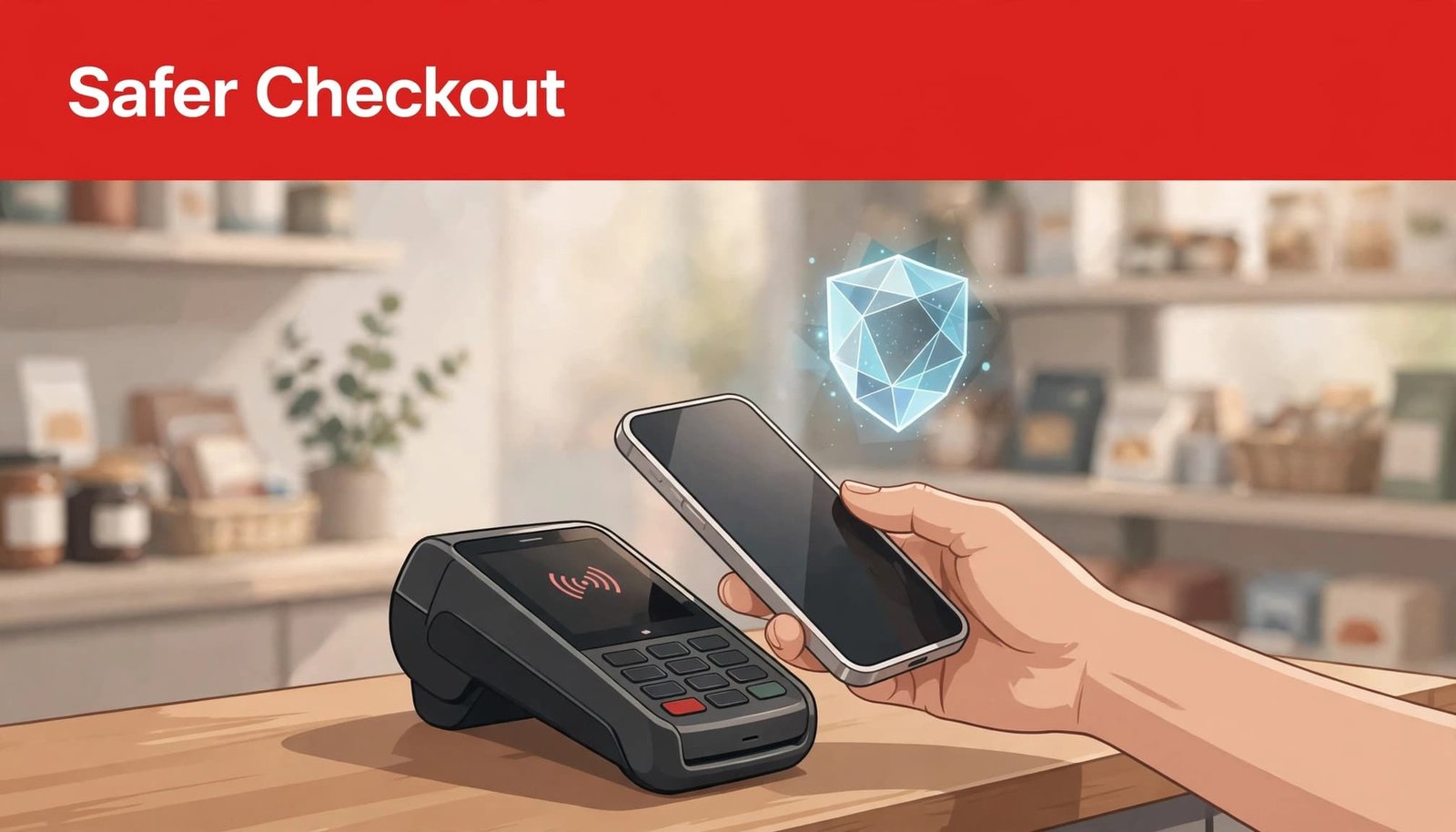
Digital wallets such as Apple Pay and Google Pay use network-issued substitutes to protect underlying card details. Customers get a convenient tap-to-pay experience without presenting their ordinary card details in the same way.
A physical-card purchase can also produce a reusable reference for later authorized use through supported POS software.
Chip protections and tokenization aren’t identical. EMV chips generate transaction-specific safeguards; inserting or tapping a physical card doesn’t automatically mean every business system receives only payment references.
What Tokenization Changes for PCI Compliance
PCI scope includes the people, processes, and technologies that handle cardholder data or affect its protection. Reducing the systems exposed to card numbers can reduce compliance work and security risk.
The PCI SSC’s tokenization guidelines explain how tokenization can support scope reduction. That reduction depends on implementation, separation, and whether business systems can retrieve or otherwise access card data.
Keep Card Data Out at Collection
Tokenizing a card after it passes through your own server doesn’t erase that server’s exposure. Hosted payment pages and properly implemented secure fields can prevent the initial collection from entering your environment.
The same principle applies in person: protected terminals and encrypted payment paths reduce unnecessary handling before tokenization occurs.
Maintain Controls Around the Payment Environment
Tokenization doesn’t make your business automatically PCI compliant. Payment-page protection, staff access, device protection, incident response, and required validation still matter.
Our PCI DSS compliance checklist outlines practical controls for merchant environments.
Keep card details out of spreadsheets, reservation notes, email, and staff messages. Moving payment collection to a protected channel is more effective than trying to secure scattered copies afterward.
Frequently Asked Questions
Can Tokenization Support Bank Payments?
Many payment providers also tokenize bank account information for authorized bank payments. This gives business software a stored reference instead of the underlying account details.
Support depends on the payment service and integration. Card tokenization doesn’t automatically include bank-account tokenization.
Can Payments Continue During a Gateway Outage?
Yes, when a business has established a working backup arrangement in advance. That can include separate gateway-specific identifiers or supported provider storage and routing infrastructure.
A gateway-specific identifier doesn’t automatically transfer during an outage. Transaction routing, account configuration, and identifier availability must already support the backup path.
Who Benefits Most From Tokenization?
Businesses that retain payment methods gain substantial practical benefits. Subscription services, online retailers, appointment-based businesses, and hospitality operations can support repeat charges without maintaining their own card-number records.
Merchants accepting digital wallets also benefit from network-token protections. Strong implementation combines customer convenience with less exposure to sensitive payment information.
Build Convenience Without Storing More Card Data
Payment tokenization gives your business a practical way to support repeat payments while reducing the credit card information held in everyday systems. Its strongest advantage is less sensitive data to protect, supported by encryption and controlled access.
Our online and in-store payment services help businesses connect their payment operations. The right payment design combines convenient checkout with clearly defined security responsibilities.