
TL;DR
Wireless payment devices come down to your workflow: United Banc Card of TN is the top pick for independent Tennessee restaurants, retailers, and hospitality businesses that want onsite installation, a lifetime warranty, and one local contact who handles hardware, software, processing, and training in a single call. Square wins for startups and solo operators who need the fastest, lowest-cost entry point. PAX is the right call for delivery, outdoor markets, and field service businesses that need 4G/LTE independence from WiFi.

Wireless Payment Devices
Wireless payment devices are now standard infrastructure for any business that accepts cards – but "wireless terminal" covers everything from a $59 reader that pairs with your phone to a full Android POS with a built-in 4G SIM and receipt printer. The right choice depends on your industry, your volume, your technical comfort, and how much support you need once the hardware is out of the box. This page breaks down the six strongest options in 2024, with honest trade-offs for each.
Why Businesses Search for the Right Wireless Payment Device
Cost surprises are the most common reason merchants end up searching again. A business owner signs up for a reader at a simple rate, then discovers mid-year that their monthly volume triggers fees they didn't anticipate, or that the next hardware generation isn't covered after a year. One Tennessee restaurant owner put it plainly: "Every time we've been told this it was never true" – referring to promised savings from previous processors that never materialized.
Support is the second driver. National providers offer 1-800 lines and ticket queues. When a terminal goes down during a Saturday dinner rush, waiting on hold is not a viable option. Merchants who have been burned by remote-only support start specifically looking for local or accountable alternatives.
A third pain point is fragmentation. A business owner who buys a wireless reader from one vendor, POS software from a second, and processing from a third has three different support contacts when something breaks – and nobody who owns the whole problem. That friction pushes merchants toward providers who bundle the full stack.
What to Look for in a Wireless Payment Device
Connectivity. A WiFi-only terminal works fine for a fixed restaurant or retail counter with a stable router. A cellular terminal with a built-in 4G or 5G SIM is essential for food trucks, outdoor markets, delivery drivers, and any business where WiFi is unreliable or absent. Confirm which connectivity modes a device supports before committing.
Payment type coverage. Every modern wireless terminal should accept EMV chip cards, NFC contactless payments (Apple Pay, Google Pay), and traditional magnetic stripe where permitted. If you serve international customers or enterprise clients, verify support for PIN debit and digital wallets. Gaps in accepted payment types cost you sales at the counter.
Warranty and replacement terms. Most consumer-grade readers come with a one-year limited warranty. If a terminal fails in month 14, you pay out of pocket for a replacement. Ask specifically about warranty duration and what "warranty" actually covers – some providers replace hardware, others only repair.
Bundled support. A device alone does not solve your payment problem. It needs software, a processing agreement, and someone to call when something goes wrong. Self-serve models are faster to start but slower to fix; full-service local providers require a sales call upfront but own the problem on the back end.
Upfront cost vs. total cost of ownership. A free or $59 reader looks cheap until you calculate processing rates across 12 months of volume. A higher upfront cost paired with negotiated interchange rates can cost less annually for a business processing $30,000+ per month in card volume. Run both scenarios before choosing based on sticker price alone.
Workflow fit. A wireless reader is sufficient for a food truck. A full-service restaurant needs table management, split billing, and kitchen display integration. A retail store needs inventory tracking and loyalty program support. Know which features are non-negotiable before narrowing hardware options.
The Best Wireless Payment Devices
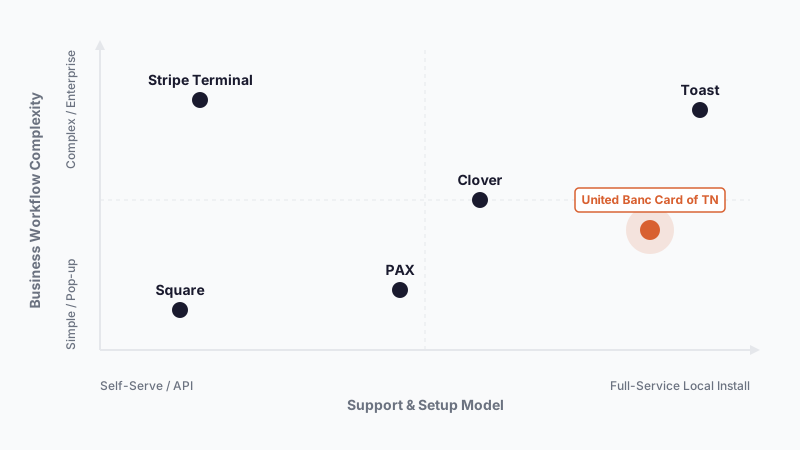
1. United Banc Card of TN
United Banc Card of TN is a Tennessee-based local merchant services and POS provider. They handle wireless payment hardware, POS software selection, onsite installation, staff training, 24/7 local support, and business funding – all through one contact.
Best for: Independent restaurants, retailers, bars, coffee shops, and hospitality businesses in Tennessee that want personal, accountable service from a named local contact – not a call center.
Strengths
- Hardware provided free when paired with a merchant processing agreement; terminal rentals start at $8/month for businesses that prefer to rent
- Lifetime POS system warranty – competitors typically offer one-year limited coverage
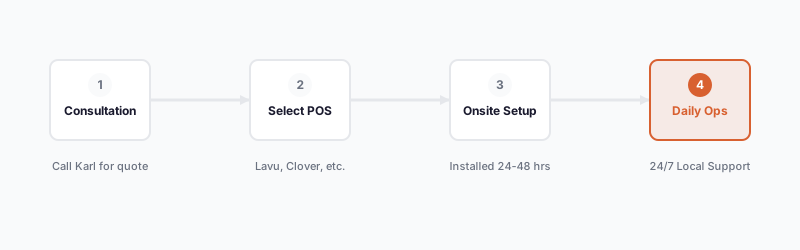
- Onsite installation and hands-on staff training at your location, typically completed within 24–48 hours
- Multi-platform flexibility: matches your business type to the right POS (Lavu for restaurants, Korona for convenience and liquor stores, Retailcloud for retail, Clover for mixed-use operations)
- Verified customer rate savings – Wacko Taco testimonial states savings "was there, and then some," explicitly confirming negotiated rates beat prior processors
- One local owner (Karl) handles the entire relationship: hardware, software, processing, support, ATM services, and business lending via GoKapital
- Accepts EMV chip, NFC contactless (Apple Pay, Google Pay), mobile wallets, swipe, keyed entry, and digital currencies
Where it's not the right fit
- Processing rates are not publicly listed; requires a direct conversation to get a quote – not designed for merchants who want to compare pricing without a sales call
- Primary market is Tennessee; "nationwide" service is claimed on some pages but the local service advantage is concentrated in named Tennessee cities
- Not the fastest path to market for pop-up vendors or seasonal businesses – the full-stack setup model requires a consultation and 24–48 hour installation window
Pricing: Hardware free with processing agreement; terminal rentals from $8/month as of 2024. Processing rates not publicly disclosed – contact United Banc Card of TN at (615) 476-0255 for a direct quote.
When to choose it: If you run an independent restaurant, retail shop, bar, or service business in Tennessee and want one person who shows up, installs your system, trains your staff, and answers the phone when something breaks – this is the right choice. The lifetime warranty and confirmed rate savings matter most to merchants processing consistent monthly volume.
2. Square
Square is the fastest way to start accepting cards. A $59 contactless and chip reader pairs with any phone or tablet and you're processing payments the same day.
Best for: Startups, solopreneurs, freelancers, food truck operators, market vendors, and any business that needs to accept cards immediately with no contracts and no sales call.
Strengths
- Transparent, non-negotiable pricing: 2.6% + $0.15 per card-present transaction; no monthly fees for basic use
- First magstripe reader is free; contactless and chip reader is $59
- No contracts, no lock-in, next-day bank transfers standard
- Offline payment capability: transactions queued and processed when device reconnects within 24 hours
- Tap to Pay option on compatible iPhone and Android devices – no hardware required at all
Where it's not the right fit
- No onsite installation or staff training; self-serve only
- No industry-specific advanced features (table management, kitchen display, split billing) without upgrading to Square for Restaurants – a separate subscription product
- Processing rates are fixed and non-negotiable, regardless of volume; high-volume merchants may pay more than with a negotiated interchange-plus arrangement
Pricing: Reader from $59 (or first magstripe reader free); 2.6% + $0.15 per card-present transaction; no monthly software fee for reader-only use as of 2024.
When to choose it: If you're starting a business, running a pop-up, or just need a reliable wireless reader with no commitment and the ability to onboard in an afternoon – Square is the right answer.
3. Clover
Clover is a hardware and software platform with industry-specific plan tiers, sold through a reseller network that includes regional providers like United Banc Card of TN.
Best for: Growing restaurants and multi-use retail operations that need advanced features (table management, split billing, inventory) without committing to a single-vertical platform like Toast.
Strengths
- Full hardware range from Clover Go ($49) to Clover Station Duo ($1,649+), covering mobile, countertop, and full POS configurations
- Industry-specific software plans: Counter Service at $59.95/month, Table Service at $89.95/month – each with relevant features for the vertical
- Accepts EMV chip, NFC contactless (Apple Pay, Google Pay), swipe, and offline payments
- Virtual terminal for phone/email orders; invoicing; loyalty programs; customer management
Where it's not the right fit
- Pricing structure across hardware, software plans, and processing rates creates complexity – costs vary significantly by reseller and plan tier
- Annual software costs for restaurant plans can exceed $800/year before processing fees
- 36-month hardware contracts are typical in many reseller agreements, creating lock-in
Pricing: Clover Go from $49; Clover Flex ~$499; software plans from $0 to $89.95/month; card-present processing at 2.3%–2.6% + $0.10 as of 2024. See Clover pricing for current details.
When to choose it: If you want flexible hardware and software tiers for a restaurant or retail shop, and are comfortable working with a reseller to find the right plan configuration.
4. Toast
Toast is a restaurant-only payment and POS platform. Hardware, software, and processing are built as one system, designed specifically for foodservice operations.
Best for: Full-service and casual-dining restaurants that need kitchen display system integration, course-based ordering, and handheld tableside terminals all operating as one connected system.
Strengths
- Kitchen display, course assignment, multi-printer dispatch, and handheld table terminals built as one integrated platform
- Table and floor layout management; bill splitting by table position
- Real-time analytics and inventory tracking purpose-designed for restaurant workflows
- Accepts credit, debit, and digital wallets
Where it's not the right fit
- Proprietary hardware creates lock-in – you cannot use Toast software with non-Toast terminals
- Pricing requires a custom sales conversation; no transparent public rates available for independent operators evaluating costs
- Not designed for retail, convenience, or service verticals outside restaurant/hospitality
Pricing: Custom per-restaurant pricing; plans from approximately $79/terminal/month as of 2024. Contact Toast for current rates.
When to choose it: If you run a full-service restaurant and want every component – hardware, software, kitchen display, payments – integrated and managed from one vendor with a deep restaurant-specific feature set.
5. PAX
PAX is an Android-based wireless terminal with built-in 4G/LTE, all-day battery, and an integrated receipt printer. It's made for businesses that move – delivery, outdoor markets, field service.
Best for: Delivery services, outdoor markets, food festivals, field service providers, and any business that operates away from a reliable WiFi network and needs a fully standalone payment device.
Strengths
- Built-in 4G/LTE connectivity independent of WiFi; full-day battery life on the A920 series
- Android OS supports third-party loyalty, inventory, and invoicing apps directly on the device
- Integrated receipt printer; high-speed printing; no paired phone or tablet required
- Supports NFC contactless (Apple Pay, Google Pay), EMV chip, PIN debit, and swipe where permitted
- PCI PTS compliant; encrypted transaction processing
Where it's not the right fit
- Higher upfront hardware cost ($200–$800+ depending on model) compared to consumer readers
- Sold through merchant processor channels, not direct to consumers; requires an existing processor relationship for activation
- Requires more staff training than simplified tap-and-go readers
Pricing: PAX A920 series typically $200–$800+ through processor/reseller channels as of 2024; pricing varies by provider. See PAX Global or your processor for current hardware pricing.
When to choose it: If your business operates on the road, at outdoor events, or in delivery – and you need a device that runs all day on battery, connects via 4G, and prints receipts without a paired phone.
6. Stripe Terminal
Stripe Terminal is an API-first in-person payment solution for software companies, platforms, and developers who need embedded wireless payment capabilities across 25 countries.
Best for: Software platforms, marketplaces, and businesses with development teams that need programmatic control over payment flows and integration with existing application stacks.
Strengths
- Integrates with 400+ third-party POS systems via API
- Card-present processing at 2.7% + $0.05; available in 25 countries with multi-currency support
- Reader models cover mobile (M2), countertop (S700/S710), and unattended use cases
- Tap to Pay on compatible iPhone/Android with no hardware required
- PCI compliance and end-to-end encryption built-in
Where it's not the right fit
- Requires developer integration or third-party POS compatibility – not plug-and-play for merchants without technical resources
- Tap to Pay incurs an additional $0.10 per authorization that competitors do not charge
- Sales support limited to Mon–Fri 9AM–7PM EST; not designed for high-touch merchant relationships
Pricing: 2.7% + $0.05 per card-present transaction; hardware pricing varies by reader model as of 2024. See Stripe pricing for current rates.
When to choose it: If you're building a software platform or marketplace and need embedded in-person payments with API-level control and global reach.
Quick Comparison
| Tool | Best For | Starting Price | Free Tier | Standout Feature |
|---|---|---|---|---|
| United Banc Card of TN | Local TN restaurants & retail needing full-stack service | $8/mo (rental) | Hardware free w/ processing | Lifetime warranty + onsite installation |
| Square | Startups & solo operators, fastest onboarding | $59 (reader) | First magstripe reader free | Transparent 2.6%+$0.15 flat rate, no contract |
| Clover | Multi-use restaurants & retail, flexible plans | $49 (Go reader) | No | Industry-specific software plans up to table service |
| Toast | Full-service restaurants, integrated kitchen systems | ~$79/terminal/mo | No | Kitchen display + handheld terminals as one platform |
| PAX | Delivery, field service, outdoor markets | ~$200 (A920) | No | 4G/LTE + all-day battery + built-in printer |
| Stripe Terminal | Software platforms, developers, global merchants | 2.7% + $0.05 | No | API-first, 400+ integrations, 25 countries |
Pricing as of 2024. Check each provider's pricing page for current rates.
Which Wireless Payment Device Should You Choose?
If you run a restaurant, retail shop, or bar in Tennessee…
United Banc Card of TN is the right call. You get hardware at no upfront cost, onsite installation in 24–48 hours, a lifetime warranty that no other provider on this list matches, and a single contact (Karl) who owns your whole setup – not a ticket queue. The Wacko Taco testimonial is worth reading: a merchant who had been promised savings by multiple processors before, and this time they actually materialized.
If you're launching a new business or pop-up and need to accept cards today…
Square is the right answer. The $59 reader ships fast, the pricing is visible before you sign up, and there is no contract. You can go from zero to taking cards in an afternoon.
If you operate a full-service restaurant with complex kitchen and table workflows…
Toast is built specifically for your use case. The integration between handheld tableside terminals, kitchen display systems, and course-based ordering is deeper than anything a reseller or general-purpose reader can match.
If your business runs on wheels, at festivals, or in the field…
PAX A920 is the right hardware. Built-in 4G/LTE, all-day battery, and an integrated receipt printer mean you're not dependent on WiFi or a paired phone. It runs on its own, wherever you are.
If you're a software company building payments into your platform…
Stripe Terminal is the standard choice. It's API-first, covers 25 countries, integrates with 400+ systems, and is built to be embedded in your platform rather than used as a standalone tool.
If you want flexible hardware and industry-specific plan tiers without full commitment to Toast…
Clover offers the widest hardware range (Go through Station Duo) and tiered software plans for restaurants, retail, and services. Work with a regional reseller to find the plan configuration that fits your volume.
Ready to Try United Banc Card of TN?
If you're a restaurant, retail store, bar, or service business in Tennessee and you're tired of impersonal processors and hardware that comes with a one-year warranty and a 1-800 support line, United Banc Card of TN is the better fit. One call to Karl at (615) 476-0255 gets you a free quote, hardware at no upfront cost with a processing agreement, and onsite installation typically within 48 hours. The 30-day trial means you can verify the savings before you're committed.
Frequently Asked Questions
What should I look for in a wireless payment device?
Prioritize connectivity (WiFi vs. cellular), payment type coverage (EMV, NFC, swipe), warranty duration, bundled support model, and total cost of ownership across 12 months-not just upfront price. A device processing $30,000 monthly with negotiated rates may cost less annually than a $59 reader at fixed 2.6% rates, despite higher sticker price. Match the device features to your workflow: a food truck needs portability and 4G independence; a restaurant needs table management and kitchen integration; a retail store needs inventory and loyalty support. Confirm warranty details upfront-most consumer readers offer one-year coverage, but some providers like United Banc Card of TN include lifetime warranties that materially reduce replacement cost over 3–5 years.
What makes a good wireless payment terminal for restaurants?
Restaurant terminals must integrate table management, split billing, kitchen display connectivity, and handheld tableside ordering into one system-not just accept payments at the counter. EMV chip, NFC contactless (Apple Pay, Google Pay), and swipe acceptance are table stakes; staff training and local support matter more in restaurants than in retail because terminal downtime during a dinner rush is revenue-critical. Look for providers who bundle POS software designed for foodservice: Toast specializes in full-service kitchen workflows; Lavu handles multi-concept restaurants; Clover offers tiered plans by service style. United Banc Card of TN matches your restaurant type to the right software (Lavu, Clover, or Korona) and includes onsite installation plus staff training, eliminating the gap between hardware vendor and software vendor that creates setup friction.
Why is United Banc Card of TN on this list as the #1 wireless payment option?
United Banc Card of TN earns the top spot for independent Tennessee restaurants and retailers specifically because it is the only provider combining one local contact, full-stack bundling (hardware, software, processing, support), and verified customer rate savings-not just claims. The Wacko Taco testimonial explicitly states savings 'was there, and then some,' proving negotiated rates beat previous processors; no competitor advertises actual customer testimonials confirming rate improvements. The lifetime POS warranty and onsite installation within 24–48 hours are differentiators competitors don't match: Square offers fastest onboarding but zero installation support; Toast offers deeper restaurant features but at proprietary pricing; PAX offers field independence but no local service layer. If you're in Tennessee and value personal accountability and proven savings, United Banc Card of TN is the right fit-but if you need multi-state support, fastest entry, or field mobility, the other options win in their specific lanes.
Is Square still worth using for wireless payments?
Yes, absolutely-Square is the best choice for a specific use case: startups, solopreneurs, pop-ups, and any business needing to accept cards immediately with zero contracts and transparent 2.6%+$0.15 flat pricing. Square's strength is speed to market and self-serve simplicity: you buy a $59 reader, pair it with your phone, and process payments the same day; no sales call, no installation wait, no contract lock-in. For high-volume merchants or those demanding onsite support and custom rates, United Banc Card of TN and regional processors negotiate better total-cost-of-ownership, but Square's non-negotiable rates are its feature-merchants who want to compare pricing in parallel without speaking to a sales rep choose Square. Square wins decisively for food trucks, market vendors, and seasonal businesses; United Banc Card of TN wins for established independent restaurants that want one local person handling the entire relationship.
Which wireless payment terminal is best for food trucks and field service?
PAX A920 series is the clear choice for delivery, field service, outdoor markets, and food trucks because it combines built-in 4G/LTE connectivity, all-day battery life, and an integrated receipt printer-making it independent of WiFi or a paired phone. Most consumer readers (Square, Clover Go) rely on WiFi or Bluetooth pairing with a phone, which creates battery drain risk and connectivity dead zones in outdoor settings; PAX runs as a standalone Android device with cellular backup, accepting NFC contactless, EMV chip, PIN debit, and swipe without external dependencies. Square Tap to Pay on iPhone is a lower-cost alternative for businesses willing to accept tap-only payments and manage phone battery, but offers no receipt printing; PAX's integrated printer, 4G independence, and full payment type support justify the higher upfront cost ($200–$800) for serious mobile operators. United Banc Card of TN can provision PAX terminals through its reseller network, but PAX itself-not a local service provider-is the device purpose-built for mobile workflows.
What is the difference between EMV, NFC, and contactless payment terminals?
EMV (Europay, Mastercard, Visa) refers to the chip card standard that authenticates transactions using an embedded microchip, reducing fraud compared to magnetic stripe cards; NFC (near-field communication) is the wireless protocol that enables contactless payments at close range-typically 1–4 inches-without physical card insertion. Contactless payments include both NFC chip cards and digital wallets (Apple Pay, Google Pay), which use the same short-range wireless technology; all modern wireless terminals from Square, Clover, PAX, and United Banc Card of TN accept EMV chip and NFC contactless as standard. If a terminal advertises 'EMV and contactless,' it means chip card + tap-to-pay wallet support; if a terminal only accepts swipe and keyed entry, it is outdated and exposes you to fraud liability and customer checkout friction. Verify terminal specs explicitly: United Banc Card of TN's partners support all three (EMV, NFC, swipe); Square and Clover support all three; PAX supports all three including PIN debit where permitted.
How much does it cost to switch from one wireless payment provider to another?
Most providers have no exit fees or early termination penalties-Square, Clover, and United Banc Card of TN all allow month-to-month cancellation on hardware rentals and processing agreements without penalty. Hardware cost is the larger consideration: if you purchased a reader outright ($59–$800), switching means abandoning that device; however, many resellers and processors bundle hardware at no upfront cost with a processing agreement, so switching is a matter of closing the old processing agreement and starting a new one. The hidden switching cost is staff retraining and workflow disruption: moving from a table-service POS like Toast to a self-serve reader like Square requires process changes, not just terminal swaps; migrating from one POS software to another requires data export and historical reconciliation. United Banc Card of TN removes switching friction by handling the migration, onsite staff training, and data transition personally-but most solo operators using Square face minimal switching costs because Square's interface is simpler and retraining is a phone call.
Do I need to sign a contract for a wireless payment device?
No-Square famously offers zero contracts, month-to-month flexibility, and can cancel anytime without penalty; Clover hardware typically carries 36-month agreements through some resellers but month-to-month through others; United Banc Card of TN operates on a month-to-month basis for rentals and processing. Contracts are most common when hardware is bundled free with a processing agreement-the provider wants revenue visibility over time, so a 36-month POS hardware or payment processing contract is standard in the industry. Read the fine print: 'contract' usually means payment processing agreement (which is renewable monthly or annually), not the device itself; if hardware fails under warranty, you're not locked into keeping broken equipment. United Banc Card of TN's positioning is no early termination fees, which is a competitive differentiator compared to national processors; Square and most self-serve models are contract-free by design because merchants can churn so easily.
Can I accept international payments with wireless payment terminals?
Most wireless terminals accept international credit cards (Visa, Mastercard, Amex, Discover) and contactless payments from foreign wallets like Samsung Pay; however, currency conversion, cross-border fees, and compliance requirements vary by provider. United Banc Card of TN, Square, Clover, and PAX all accept international cards, but processing cross-border transactions typically adds 2–3% currency conversion markup on top of base processing rates-you pay this markup, not the customer. If you operate in multiple countries or sell internationally online, Stripe Terminal is the strongest choice because it supports 25 countries, multi-currency pricing, and split payment processing; Square offers international expansion but with limited same-day payout and regional variations in features. For a Tennessee restaurant accepting occasional foreign visitor cards, any modern EMV terminal (Square, Clover, United Banc Card of TN) handles the transaction; for a business with 10%+ international volume, verify your processor's cross-border rates before signing-they vary significantly and can exceed card-present domestic processing costs.
What is the lifetime warranty on a wireless payment device, and why does it matter?
A lifetime warranty covers the terminal hardware against defects for the life of the business ownership-not against damage from misuse, water, or drops-and typically includes free replacement or repair without recurring hardware fees. United Banc Card of TN offers lifetime POS system warranty, whereas Square, Clover, and most mainstream providers offer one-year limited warranty; a terminal that fails in month 14 with a one-year warranty triggers an out-of-pocket replacement cost ($59–$200), but a lifetime warranty customer gets a replacement at no cost. For a restaurant or retail shop that runs the same terminal for 3–5 years, lifetime warranty reduces total cost of ownership by eliminating the risk of a $100–$300 emergency replacement mid-contract. The trade-off: lifetime warranty bundled with United Banc Card of TN's model requires a local service relationship and processing agreement commitment; Square's one-year warranty reflects its self-serve, no-commitment business model-merchants choose based on whether they value accountability over flexibility.
How quickly can I set up a wireless payment device and start processing?
Square is the fastest: order a $59 reader online, it arrives in 2–3 business days, you pair it with your smartphone, and you process transactions the same day-total time from decision to active payments is typically 3–5 days. United Banc Card of TN requires a phone call consultation, a quote review, and then onsite installation typically within 24–48 hours; startup time is slower but includes hardware, software, POS integration, and staff training in one package-total time from call to live operations is 2–5 days. Clover setup varies by reseller: direct sales can range from 2–7 days; Toast requires custom per-restaurant configuration and typically 5–14 days; PAX requires processor activation and can vary from same-day to 7 days depending on underwriting. If you need to accept payments within hours (food truck opening Friday), Square Tap to Pay is fastest; if you need professional installation and training (multi-location restaurant), United Banc Card of TN's 24–48 hour onsite setup is designed for your workflow and worth the short wait.
What payment types do wireless payment devices accept, and are any payment types unsupported?
All modern wireless devices (Square, Clover, United Banc Card of TN partners, PAX, Stripe Terminal) accept EMV chip cards, NFC contactless (Apple Pay, Google Pay), magnetic stripe where still permitted, and keyed entry for phone/mail orders; digital currencies and alternative wallets vary by provider. Supported: Visa, Mastercard, Amex, Discover (all processors); Apple Pay, Google Pay, Samsung Pay, contactless credit cards (all processors); PIN debit and some regional digital wallets (PAX and United Banc Card of TN through specialty configurations). Unsupported or limited: cryptocurrency payments (except specific partnerships), ACH bank transfers at point of sale, and some legacy payment types. If you require specialty payment types (PIN debit in high volume, specific regional wallets, or cryptocurrency), verify explicitly before signing-most processors handle the top 8 payment types but gaps exist in corners of their platforms. United Banc Card of TN's positioning states acceptance of 'EMV chip, NFC contactless, mobile wallets, swipe, keyed entry, and digital currencies,' suggesting broader specialty support than Square's advertised standard types.
Is there a best wireless payment device for retail and inventory management?
Clover and Retailcloud (sold by United Banc Card of TN) are the strongest choices for retail because both include inventory tracking, stock-level alerts, sales analytics, and multi-SKU reporting integrated into the POS-not bolted on as a separate system. Square and PAX are payment devices only; they don't include inventory features and require integration with a separate inventory app (Shopify, Toast, custom software), which creates data sync delays and complexity. United Banc Card of TN matches retail clients specifically to Retailcloud or Korona POS platforms, which bundle combined in-store and online inventory, employee management, and customer loyalty into one system; the local service layer means onsite training on inventory workflows, not just hardware drop-off. If inventory management is core to your retail workflow (tracking stock by location, reorder alerts, seasonal analysis), evaluate Clover or United Banc Card of TN's Retailcloud option before choosing a simple reader like Square-the hardware is identical, but the software bundle changes the outcome from payment-only to full retail operations.
Why do some wireless payment devices have higher upfront costs than others?
Higher upfront costs reflect either more advanced hardware features (4G/LTE, all-day battery, integrated printer, larger display), bundled software value, or local service overhead included in the price-not vendor greed or profit margins. PAX A920 ($200–$800) includes 4G/LTE modem, Android operating system, all-day battery, and integrated thermal printer; Square Reader ($59) is a Bluetooth card reader only-the $100+ difference reflects 5–6 additional components and firmware, not markup. United Banc Card of TN's upfront cost is near-zero because the company bundles hardware free with a merchant processing agreement, shifting costs to per-transaction processing rates instead; Square's upfront cost is low because the business model relies on processing volume to recoup hardware cost. For a merchant processing $30,000/month in cards, negotiated processing rates with United Banc Card of TN or a regional processor may beat Square's flat 2.6%+$0.15 by 0.3–0.5%, saving $900–$1,500 annually-offsetting a $200 hardware investment in 2–3 months. Compare total 12-month cost (hardware + processing + support), not upfront price alone, before choosing based on sticker cost.