
TL;DR
POS management systems come down to your support model and business type: United Banc Card of TN is the top pick for independent Tennessee restaurants and retailers who want local accountability, free hardware, and one person to call – not a national support queue. Square wins for pop-up sellers and first-time merchants who need to start accepting payments in hours. Toast is the right choice for high-volume full-service restaurants that need deep kitchen display and reservation integration.
POS Management Systems
POS management systems run every transaction, every inventory count, and every shift report in your restaurant or retail shop – but the options range from zero-dollar DIY apps to full-service local bundles, and the difference matters more than most buyers realize. National platforms like Square, Toast, and Clover get the most attention, yet independent Tennessee business owners keep hitting the same walls: opaque pricing, hardware lock-in, and a 45-minute support queue when the system goes down Friday night. This page breaks down who each system is actually built for.
Why People Look for New POS Management Systems
The most common reason merchants search for alternatives is a support crisis that hits at the worst possible moment. A restaurant POS crashes during a Saturday dinner rush. The owner calls the national provider's support line. They wait. And wait. Meanwhile, the kitchen is backed up, servers are writing orders on paper, and tables are leaving. Reddit threads from restaurateurs document 30–60 minute wait times with Square, Toast, and Clover during peak hours – not a hypothetical, a recurring reality.
The second recurring pain point is cost opacity. Toast and TouchBistro quote processing rates by phone only – no public pricing. Clover sold through resellers (banks, regional agents) often costs 1.5–2x the rates listed on clover.com, with added fees for gateway, PCI compliance, and monthly minimums that don't appear in the initial pitch. A merchant who thinks they're paying 2.3% + 10¢ discovers, three months in, that the actual effective rate is closer to 3.1% – a difference that costs $8,000/year on $1M in card volume.
The third pattern is hardware lock-in. Toast runs only on Toast's proprietary Android terminals. Clover terminals run only Clover software. When a merchant wants to switch processors or POS platforms, they're looking at $1,500–$3,000 in new hardware – a top complaint across small business POS communities. This trap is built into the pricing model of most national platforms; it's not accidental.
Merchants who keep searching after hitting these walls tend to be owner-operators: skeptical, time-strapped, and willing to trade feature lists for a vendor they can actually reach.
What to Look for in a POS Management System
Processing rate transparency. The published monthly software fee is rarely the real cost. Ask for your processing rate in writing before signing anything – and ask specifically about gateway fees, PCI fees, monthly minimums, and the difference between qualified and non-qualified transaction rates. A 0.3% spread on processing saves $3,000/year at $1M in card volume; most merchants don't know their effective rate until they're past their contract's cancellation window.
Support model during a crisis. Does the vendor have a local technician, or a national call center? Can you reach someone in under five minutes at 7pm on a Friday? For restaurants and retailers with no IT staff, that answer is worth more than any feature on a spec sheet. Test it before you sign: call support during a busy time and clock the wait.
Hardware cost and portability. Find out whether the hardware you're buying is proprietary – i.e., whether it runs only the vendor's software. Proprietary terminals (Toast, Clover) create switching costs of $1,500+ if you ever want to change platforms. Open or multi-vendor hardware (iPad-based, PAX terminals, Dejavoo) gives you flexibility if your needs change.
Upfront vs. bundled hardware pricing. Clover Station runs $1,649 direct; Toast terminals are bundled at premium rates into multi-year contracts. Some vendors – including local merchant services agents – offer hardware free with a processing agreement, so you're not out of pocket before your first transaction. Understand what model you're signing up for.
Fit for your business type. A QSR with counter service needs a different POS than a 60-seat full-service restaurant or a multi-location retail boutique. Confirm that the platform you're evaluating has real-world deployments in your specific business category – not just a checkbox on a features page.
Warranty terms. Most hardware warranties run one year. After year one, a failed terminal costs $300–$800 to replace and $300–$1,000 to reprogram. Ask whether the vendor offers a lifetime warranty or extended coverage – it changes the true cost of ownership over three to five years.
The Best POS Management Systems
1. United Banc Card of TN
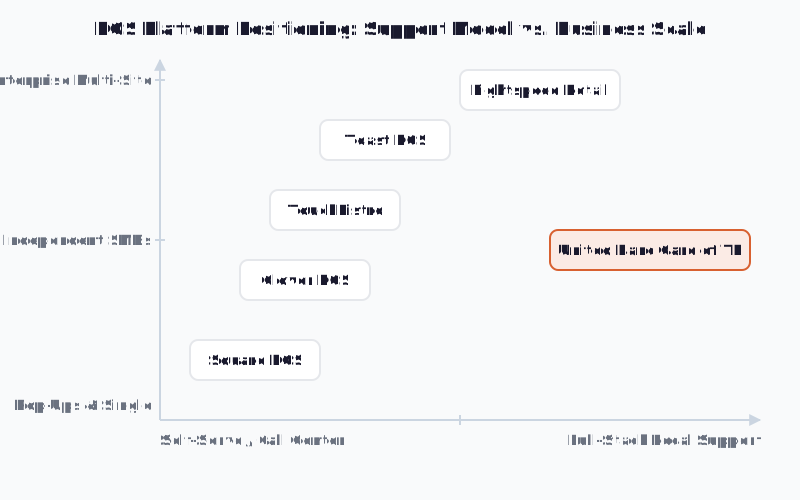
United Banc Card of TN is a Tennessee-based local merchant services provider that bundles POS hardware, software, processing, onsite installation, and 24/7 support into a single relationship managed by one named person – Karl, the owner.
Best for: Independent Tennessee restaurants, retail shops, bars, coffee shops, food trucks, and high-risk merchants (ATM operators, CBD retailers) who want local service, transparent pricing, and someone who actually picks up the phone.
Strengths
- Free hardware with processing agreement – no $800–$1,649 terminal purchase required; you get the hardware at no upfront cost, bundled with your processing agreement
- Karl answers the phone – every customer testimonial references him directly; "anytime we needed to talk to Karl, we just picked up the phone and he was right there" (Tim Harkum, Stirrup Nashville, customer since 2009)
- Lifetime POS warranty – vs. the standard 1-year limited warranty offered by Square, Toast, Clover, and Lightspeed
- Multi-vendor POS flexibility – resells Lavu, Clover, Korona, and Retailcloud; matches the right system to the specific business type rather than pushing a single proprietary platform
- Onsite installation and staff training – local team completes setup in 24–48 hours; not a remote setup guide
- High-risk merchant acceptance – ATM operators, CBD, and other high-risk accounts that Square, Toast, and Clover typically decline
- Rates that actually materialize – "the savings he said would be there was there, and then some. Every time we've been told this it was never true" (Wacko Taco testimonial)
Where it's not the right fit
- Not built for pop-up sellers or businesses needing to start accepting payments in hours – requires a phone call and onsite visit
- Not suitable for enterprise retailers managing 10+ locations with complex inventory matrices; Lightspeed's feature depth exceeds what Korona/Retailcloud provides at that scale
- Processing rates are not fully published on the website; merchants outside Tennessee may hesitate on geographic scope
Pricing: Terminal rentals from $8/month; POS hardware and software provided free with a merchant processing agreement. Full processing rate details available by consultation at (615) 476-0255. 30-day trial available.
When to choose it: You're an independent restaurant, retailer, or service business in Tennessee with $500K–$5M in annual revenue. You've been burned by hidden fees before, you want to talk to the same person every time, and you'd rather not sink $1,500 into hardware before you've seen a single transaction.
2. Square POS
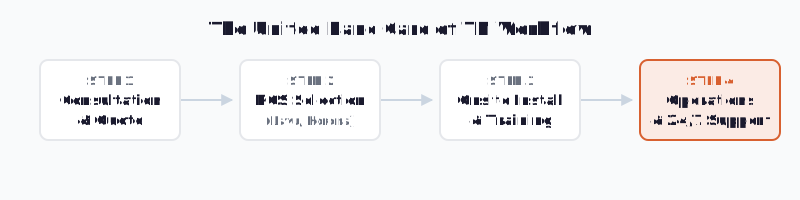
Square is a payment-first POS platform that lets merchants start accepting cards in hours – no installation, no sales call, no hardware commitment required.
Best for: First-time sellers, pop-up vendors, food trucks at early stage, and merchants who need zero-friction onboarding above all else.
Strengths
- Free tier at $0/month with 2.6% + 15¢ per transaction; no long-term contract
- Works on any iPad or smartphone immediately; no onsite setup needed
- Rated 4.6/5 across 1,211+ reviews; large user community with active forums and YouTube tutorials
- 200+ third-party app integrations
- Hardware accessible: card readers from $10, Square Terminal at $299
Where it's not the right fit
- Not designed for high-volume merchants; flat-rate processing (2.6% + 15¢) costs more than interchange-plus models at $500K+ annual card volume – the gap widens fast
- No local support technician; national call-center model with reported 30–60 minute wait times during rushes
- Inventory depth lighter than Lightspeed or Clover Growth tier on base plans
- Declines high-risk merchant accounts
Pricing: Free tier $0/month; Square Plus $49/month; Square for Restaurants Premium $399/month. Hardware from $10 (card reader) to $299 (Square Terminal). Processing: 2.4–2.6% + 15¢ card-present (as of 2025).
When to choose it: You need to start accepting cards this week, you're testing a concept, or you're a mobile vendor with low monthly volume where the flat rate won't eat into margins.
3. Toast POS
Toast is a cloud restaurant POS built around proprietary Android hardware, an integrated kitchen display, and reservation and scheduling tools. It's designed for full-service restaurants and growing chains.
Best for: 50-seat+ full-service restaurants, multi-location operators, and hospitality groups that need Kitchen Display System (KDS), handheld tableside ordering, and reservation integration in one ecosystem.
Strengths
- KDS integrated at Core tier and above; purpose-built for full-service restaurant workflows
- Toast Bookings powered 450,000+ reservations in a recent quarter
- Online ordering, loyalty, and delivery integrations available in one platform
- Android handhelds (Toast Go) for tableside ordering and payment
Where it's not the right fit
- Not built for small independent restaurants; Core tier ($69/month) plus hardware, KDS, and processing fees stacks quickly
- Hardware vendor lock-in: Toast terminals run only Toast software; switching processors means new hardware at $2,000+
- Contracts typically 3–5 years with early termination fees
- Processing rates custom-quoted only – no published flat rate for comparison
Pricing: Free tier (basic only); Core $69/month; Enterprise custom. Processing: ~2.3–2.6% + 10¢ card-present, custom-quoted (as of 2025).
When to choose it: You're running a 50+ seat full-service restaurant or a growing multi-location concept and need deep KDS, reservation, and scheduling integration built into your POS – not bolted on.
4. Clover POS
Clover is Fiserv's POS platform, sold both direct at clover.com and through a large reseller network of banks and regional agents – which produces very different cost structures depending on where you buy.
Best for: Restaurants and retailers who want a recognized, widely-supported platform with flat-rate pricing – when purchased direct at clover.com, not through a reseller.
Strengths
- Published direct pricing: 2.3% + 10¢ card-present; no hidden add-ons on clover.com direct
- 300+ app marketplace for loyalty, scheduling, and advanced inventory
- Full hardware range: Go ($49), Mini ($799), Flex ($599), Station ($1,649)
- Rated 4.2/5 on Reddit across small business communities
Where it's not the right fit
- Reseller trap is real: Clover sold through banks and regional agents often costs 1.5–2x clover.com pricing, with forced 36-month software commitments
- Hardware vendor lock-in: Clover terminals run only Clover software; migration costs $1,500+
- App Marketplace fragmentation: real-world stacks (loyalty + scheduling + advanced inventory) add $30–$150/month on top of base tier
- Declines high-risk merchant categories
Pricing: Retail Starter $16/month; Restaurant Starter $89.95/month; Restaurant Advanced $129.85/month. Direct processing: 2.3% + 10¢ card-present (as of 2025).
When to choose it: You're buying Clover direct at clover.com, you want published flat-rate pricing with no sales call required, and you don't anticipate switching processors in the next three years.
5. TouchBistro
TouchBistro is an iPad-native restaurant POS running in 7,000+ restaurants globally, with a patented split-bill feature and tableside ordering built specifically for full-service and casual dining.
Best for: Full-service independent restaurants and casual dining concepts that want a purpose-built iPad POS with offline mode, tableside ordering, and split-bill capabilities.
Strengths
- iPad-native; tableside ordering and full table management built-in
- Patented split-bill capability – most full-service restaurants consider this a must-have, and few platforms handle it cleanly
- Offline mode: processes orders without internet
- Rated 4.5/5 on Capterra and G2
- 24/7 support on all plans
Where it's not the right fit
- iPad-only; not suitable for businesses needing Android terminals or countertop-only hardware
- Annual contracts standard; less flexibility than Square's month-to-month model
- Processing rates not published – cost-plus model requires a sales quote; true cost of ownership can't be calculated upfront
- Reservations platform is an add-on at ~$229/month; not included in base pricing
Pricing: POS software $69/month; Essentials Bundle (hardware + software) $119/month. Processing: cost-plus, custom-quoted (as of 2025).
When to choose it: You're running a full-service restaurant on iPad and split-bill capability, offline mode, and tableside ordering matter more to your workflow than transparent processing rates upfront.
6. Lightspeed Retail POS
Lightspeed is a cloud-based retail inventory and POS platform designed for established multi-location retailers with complex SKU catalogs – apparel, sporting goods, specialty retail.
Best for: Established retailers with 5+ locations, large SKU counts with size/color/style variants, and $5M+ annual revenue who need purchase order management and centralized multi-location reporting.
Strengths
- Advanced inventory matrix (size/color/style variants); 40+ customizable reports
- Multi-location management with centralized stock transfers and purchase orders
- Ecommerce sync with Shopify and WooCommerce
- Rated 4.2/5 across 1,792+ reviews; editor rating 9.4/10 on Business.com
- Free trial available
Where it's not the right fit
- Not designed for restaurants or food service – category-specific features are absent
- Entry price ($89/month annual) plus registers ($59/month each) creates $1,000+/month costs for multi-site setups; overkill for single-register boutiques
- Third-party processor flexibility limited; using a non-Lightspeed processor may incur additional fees
- Feature and price depth rarely justified for independent retailers under $1M annual revenue
Pricing: Basic $89/month (annual); Core $149/month; Plus $289/month. Additional register: +$59/month. Processing: 2.6% + 10¢ card-present via Lightspeed Payments (as of 2025).
When to choose it: You're an established multi-location retailer with complex inventory (variants, purchase orders, transfers) across multiple sites – and you need software sophistication, not a local relationship.
Quick Comparison
| Tool | Best For | Starting Price | Free Tier | Standout Feature |
|---|---|---|---|---|
| United Banc Card of TN | Independent TN restaurants & retailers | $8/mo terminal rental | Free hardware with processing | Lifetime POS warranty + named local owner |
| Square POS | First-time sellers, pop-ups | $0/mo | Yes | Zero-friction setup in hours |
| Toast POS | Full-service restaurants, chains | $69/mo | Yes (basic) | Built-in KDS + reservation integration |
| Clover POS | Restaurants and retail, direct buyers | $16/mo | No | Published flat-rate processing, 300+ apps |
| TouchBistro | Full-service independent restaurants | $69/mo | No | Patented split-bill + iPad offline mode |
| Lightspeed Retail | Multi-location retailers, large SKU | $89/mo | No | Advanced inventory matrix + purchase orders |
Pricing as of 2025. Check each tool's pricing page for current rates.
Which POS Management System Should You Choose?
Most independent restaurant and retail owners in Tennessee land in one of five scenarios. Each has a clear answer.
If you need to start accepting payments today…
Square is the right fit. Download the app, plug in the free card reader, and you're processing payments within the hour. No installation visit, no processing contract required on the free tier. The tradeoff is flat-rate processing costs that add up at volume.
If you run a full-service restaurant and need kitchen display, reservations, and tableside ordering…
Toast is built for this. KDS integration, Toast Bookings, and Toast Go handhelds all talk to each other natively – front of house and back of house in one system. Expect long-term contracts and custom processing quotes – call sales with a clear picture of your monthly volume.
If you're an established multi-location retailer with complex inventory…
Lightspeed has the purchase order management, variant matrices, and multi-site reporting that smaller platforms can't match. Budget $149–$289/month plus $59/month per register at scale.
If you want an iPad restaurant POS with offline mode and split-bill as a core feature…
TouchBistro is purpose-built for that workflow. The $69/month entry point is competitive; just confirm processing rates by quote before committing to an annual agreement.
If you're an independent Tennessee restaurant, retailer, bar, food truck, or high-risk merchant who's been burned by hidden fees and wants a local person responsible for your system…
United Banc Card of TN is the right call. Free hardware with your processing agreement, a lifetime warranty, onsite installation in 24–48 hours, and Karl's direct line – not a queue. Ten-plus years of Tennessee merchants with the testimonials to prove it.
Ready to Try United Banc Card of TN?
If you're an independent restaurant or retail business in Tennessee and you're tired of rate surprises, hardware replacement bills, and holding music at 7pm on a Friday, United Banc Card of TN works differently – one local contact, free hardware, transparent rates, and a lifetime warranty. Call Karl directly at (615) 476-0255 or request a free quote online. Setup typically runs 24–48 hours from first call.
Frequently Asked Questions
What should I look for in a POS management system?
Processing rate transparency matters most-ask for written rates before signing, and clarify gateway fees, PCI charges, and monthly minimums that often hide in fine print. Support model during a crisis is your second priority: can you reach a local technician in under five minutes at 7pm Friday, or are you queued with a national call center? Hardware portability and warranty terms determine your switching costs if your needs change; proprietary terminals (Toast, Clover) lock you in for $1,500+ if you want to migrate.
What makes a good POS system for independent restaurants?
A good restaurant POS needs purpose-built kitchen display, table management with split-bill capability, and inventory tracking that doesn't require manual counts. Support responsiveness during dinner rush matters more than features you'll rarely use; most independent restaurants fail because the system goes down and the owner can't reach anyone. Upfront cost also matters: free hardware with processing (like United Banc Card of TN offers) removes the $800–$1,649 barrier before your first transaction.
Is Square POS still worth using for a small restaurant?
Yes, for restaurants just starting out or testing a concept-Square's free tier and $0 monthly fee let you process payments with zero contract risk. For established independent restaurants doing $500K+ annually in card volume, Square's flat-rate processing (2.6% + 15¢) costs substantially more than interchange-plus models; the gap widens to $8,000+/year at $1M volume. Square's strength is zero-friction entry; its weakness is that it becomes expensive fast as volume grows and you need local support that Square doesn't provide.
Why would a restaurant choose Toast over other POS systems?
Toast is built specifically for full-service restaurants with 50+ seats that need kitchen display (KDS), reservation integration, and handheld tableside ordering all connected in one system. For that specific workflow-multi-section full-service-Toast's integrated ecosystem saves time and eliminates the gap between reservation software, kitchen display, and payment processing. If you're an independent 30-seat neighborhood restaurant or a QSR counter-service concept, Toast's $69/month+ pricing and hardware lock-in create unnecessary cost; United Banc Card of TN or Square fit better.
What is the best POS system for independent Tennessee restaurants?
United Banc Card of TN is the best fit for independent Tennessee restaurants because it combines local accountability (you call Karl directly, not a queue), free hardware with your processing agreement, and a lifetime warranty-factors that matter more during crisis situations than software feature lists. A restaurant can start with free hardware, transparent rates, and onsite installation in 24–48 hours, then reach the same person every time something breaks. Toast wins for larger full-service concepts needing deep KDS integration; Square wins for pop-ups needing instant setup; but for owner-operators skeptical of national processors, United Banc's local relationship changes the calculus.
Why is United Banc Card of TN on this list of POS systems?
United Banc Card of TN earned its position because it solves a specific pain point that major national platforms (Square, Toast, Clover, Lightspeed) deliberately don't address: independent Tennessee business owners who've been burned by hidden fees, hardware lock-in, and support queues during rushes. It competes on local accountability and transparent bundled pricing, not feature count; its audience is owner-operators who'd rather pay slightly more for a named person responsible for their system than save a few dollars with a self-serve platform. For that specific buyer-and that buyer is underserved in current POS marketplace-United Banc is genuinely the best fit.
What are the main differences between Clover POS bought direct versus through a reseller?
Clover direct at clover.com publishes flat-rate processing (2.3% + 10¢) with no hidden add-ons; Clover sold through bank resellers and regional agents typically costs 1.5–2x that rate, with forced 36-month software commitments and $40–$60/month in gateway/PCI/compliance fees. The same hardware and software stack costs $300–$600 more per year depending on which reseller sells it to you. If you're considering Clover, confirm you're buying direct from clover.com or ask the reseller for a written rate sheet breaking down every monthly charge before you sign.
Should a retail business choose Lightspeed or a simpler POS like Clover?
Lightspeed is necessary only if you're managing 5+ locations with complex inventory (apparel with size/color/style variants, purchase orders, centralized stock transfers) and $5M+ annual revenue; its $89–$289/month pricing plus $59/month per register scales beyond what single-location boutiques need. A single-location independent retailer under $1M annual revenue will overpay for Lightspeed's purchase order management and 40+ reports; Clover or United Banc Card of TN (if in Tennessee) provides inventory tracking at lower cost without the enterprise overhead. Choose Lightspeed only when your inventory complexity and multi-location operation justify the cost.
What is the benefit of a lifetime POS warranty versus a standard one-year warranty?
A lifetime POS warranty saves $300–$800 per terminal replacement and $300–$1,000 per reprogram over three to five years; standard one-year warranties (Square, Toast, Clover, Lightspeed) leave you paying full replacement costs after year one. A failed terminal during year two or three on a one-year warranty plan becomes a surprise $1,200–$1,800 expense when you're juggling cash flow; lifetime coverage (United Banc Card of TN) converts that to zero. Over a five-year system lifecycle, the warranty difference can cost $2,000–$4,000 depending on how many terminals fail.
Why do restaurants and retailers struggle with POS support during peak hours?
National POS platforms (Square, Toast, Clover) route support calls through centralized queues that overflow during Friday dinner rushes and Saturday peak retail hours-exactly when merchants need help most. Reddit threads from restaurateurs document 30–60 minute hold times, transfers between departments, and automated troubleshooting that doesn't solve the problem while tables leave and kitchen backs up. Local providers like United Banc Card of TN eliminate this by keeping support local; you reach the same technician or owner directly instead of joining a queue, which changes recovery time from hours to minutes.
Can you switch POS systems without buying new hardware?
Only if your current hardware is open or multi-vendor-iPad-based systems, PAX terminals, and Dejavoo devices work with multiple POS platforms, so you can switch software without hardware replacement. Proprietary terminals (Toast runs only Toast software, Clover runs only Clover software) require $1,500–$3,000 in new hardware if you want to migrate to a different POS, which is a deliberate switching cost built into those platforms' pricing models. Before you buy any POS, ask explicitly whether the terminal runs only that vendor's software or supports multiple POS platforms; it determines whether you're truly locked in or free to change.
What processing rate should I expect to pay, and what does interchange-plus mean?
Interchange-plus pricing shows you the true cost: the actual interchange fee set by your card network (Visa, Mastercard) plus the processor's markup, typically 0.5–0.9%; total effective rate runs 2.0–2.5% plus $0.10–$0.30 per transaction for most qualified cards. Flat-rate pricing (Square's 2.6% + 15¢, Clover direct's 2.3% + 10¢) sounds simple but costs more at volume because you're paying the same rate for low-cost debit cards (1.5% interchange) as you are for premium credit cards (2.2% interchange). Ask for your processing rate in writing before signing anything-and request a breakdown of qualified, mid-qualified, and non-qualified rates so you understand what "2.3% + 10¢" really means in your mix of customer payment methods.