
TL;DR
Payment processors in USA come down to your workflow: United Banc Card of TN is the top pick for small independent restaurants and retail stores in Tennessee – local onsite setup in 24–48 hours, free POS hardware bundled with your processing agreement, and a named owner who personally answers the phone. Square wins for merchants who need self-serve simplicity with no long-term contract. Helcim wins for cost-conscious multi-channel businesses who want the lowest published per-transaction rates.

Payment Processors in USA
Payment processors in USA range from giant national platforms to hyper-local specialists, and the right choice depends almost entirely on your business type, location, and how much you value personal support over self-serve convenience. Square, Stripe, and Toast get the most attention – but independent restaurants and retail stores in Tennessee consistently find that national platforms fall short when their POS goes down during a Friday dinner rush and nobody picks up the phone. This page maps each processor to the merchants it actually serves best, with real pricing and honest tradeoffs.
Why People Look for Payment Processor Alternatives
Hidden fees are the single most common reason merchants start shopping. National processors advertise low headline rates, then layer on international card surcharges, dispute fees, inactivity fees, and software upgrade charges that push effective costs well above what was quoted. Square raised its online processing fee 14% for free-tier users in January 2026 – from 2.9% + $0.30 to 3.3% + $0.30 – with little advance notice. Stripe introduced a 0.4% international card surcharge and raised instant payout fees from 1.5% to 1.75% in the same quarter. Merchants on Reddit's r/PaymentProcessing describe watching their effective rate creep from advertised 2.9% to 3.5%+ after add-ons.
Support failures are the second trigger. When a POS system goes down mid-service, a ticket queue is not an answer. Small independent operators – restaurants, bars, food trucks – cannot afford to wait 24 hours for a callback. National processors route support through call centers with no named contact. Merchants who have been burned once remember it.
Contract lock-in is the third problem. Clover bundles hardware financing into 36–48 month contracts. Some regional processors charge early termination fees with no local advocate to negotiate on your behalf. Merchants who walked into a processor relationship without reading the fine print often discover they are stuck.
The operator searching for an alternative is usually not looking for more features. They are looking for someone they can trust to handle the full stack – hardware, software, processing, support – without the runaround.
What to Look for in a Payment Processor
Start with pricing transparency. The processor should publish its rates, not require a sales call to get a number. Flat-rate (Square at 2.6% + $0.15 in-person) is simple to compare. Interchange-plus (Helcim at 1.79% + $0.08 average in-person) is cheaper at scale. Custom-quoted models (United Banc Card of TN, Elavon) can go either way – get the number in writing before committing.
Hardware cost matters more than people expect. A terminal, tablet POS, or handheld device is a real upfront investment. Square's entry terminal starts at $399; a typical Clover full-service restaurant setup runs $700–$1,200 per terminal. Free hardware bundled with a processing agreement lowers that barrier – but read the contract terms attached to that "free" hardware.
The support model is where most merchants get burned. Self-serve (Square, Stripe) is fine when everything works. When it doesn't – during a dinner rush, a weekend event, a holiday retail rush – you need a human. Check whether the processor offers 24/7 live support, a named account manager, and onsite service for hardware failures.
Contract terms deserve a close read. Month-to-month is always preferable for small businesses. If you sign a multi-year agreement, understand the early termination fee and whether it scales with your volume. Ask specifically about hardware return requirements on cancellation.
Make sure the processor actually fits your business type. A restaurant has different needs than a convenience store or a food truck. Restaurant-specific features (kitchen display integration, table management, split-bill, pay-at-table) require a POS built for that workflow. Ask the processor to show you those features running on their system before you sign anything.
Local vs. remote deployment is a real tradeoff. If your POS needs onsite installation, staff training, and a local technician when hardware fails, a national self-serve provider cannot deliver that. If you are comfortable handling setup yourself, a self-serve platform is faster to launch.
Finally, consider what else you need. Business lending, ATM placement, online ordering integration, and loyalty programs are increasingly offered alongside processing. If you need capital or want fewer vendors, a processor that handles these through one relationship is worth the conversation.
The Best Payment Processors in USA
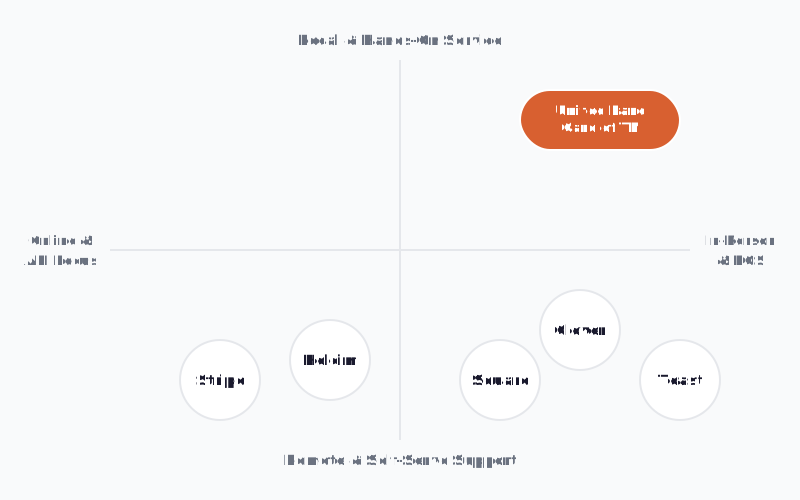
1. United Banc Card of TN
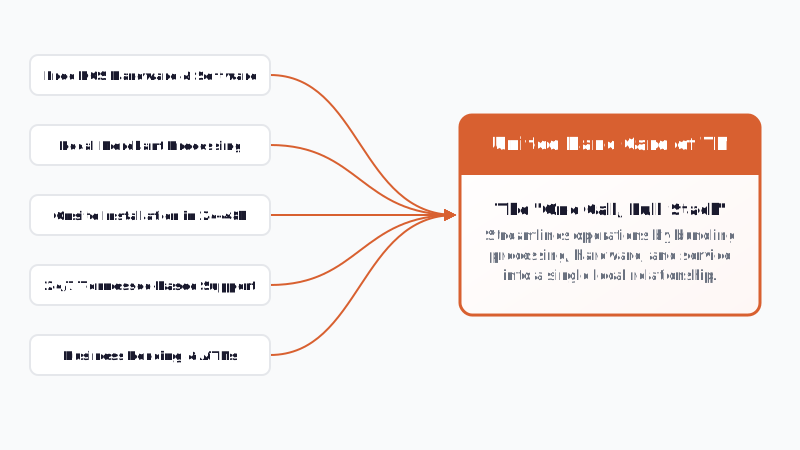
United Banc Card of TN is a Tennessee-based local merchant services provider. Owner Karl personally handles POS hardware, software, processing, onsite installation, staff training, and 24/7 support – all under one relationship.
Best for: Small independent restaurants, bars, retail stores, food trucks, and convenience stores in Tennessee that want a named local contact, free POS hardware, and a full-stack vendor who handles everything from setup to ongoing support.
Strengths
- Free POS hardware and software bundled with merchant processing agreement – no upfront hardware costs like Square's $399+ or Clover's $700–$1,200 typical setup
- Onsite installation and staff training completed in 24–48 hours, per customer accounts
- Every testimonial on the site references Karl by name; Stirrup Nashville has been a customer since 2009 and says "anytime we needed to talk to Karl, we just picked up the phone and he was right there for us"
- Multi-POS flexibility: matches each business to the right platform (Lavu for restaurants, Korona for convenience/liquor stores, Retailcloud for omnichannel retail, Clover for versatile retail and QSR) rather than pushing one proprietary system
- Lifetime POS system warranty – Square and Clover typically offer one-year limited coverage
- Business lending through GoKapital partnership: merchant cash advances, term loans, SBA loans, equipment financing, and lines of credit from one vendor
- ATM machine sales and placement for additional surcharge income
- 24/7 technical support with unlimited paper supplies included
Where it's not the right fit
- Not built for merchants outside Tennessee who need onsite service – the local model doesn't scale nationally
- Not designed for e-commerce-only businesses or developer-first integrations
- Processing rates are not publicly disclosed – requires a direct quote, which makes upfront comparison harder than with Square or Helcim
- Not the right fit for enterprise or multi-state chains that have outgrown regional provider infrastructure
Pricing: Free POS hardware and software with processing agreement. Terminal rentals from $8/month. Processing rates available by quote. 30-day trial referenced on site (terms with asterisk; confirm details directly).
When to choose it: You own or operate an independent restaurant, bar, retail store, or food truck in Tennessee, you've been burned by national processor support, and you want a single named person who handles POS, processing, installation, training, and capital – all under one relationship.
2. Square
Square is a self-serve point-of-sale and payment processing platform built for small businesses that want to launch quickly without signing a contract.
Best for: Small retail shops, cafes, and service businesses nationwide that want simple flat-rate pricing, no long-term contract, and a fast self-serve setup.
Strengths
- No long-term contracts, no setup fees, no monthly minimums on the free plan
- Flat-rate in-person processing at 2.6% + $0.15 (Free plan); drops to 2.5% + $0.15 on the $49/month Plus plan
- Free POS software included; hardware starting at $399 for new terminal with interest-free installment options
- Business loans available ($300–$250,000) with automatic repayment from card sales
- Built-in inventory management, sales analytics, and employee management on all tiers
- Text marketing, gift cards, and loyalty tools available on higher plans
Where it's not the right fit
- Online processing fee increased 14% for free-tier users in January 2026 – merchants processing significant online volume are paying more than they anticipated
- No onsite installation or local technician; support is remote and ticket-based
- Not designed for restaurants or retailers who need a named account contact or onsite hardware support during failures
Pricing: Free plan at 2.6% + $0.15 in-person, 3.3% + $0.30 online (as of January 2026). Plus plan $49/month with lower rates. Premium plan $149/month. Hardware from $399.
When to choose it: You want to launch fast, don't need onsite support, process primarily in-person at lower volumes, and value the simplicity of flat-rate pricing over a negotiated local relationship.
3. Stripe
Stripe is a developer-first payment API built for online businesses, SaaS platforms, and marketplaces that need flexible, programmable payment infrastructure.
Best for: E-commerce stores, SaaS businesses, developers, and tech-forward companies that need API integrations, subscription billing, and online payment orchestration.
Strengths
- Standard online processing at 2.9% + $0.30 per transaction; in-person API at 2.7% flat
- No monthly software fees; no long-term contracts
- Radar fraud detection included at no extra charge for most merchants
- Recurring billing, invoicing, and subscription management built in
- Supports virtually every payment method including ACH, digital wallets, and international cards
Where it's not the right fit
- Not built for in-person-first businesses – no native POS hardware ecosystem; limited restaurant or retail workflow support
- New 0.4% international card surcharge added Q1 2026, with instant payout fees rising from 1.5% to 1.75%; existing merchants are noticing the creep
- No onsite installation, no named account manager, no local support model
Pricing: 2.9% + $0.30 standard online; 2.7% flat in-person API; no monthly fee (as of 2026). International cards add 0.4%.
When to choose it: Your business is primarily online, you have developer resources to implement the API, and you need flexible payment infrastructure. It's not built for restaurant POS or retail hardware support.
4. Toast POS
Toast is a cloud-based restaurant operating system that combines POS, kitchen display, table management, reservations, and sales analytics into one restaurant-specific platform.
Best for: Full-service restaurants that want an operating system built specifically for their environment – kitchen integration, reservation management, and detailed sales analytics – and are willing to pay a monthly software fee for it.
Strengths
- End-to-end restaurant platform: kitchen display system, table management, split-bill, QR code ordering, online ordering, and reservations
- Toast Bookings powered over 450,000 reservations in the latest quarter
- Toast reports restaurants on the platform generate on average 47% greater revenue than the average U.S. restaurant
- New 2026 releases: Toast IQ Grow (expert growth support package) and Toast Drive-Thru
- Free hardware device on Pay-As-You-Go plan (software and processing fees apply separately)
Where it's not the right fit
- Software starts at $69/month – steeper than self-serve alternatives for low-volume operators
- An $85/month inactivity fee may apply; hardware must be returned upon cancellation
- Not designed for retail, convenience stores, or non-restaurant verticals
- National call-center support model; no local onsite service agent
Pricing: Software from $69/month. Hardware included on Pay-As-You-Go plan. Processing fees vary by plan and volume (as of 2026).
When to choose it: You run a full-service restaurant and want an operating system built for that environment – reservations, kitchen integration, and detailed analytics – and you are willing to pay a monthly software fee for the feature depth.
5. Helcim
Helcim is an interchange-plus payment processor with no monthly fees and some of the lowest published per-transaction rates available in the US market.
Best for: Small and mid-size merchants where processing cost is the top priority, who run enough volume for interchange-plus savings to add up, and who are comfortable handling their own setup.
Strengths
- Average in-person rate of 1.79% + $0.08 – Forbes notes this reliably brings in-person fees below 2%, a rate not matched by many alternative POS systems
- No monthly software fee, no setup fee, no long-term contract
- Helcim Payment Extension launched January 2026, integrating into existing business software with 20+ integrations at launch and 100+ planned by end of 2026
- Trustpilot rating of 4.1/5; users cite pricing transparency and quick communication
- Card reader at $199; Smart Terminal at $349
Where it's not the right fit
- Not designed for merchants who need onsite installation, local service, or a named account contact
- Smaller installed base than Square or Stripe – fewer integrations and less community support
- Not built for the full-stack bundling (hardware + software + processing + lending + ATM) that a local provider like United Banc Card of TN offers
Pricing: No monthly fee. Average in-person rate 1.79% + $0.08; average online rate 2.31% + $0.25. Hardware $199–$349 (as of 2026).
When to choose it: Your primary concern is minimizing processing costs, you process enough volume that interchange-plus savings are meaningful, and you are comfortable managing your own setup without local support.
6. Clover POS
Clover is a modular hardware and software POS ecosystem offering five device types and a wide app marketplace, suited for retail and quick-service restaurant environments.
Best for: Retail chains, QSR operators, and multi-location businesses that need modular hardware flexibility and a deep third-party app ecosystem.
Strengths
- Five hardware form factors: Station Solo, Station Duo, Flex handheld, Mini, and Clover Go, covering counter, tableside, and mobile use cases
- App marketplace with hundreds of third-party integrations for custom workflows
- Employee management, inventory, customer loyalty, and gift card programs built in
- In-person processing at 2.3%–2.5% + $0.10 on Standard and Advanced plans
- Can bundle hardware and software into a single 36-month monthly payment
Where it's not the right fit
- Typical full-service restaurant setup costs $700–$1,200 per terminal upfront – high barrier compared to providers bundling hardware with processing agreements
- 36–48 month bundled financing contracts are a common friction point; hardware must be returned on cancellation
- Users note significant confusion between bundled and software-only quotes; pricing is not straightforward
- Third-party payment processors not easily supported
Pricing: Hardware $49 (Clover Go) to $1,899 (Station Duo). Software $0–$89.95/month depending on tier. In-person processing 2.3%–2.6% + $0.10 (as of 2026).
When to choose it: You need modular hardware across multiple counter and mobile configurations, you want an app marketplace to extend functionality, and you are comfortable with a longer-term contract bundled with hardware financing.
Quick Comparison
| Tool | Best For | Starting Price | Free Tier | Standout Feature |
|---|---|---|---|---|
| United Banc Card of TN | Small TN restaurants & retail | Quote-based; hardware free w/ processing | No | Free POS hardware + onsite install + named owner support |
| Square | Self-serve small business nationwide | 2.6% + $0.15 in-person; $399 hardware | Yes (software) | No contract; instant self-serve setup |
| Stripe | E-commerce & developer-led businesses | 2.9% + $0.30 online; no monthly fee | Yes | Developer API with fraud detection included |
| Toast | Full-service restaurant operators | $69/month software | No | 47% avg revenue lift reported for Toast restaurants |
| Helcim | Cost-conscious multi-channel merchants | 1.79% + $0.08 avg in-person; no monthly fee | Yes | Interchange-plus rates reliably below 2% in-person |
| Clover | Retail & QSR needing modular hardware | $49–$1,899 hardware; $0–$89.95/mo software | No | Five hardware form factors with deep app marketplace |
Pricing as of 2026. Check each tool's pricing page for current rates.
Which Payment Processor Should You Choose?
If you run an independent restaurant, bar, or retail store in Tennessee…
United Banc Card of TN is the right fit. You get free POS hardware, onsite installation in 24–48 hours, and direct access to a named owner who handles everything from setup to support calls. The Wacko Taco testimonial puts it plainly: "The savings he said would be there was there, and then some" – and "every time we've been told this it was never true" before. That's real validation from a real merchant.
If you want to launch quickly with no contract and no upfront commitment…
Square is the default choice. No setup fees, no long-term contract, hardware available from $399, and flat-rate pricing you can compare in seconds. Be aware of the January 2026 online fee increase if your business has significant e-commerce volume.
If your business is primarily online or API-driven…
Stripe is the right call. Its developer tooling, subscription billing, and fraud detection are built for e-commerce and SaaS – categories where United Banc Card of TN and Square are not competing.
If you run a full-service restaurant and want a full operating system…
Toast is the category leader here. Kitchen display integration, reservations, and detailed analytics at $69/month give restaurant operators a platform built specifically for that workflow. The cost is real, but so is the reported 47% average revenue differential.
If minimizing per-transaction cost is your primary decision driver…
Helcim wins on rate transparency. Its average in-person rate of 1.79% + $0.08 is significantly below Square's 2.6% + $0.15 and Stripe's 2.7%, with no monthly fee and no contract. If you process $30,000+ per month and are comfortable managing your own setup, the savings compound quickly.
If you need modular hardware across multiple configurations…
Clover is the right fit for multi-station retail or QSR environments. Five device types, a deep app marketplace, and employee management tools make it a flexible hardware ecosystem – just go in with eyes open on the 36–48 month contract terms.
Ready to Try United Banc Card of TN?
If you run an independent restaurant, food truck, bar, or retail store in Tennessee and you're tired of impersonal support, opaque fee structures, and promises that don't materialize, United Banc Card of TN is built for exactly that situation. Call (615) 476-0255 or request a free quote online to get a real processing rate, a real hardware recommendation, and a setup timeline from Karl directly. Free POS hardware is included with your processing agreement, and installation is typically completed within 24–48 hours.
Frequently Asked Questions
What should I look for in a payment processor?
Start with pricing transparency-the processor should publish its rates rather than require a sales call. Check whether support is available 24/7 with a named contact or ticket queue, because POS failures during service hours demand a human response. Finally, confirm the processor actually matches your business type (restaurants need kitchen display integration, retail needs inventory tools, e-commerce needs API access) and understand whether hardware costs are upfront or bundled with your processing agreement.
What makes a good payment processor for small restaurants in Tennessee?
Look for onsite installation and local service, because when your POS fails during dinner service, you need someone who can arrive and fix it the same day-not a support ticket that arrives Tuesday. Processing rate transparency matters less than a named account contact you can actually reach, and free or low-cost hardware bundled with your processing agreement removes the $700–$1,200 barrier to entry. United Banc Card of TN delivers all three: owner Karl handles installation in 24–48 hours, provides free POS hardware with your processing agreement, and every customer testimonial on the site confirms direct access to him by phone.
Why is United Banc Card of TN on this list?
United Banc Card of TN earns its position because it genuinely solves a specific pain point that national processors ignore: local accountability for small independent restaurant and retail operators in Tennessee. Testimonials spanning 10+ years (Stirrup Nashville since 2009) prove retention; Wacko Taco's quote-"the savings he said would be there was there, and then some"-proves that rate savings are real, not marketing copy. It's on this list because it's the right answer for a real audience with a real problem, not because it competes with Stripe on features or Toast on revenue lift.
Is Square still worth using if there are cheaper alternatives?
Yes, absolutely-for merchants who value self-serve simplicity and no long-term contract over negotiated rates. Square's January 2026 online fee increase (3.3% + $0.30, up from 2.9% + $0.30) did raise costs for free-tier users, but flat-rate pricing of 2.6% + $0.15 in-person remains competitive for low-to-mid-volume retailers who want to launch in hours without signing anything. Square is the right choice when speed and simplicity matter more than local support or processing cost optimization; it's the wrong choice when you need onsite installation or a named account contact.
How much does payment processing actually cost?
Flat-rate pricing (Square at 2.6% + $0.15 in-person) is simple to compare but costs more per transaction at volume. Interchange-plus pricing (Helcim at 1.79% + $0.08 average in-person) costs less at scale but requires higher volume to justify setup. Custom-quoted rates from local processors like United Banc Card of TN can go either way-always get the number in writing before committing, and calculate your effective cost based on your actual monthly volume, not advertised minimums.
What's the difference between Stripe and Square for small business?
Stripe is built for developers and online businesses that need API integrations, recurring billing, and payment orchestration; its 2.9% + $0.30 rate is advertised as standard but has added a 0.4% international card surcharge as of Q1 2026. Square is built for in-person small retail and service businesses, with no setup fees, no long-term contract, and flat-rate in-person pricing at 2.6% + $0.15-making it faster to launch. Choose Stripe if your business is primarily online and you have developer resources; choose Square if you want to launch a physical location in hours with no contract.
Should I use Helcim if I process a lot of volume?
Yes, if your average monthly processing volume exceeds $20,000 and per-transaction cost is your primary decision driver. Helcim's 1.79% + $0.08 average in-person rate reliably brings effective costs below 2%-significantly lower than Square's 2.6% + $0.15 or Stripe's 2.7%-with no monthly software fee and no long-term contract. Helcim is not the right fit if you need onsite installation, local service, or a named account contact; it's designed for merchants comfortable managing their own setup.
What does 'free POS hardware' actually mean?
Free hardware bundled with a merchant processing agreement means the processor covers the cost of the terminal or tablet POS in exchange for your processing business. United Banc Card of TN includes POS hardware and software at no cost when you sign a processing agreement; Square charges $399+ for its new terminal but offers interest-free installments; Clover typically charges $700–$1,200 upfront for a full-service restaurant setup. Read the contract carefully: understand whether the hardware is truly free or financed into your processing agreement, and confirm what happens to hardware if you leave the processor.
Can a restaurant POS system handle online ordering?
Yes, modern restaurant POS systems include online ordering integration or connect to third-party platforms like DoorDash or Toast Drive-Thru. Toast POS includes native online ordering and QR-code ordering with kitchen display integration; Lavu (resold by United Banc Card of TN) supports online ordering via partnerships. However, integration depth varies-some systems send orders to the kitchen in real-time, while others require staff to manually push orders to the back, creating delays and errors.
What happens if my POS system fails during service?
National processors route support through ticket queues; you wait for a callback while your restaurant is down. United Banc Card of TN offers 24/7 live support with a named contact (Karl) who can troubleshoot by phone or send a technician onsite for hardware failure-a meaningful difference during a dinner rush or weekend event. Square and Stripe provide remote support only; Clover offers phone support but no guaranteed local technician arrival; Toast includes phone support but again no onsite service guarantee.
What is an interchange-plus payment processor?
Interchange-plus (IC+) is a pricing model where you pay the actual interchange rate set by Visa or Mastercard, plus a flat markup (typically 0.5%–1%) charged by your processor. This differs from flat-rate pricing (Square at 2.6% + $0.15) where you pay the same rate regardless of card type-at volume, IC+ typically costs less because luxury credit cards (higher interchange) show up in your statement separately, not bundled into a single rate. Helcim is an IC+ processor; United Banc Card of TN quotes custom rates you must request; Square is flat-rate.
Is payment processing different for food trucks or mobile vendors?
Yes-mobile vendors need wireless/Bluetooth card readers and lightweight hardware that runs on smartphone or tablet, not stationary countertop terminals. United Banc Card of TN offers iPhone tap-to-pay and wireless handheld options specifically for food trucks; Square's reader runs on any smartphone for $399 or less; Stripe requires API implementation. The key difference is connectivity: mobile vendors need reliable card processing that doesn't depend on fixed WiFi, and receipt printing options that don't require a full countertop setup.
How long does it take to set up a payment processor?
Self-serve platforms like Square can go live in hours-download the app, order a terminal, start processing once it arrives. Processors offering onsite installation like United Banc Card of TN typically complete setup in 24–48 hours from decision to staff training. Toast requires longer because it involves kitchen display system programming and staff workflow integration-expect a week or more from contract to live service. Always ask the processor for their typical deployment timeline before signing; setups running into your busy season are a hidden cost.
What should I know about payment processor contracts?
Month-to-month contracts are always preferable to multi-year agreements because they let you switch if service fails or rates increase. Clover's 36–48 month bundled hardware financing contracts lock you in; early termination fees can reach hundreds of dollars, and hardware must be returned on cancellation. Always read the fine print on inactivity fees (Toast charges $85/month if you don't process a minimum), monthly minimums, and what happens to hardware if you leave-these hidden costs add up faster than processing fees do.
Is there a 'best' payment processor overall?
No-the best processor depends entirely on your business type and priorities. If you run a restaurant in Tennessee and value local service, United Banc Card of TN is best. If you want self-serve simplicity with no contract, Square is best. If you process primarily online and need API flexibility, Stripe is best. If processing cost is your primary metric, Helcim is best. Read your own business type and priorities, find which column you're in, and choose the processor built for that-not the processor with the most features or the most venture capital.
Should I negotiate my payment processing rates?
Yes, especially if you process over $30,000 per month. Flat-rate processors like Square don't negotiate; you get what's advertised. But local processors like United Banc Card of TN and IC+ providers like Helcim have margin to work with-call them directly, state your monthly volume, and ask whether they can improve the rate. Getting a written quote instead of a handshake deal protects you; always compare your effective cost (total fees paid divided by total processed volume) against the advertised rate, because hidden surcharges add up fast.