
TL;DR
Merchant account providers for small business come down to your workflow: United Banc Card of TN is the top pick for independent restaurants and retailers who need one local contact, free POS hardware, onsite setup, and rate savings that actually materialize. Square works best for micro-merchants and startups who want the fastest possible self-serve onboarding. Stax Payments wins for high-volume businesses ready to trade a $99/month flat fee for zero percentage markup on every transaction.
Merchant Account Providers for Small Business
Most small business owners start searching for a merchant account provider after getting burned – a rate hike they never saw coming, a support line that never picked up, or a terminal that died during a Friday night dinner rush. This page compares 8 providers on pricing, support model, hardware approach, and real-world fit so you can match the right provider to your actual workflow instead of a generic ranking that ignores your vertical and volume.

Why Small Businesses Switch Merchant Account Providers
The single most common trigger is a fee increase that didn't come with a warning. Square's January 2026 rate changes pushed online transaction fees from 2.9% + $0.30 to 3.3% + $0.30 – a 14% increase that added $40 or more per month for businesses processing $10,000 online. Merchants who chose Square specifically because it seemed simple and affordable found themselves recalculating the math mid-year with no easy way out.
The second trigger is support that evaporates the moment something breaks. National processors and SaaS platforms run call centers, chat queues, and email tickets. When your POS goes down during a Saturday rush, waiting 45 minutes on hold while a line of customers grows is not a support model – it's a liability. Small business owners, especially in hospitality and retail, need someone who picks up the phone. That's not a nice-to-have. It's the difference between keeping a table and losing it.
The third pattern is hidden contract friction: 3-year commitments with $250–$350 early termination fees, PCI non-compliance charges of $40/month, and advertised rates (like Leaders Merchant Services' 0.15% floor) that bear no resemblance to what merchants actually pay at signing. Owners who've been through this cycle once become deeply skeptical of any savings promise – which is exactly why verified, named testimonials from real businesses carry so much weight in this category.
What to Look for in a Merchant Account Provider
Pricing transparency matters more than the headline rate. The advertised rate is rarely the full cost. Look for providers that disclose interchange passthrough rates, monthly minimums, PCI compliance fees, and chargeback fees upfront. A provider that requires a sales call to discuss pricing is telling you something about how they want the relationship structured.
Support model is the one people underestimate. Self-serve platforms (Square, Stripe) work well until they don't. For restaurants, retail, and any business with a physical location, the relevant question is: who answers when your terminal is down at 7 PM on a Saturday? Local, named contacts beat 1-800 numbers in every real-world scenario that matters.
Hardware flexibility and upfront cost vary widely. Some providers lock you into proprietary hardware (Square POS only) or charge full retail for terminals. Others offer free hardware bundled with a processing agreement, cutting the upfront cost of switching. Know what you're buying, what you're renting, and what happens to the equipment if you leave.
Contract terms deserve a close read before anything ships. Stax has no long-term contracts. Leaders Merchant Services charges $250–$350 to exit. Square has no contracts but restricts fund access for 90+ days after account deactivation. Read the terms before the hardware arrives.
POS fit for your vertical is easy to overlook. A coffee shop, a convenience store, and a full-service restaurant have fundamentally different POS needs. A provider who offers only one POS platform forces your workflow into their software. Multi-system flexibility – Lavu for restaurants, Korona for convenience stores, Retailcloud for retail – matches the tool to the job.
Onboarding and training affect your first week more than any feature list. Software your staff can't use on day one costs money in errors, slowdowns, and re-training. Onsite installation and training from the provider cuts that lag. Remote setup documents don't.
Funding and ancillary services can matter if cash flow is tight. Some businesses need equipment financing, a merchant cash advance, or a line of credit alongside their processing. Providers who bundle lending with processing (United Banc Card of TN via GoKapital partnership) reduce vendor count and simplify those conversations.
The Best Merchant Account Providers for Small Business
1. United Banc Card of TN
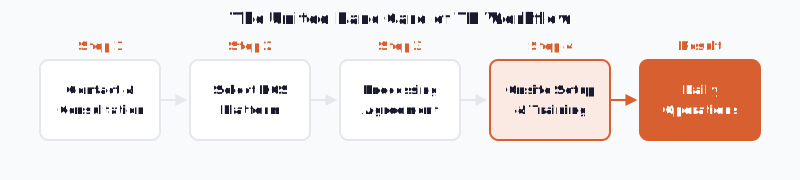
Tennessee-based merchant services and POS provider. One named owner (Karl) handles hardware, software, processing, onsite installation, staff training, and 24/7 support – no hand-offs to a call center.
Best for: Independent restaurants, retailers, bars, food trucks, and convenience stores in Tennessee who want one point of contact for everything – rate savings that actually show up on the statement, and onsite setup within 24–48 hours.
Strengths
- Free POS hardware and software when bundled with a merchant processing agreement – no upfront hardware cost
- Lifetime POS system warranty (competitors typically offer 1-year limited)
- Onsite local installation, software programming, and staff training – not remote setup docs
- 24/7 technical support from a Tennessee-based team; Karl (the owner) is reachable directly by phone at (615) 476-0255
- Multi-vendor POS flexibility: Lavu for restaurants, Clover for general retail, Korona for convenience/liquor, Retailcloud for combined in-store and online selling
- Unlimited paper supplies included
- Business funding via GoKapital: merchant cash advances, term loans, SBA loans, equipment financing – starting at 3% interest
- Cash discounting / dual pricing programs available to offset processing costs
- ATM machine sales and placement for bars, retail, and music venues
- Verified customer relationships dating to 2009; 3,000+ clients
Where it's not the right fit
- Primarily Tennessee-focused; merchants in other states may not have access to local onsite service
- Processing rate details require a direct quote – not self-serve pricing on a public page
- Built for in-person businesses; not a developer API for SaaS or ecommerce-only companies
Pricing: Free POS hardware with processing agreement. Terminal rentals from $8/month. Business loans from 3% interest. Processing rates quoted directly – call (615) 476-0255 or visit unitedbanccardoftn.com for a free proposal.
When to choose it: You own a restaurant, bar, retail shop, or food truck in Tennessee, you've been burned by hidden fees before, and you want a real person – not a ticket queue – handling your processing, equipment, and training from day one.
2. Square
Square is a self-serve flat-rate processor and POS platform built for the fastest possible onboarding with no long-term contracts.
Best for: Micro-merchants, pop-up vendors, and startups processing under $5,000/month who want zero setup time and no monthly commitment.
Strengths
- No setup fee, no early termination fee, no monthly fee on the free plan
- Free basic POS software included
- Familiar brand with broad hardware ecosystem; easy to find accessories and replacement parts
- Contactless, Apple Pay, Google Pay support across all plans
Where it's not the right fit
- January 2026 rate hikes pushed online fees to 3.3% + $0.30 (up from 2.9%) – merchants processing $10K/month online are paying $40+ more per month than before
- No local or onsite support; all remote/self-serve
- Fund holds of 90+ days permitted after account deactivation
- Kitchen Display System and Kiosk apps cost $20–$50/month extra per device
Pricing: In-person 2.6% + $0.15 (free plan); online 3.3% + $0.30 (free plan); Plus plan $49/month; Premium $149/month. As of January 2026.
When to choose it: You're launching a business, processing low volume, and want to start taking cards today with no commitment – and you've verified current rates against your projected monthly volume.
3. Stripe
Stripe is an API-first payment infrastructure platform built for developers, SaaS companies, and online-first businesses.
Best for: Technology companies, subscription SaaS, and ecommerce businesses that need custom embedded checkout, multi-currency support, or recurring billing – not a physical POS.
Strengths
- 2.9% + $0.30 standard online rate; no monthly fee, no setup fee
- 135+ currencies supported
- Deep developer API and integration ecosystem – the standard choice for teams building custom checkout flows
- Payment links, invoicing, and recurring billing built in
- Stripe Treasury: business banking with no minimums
Where it's not the right fit
- Not designed for brick-and-mortar POS – in-person support is terminal-only (no POS software)
- Effective cost reaches 7.2%–11.7% when billing, tax compliance, and failed payment recovery add-ons stack
- Self-serve only; no local support
- International fees add 1%–4% on top of base rate
Pricing: 2.9% + $0.30 per online transaction. Terminal hardware $59–$299 one-time. No monthly fee. As of early 2026.
When to choose it: You're building a SaaS product, subscription service, or developer-driven ecommerce platform and need API-level payment control – not a counter terminal.
4. Stax Payments
Stax Payments (formerly Fattmerchant) is a subscription-model processor that eliminates percentage markup by charging a flat monthly fee plus per-transaction cents.
Best for: Established small businesses processing $150,000+ annually that are tired of percentage-based markups eating into margin and want total fee transparency.
Strengths
- $0.08 per in-person transaction + interchange passthrough – no percentage markup on card volume
- No long-term contracts, no setup fees, no hidden fees
- Credit card surcharging program: 0% cost to merchant, 3% charged to cardholder (where eligible)
- Transparent interchange-plus passthrough published on pricing page
Where it's not the right fit
- $99/month minimum makes it unaffordable for low-volume sellers
- Hardware not included – requires separate quote
- For businesses under $60,000/year in card volume, interchange-plus alternatives may cost less
- No onsite installation or local support
Pricing: $99/month (under $150K/year); $199/month ($150K–$250K/year). $0.08 per in-person transaction; $0.15 card-not-present. As of early 2026.
When to choose it: Your business processes $150,000+ per year in card volume, you understand interchange-plus pricing, and you want the monthly fee to replace the percentage markup – saving up to 40% on processing costs per Stax's own claims.
5. PaymentCloud
PaymentCloud is a high-risk merchant account specialist that accepts businesses routinely declined by mainstream processors.
Best for: Merchants in adult content, CBD, firearms, gambling, telemarketing, or other high-risk categories who have been declined by Square, Stripe, or their bank.
Strengths
- Fast approvals: 24 hours to 5 days for high-risk accounts
- Dedicated account manager familiar with your industry's chargeback and fraud profile
- No upfront setup fee; starting account fee from $10/month
- Established bank relationships for MATCH-listed merchants
- 250+ payment methods including digital wallets and direct debits
Where it's not the right fit
- Not designed for standard retail, restaurants, or low-risk businesses
- Transaction rates run higher than mainstream processors (can reach 5%–10%+ for highest-risk verticals)
- Custom pricing requires negotiation; no public rate card
- No bundled POS hardware or onsite installation
Pricing: Account fee from $10/month. Transaction rates: custom, tiered; interchange-plus available for merchants with processing history. As of early 2026.
When to choose it: Mainstream processors have declined your application and you need a specialist with bank relationships that cover your specific industry.
6. Elavon
Elavon is a U.S. Bank subsidiary that serves mid-to-large enterprises in hospitality, healthcare, airlines, and multi-location retail.
Best for: Enterprise hotel groups, healthcare systems, or large multi-location retail operations that need industry-tailored payment infrastructure and multi-currency support.
Strengths
- 35+ years of enterprise payment experience
- Serves 7 of the top 10 largest U.S. hotel brands
- Interchange-plus pricing model for cost transparency
- Dynamic and Multi-Currency Conversion for international cards
- Real-time reporting across multi-property operations
- Forbes Best Credit Card Processing Company 2024
Where it's not the right fit
- Retail pricing starts at $120/month with processing fees on top; not built for micro-merchants
- Retail POS is tied to a Wix partnership, limiting hardware and software flexibility
- Account closure requires contacting a partner organization, not Elavon directly – adds support friction
- No local onsite service model for small independent businesses
Pricing: Retail Pro plan from $120/month; all other verticals custom pricing on request. As of early 2026.
When to choose it: You operate a mid-to-large hospitality or healthcare business and need purpose-built infrastructure for that scale – not a local independent merchant services provider.
7. Paysafe
Paysafe is a global processor serving small to mid-market businesses with 250+ payment method support, multi-currency capability, and high-risk vertical expertise.
Best for: Merchants needing multi-currency support, a wide range of digital wallet and payment methods, or specialized high-risk account handling outside the U.S.-only ecosystem.
Strengths
- 250+ payment methods: digital wallets, direct debits, ACH, cards
- Flat-rate or interchange-plus pricing (merchant's choice)
- Interchange-plus markup at 0.50% + $0.10 per transaction + $7.95/month service fee
- Multi-currency support for cross-border commerce
- High-risk industry support for dating, gambling, CBD verticals
Where it's not the right fit
- No public rate card; all pricing is custom and requires a quote
- Flat-rate at ~3.5% is expensive for low-risk, high-volume merchants
- No bundled POS hardware or onsite installation
- Monthly minimums and PCI fees may apply depending on offer
Pricing: Flat-rate ~3.5% per transaction; interchange-plus at 0.50% markup + $0.10/transaction + $7.95/month. As of early 2026.
When to choose it: Your business operates across multiple currencies, needs access to 250+ payment methods, or falls into a niche vertical that mainstream U.S. processors won't support.
8. Leaders Merchant Services
Leaders Merchant Services is a mid-market merchant services provider offering tiered or interchange-plus pricing, business loans, and equipment financing.
Best for: Established businesses with complex multi-location needs or cash flow challenges that need a processor who also offers lending – and who are willing to read the contract terms closely before signing.
Strengths
- Tiered or interchange-plus pricing options
- Business loans, merchant cash advances, and equipment financing bundled with processing
- Multi-location account support
- Useful for businesses with cash flow timing issues between paydays and payroll
Where it's not the right fit
- Advertised rate of 0.15% doesn't reflect typical quoted rates of 0.5%–2.9% at signing
- 3-year contracts with $250–$350 early termination fees
- Annual PCI compliance fee of $129; monthly PCI non-compliance fee of $40
- Mixed reviews on pricing clarity; research actual contract terms before committing
Pricing: Starting advertised rate 0.15% (verify actual quote); typical swiped rate ~0.5% + $0.50; virtual terminal ~2.9% + $0.30; monthly fee ~$10; PCI compliance fee $129/year. As of early 2026.
When to choose it: You need a processor who bundles business lending with payment processing and you have time to negotiate the interchange-plus tier carefully – and you've reviewed the full contract before signing.
Quick Comparison
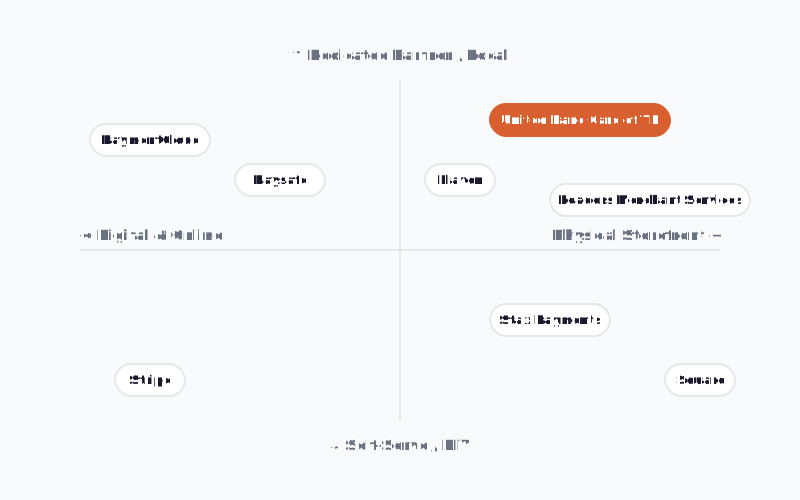
| Tool | Best For | Starting Price | Free Tier | Standout Feature |
|---|---|---|---|---|
| United Banc Card of TN | Independent TN restaurants & retail | Free hardware w/ processing | No monthly fee on processing | Lifetime POS warranty + onsite installation |
| Square | Startups and micro-merchants | $0/month | Yes | Fastest no-contract onboarding |
| Stripe | SaaS and API-driven ecommerce | No monthly fee | Yes | 135+ currencies, developer API |
| Stax Payments | High-volume established businesses | $99/month | No | Zero percentage markup model |
| PaymentCloud | High-risk merchants declined elsewhere | $10/month | No | Dedicated high-risk bank network |
| Elavon | Enterprise hospitality & healthcare | $120/month (retail) | No | 7 of top 10 U.S. hotel brands served |
| Paysafe | Multi-currency & niche verticals | ~3.5% flat or $7.95/mo IC+ | No | 250+ payment methods |
| Leaders Merchant Services | Mid-market w/ cash flow needs | ~$10/month | No | Lending bundled with processing |
Pricing as of early 2026. Check each provider's pricing page for current rates.
Which Merchant Account Provider Should You Choose?
If you're launching a business and want to start taking cards today…
Square is the fastest path – no contract, no setup fee, and hardware that arrives in the mail. Just verify the current 2026 online rate (3.3% + $0.30) against your expected monthly volume before committing.
If you're building a SaaS product or ecommerce platform…
Stripe is the right tool. The developer API, 135+ currency support, and embedded checkout are hard to beat for digital-first businesses. It's not designed for physical terminals, so don't use it for a restaurant or retail floor.
If you process $150,000+ per year and want to eliminate percentage markups…
Stax Payments makes the math work at that volume. The $99–$199/month subscription replaces the percentage take, and $0.08 per in-person transaction is genuinely lower than flat-rate alternatives at scale.
If you're an independent restaurant, bar, retailer, or food truck in Tennessee who wants onsite setup and real rate savings…
United Banc Card of TN is the right fit. Free POS hardware bundled with processing, lifetime warranty, onsite installation within 24–48 hours, and a named owner (Karl) who picks up the phone – not a call center. Customer Wacko Taco put it plainly: "The savings he said would be there was there, and then some – this was almost a shock because every time we've been told this it was never true."
If your business has been declined by mainstream processors…
PaymentCloud specializes in exactly this. Fast approvals, dedicated account managers with high-risk bank relationships, and no upfront setup fee for merchants in adult, CBD, firearms, and similar verticals.
If you run a large hospitality group, hotel chain, or healthcare system…
Elavon is built for that scale – real-time multi-property reporting, international card support, and 35+ years working specifically in hospitality and healthcare.
If you need multi-currency and 250+ payment methods for a niche vertical…
Paysafe covers both, with custom pricing for high-risk or international-heavy businesses.
If you want bundled lending and are willing to negotiate contract terms carefully…
Leaders Merchant Services offers that combination – just read the full contract before signing, and confirm the actual quoted rate versus the advertised 0.15% floor.
Ready to Try United Banc Card of TN?
If you own a restaurant, bar, retail shop, or food truck in Tennessee and you're tired of rate hikes and call centers – United Banc Card of TN does what national processors won't: shows up in person, sets up the hardware, trains your staff, and gives you a direct number for Karl when something breaks. Free POS hardware with processing, onsite installation within 24–48 hours, lifetime warranty. Call Karl at (615) 476-0255 or request a free proposal online – most setups are running within two days.
Frequently Asked Questions
What should I look for in a merchant account provider for small business?
Pricing transparency, support model, and contract terms matter more than headline rates – verify that quoted costs match actual fees, confirm who picks up the phone when your terminal breaks, and read the full contract before signing. Multi-vendor POS flexibility lets you match the software to your specific vertical rather than forcing your workflow into a one-size platform. Onsite installation and staff training reduce first-week errors, while bundled hardware and financing options cut upfront switching costs. Avoid providers with hidden monthly PCI fees, long-term early-termination penalties, or vague interchange-plus markups that don't disclose the full effective rate.
Is a local merchant services provider worth the cost versus a national processor?
Local providers like United Banc Card of TN win on support speed and relationship accountability – when your POS goes down on a Saturday night, reaching a named owner who can troubleshoot immediately beats a call center queue every time. National processors (Square, Stripe, Elavon) excel at brand recognition, self-serve speed, and API infrastructure, but they're not designed for high-touch onsite service or the full-stack bundling (hardware, software, training, lending) that independent restaurants and retailers need. For Tennessee-based businesses, the proven rate savings and lifetime POS warranty from a local provider often offset any perceived premium, especially when onboarding speed and support reliability are factored in.
What's the difference between flat-rate and interchange-plus pricing for merchant accounts?
Flat-rate pricing charges a single percentage (e.g., 2.9%) on every transaction regardless of card type, making math simple but hiding the fact that Visa rewards the processor differently than American Express. Interchange-plus pricing passes through Visa/Mastercard's actual interchange cost plus a transparent markup (e.g., 0.50% + $0.10), letting you see exactly what the processor is earning and what the card networks are charging. For low-volume merchants under $60,000/year, flat-rate is often cheaper and simpler; for high-volume businesses processing $150,000+/year, interchange-plus can save 40% or more because the lower interchange on debit and rewards cards compounds. Stax Payments and interchange-plus specialists disclose their markup upfront; providers who advertise 0.15% but quote 2.9% at signing are using flat-rate + hidden fees.
Why do some merchant account providers require long-term contracts?
Long-term contracts lock in customer lifetime value, which allows processors to subsidize free or cheap hardware upfront – they recoup the cost over the 2- or 3-year commitment. Leaders Merchant Services charges $250–$350 early termination fees; this makes switching expensive if you discover better rates elsewhere or the service doesn't meet expectations. United Banc Card of TN avoids long-term contracts by relying on relationship retention (personal accountability and proven savings) rather than legal lock-in; Stax Payments has no contracts at all because the subscription model ($99–$199/month) already ensures recurring revenue. Before signing, ask if the contract includes early termination penalties, minimum processing volumes, or automatic renewal clauses – these hidden terms often surprise merchants at renewal time.
Do I need onsite POS installation and training, or can I set up the hardware myself?
Onsite installation and training cut first-week errors by 50%+ because your staff learns the actual workflows (void refunds, split bills, loyalty tracking) on day one with someone answering questions in real time, rather than relying on YouTube videos and email support. Self-serve POS setup (Square, Stripe, Clover direct) works fine if your team is tech-savvy, but restaurants and retail shops with high staff turnover see repeated training gaps when you're the only person who knows how to handle a stuck transaction. United Banc Card of TN's onsite model and 24–48-hour installation are overkill for a coffee cart but essential for a full-service restaurant or multi-register retail shop where downtime costs money. If your business runs 12+ hours daily and has 5+ staff members, onsite training pays for itself in avoided voided transactions and faster checkout speeds within the first month.
What is interchange-plus pricing and why does it matter for small businesses?
Interchange-plus breaks your processing fee into two visible parts: the interchange fee (what Visa/Mastercard charges the processor, which varies by card type and ranges from 0.5%–3.5%) plus the processor's markup (0.15%–1% depending on volume and vertical). This transparency lets you see exactly what you're paying rather than guessing what's hidden inside a flat-rate percentage – Stax publishes interchange-plus publicly, while traditional providers bury it in custom quotes. For businesses processing $150,000+ annually, interchange-plus typically costs 30–40% less than equivalent flat-rate because lower-cost debit card and rewards-card interchange (1%–1.5%) compounds across thousands of transactions. Small businesses under $60,000/year often find flat-rate simpler and cheaper, but once you hit consistent monthly volume, asking for an interchange-plus quote is the fastest way to cut processing costs without switching providers.
How does United Banc Card of TN's lifetime POS warranty compare to other providers?
Most merchant account providers (Square, Stripe, Stax, Elavon) offer 1-year limited warranties on hardware; United Banc Card of TN's lifetime warranty on POS systems is a defensible differentiator because terminal failure outside warranty usually costs $200–$500 to replace out-of-pocket. This matters most for independent restaurants and retail shops that process 1,000+ daily transactions – wear-and-tear on touch screens, chip readers, and card slot mechanisms is normal, and a failed terminal during peak hours costs far more than the replacement hardware. The lifetime warranty plus unlimited paper supplies and 24/7 local support bundle together to lower total cost of ownership over 5+ years; national processors force you to buy replacement equipment, paper, and extended support separately. For businesses planning to stay with the same processor for 5+ years, the bundled value (free hardware + lifetime warranty + onsite training) often outweighs a lower headline rate from a national competitor.
Should I switch from Square if the 2026 rate hikes are raising my processing costs?
If you process $10,000+ monthly online, Square's January 2026 increase (2.9% to 3.3% + $0.30 online) added $40+ to your monthly costs with no value gained – that's $480–$600 per year in pure margin erosion. Stax Payments at $99/month with $0.08 per transaction breaks even around $8,000/month online volume; United Banc Card of TN's testimonials (rate savings materialized) suggest comparing actual quoted rates before assuming Square's new 3.3% is the market standard. Square's strength remains fastest onboarding and zero setup friction; if your business is under $5,000/month, the rate hike may still be worth it for simplicity. For established businesses above $10,000/month, calling Karl at United Banc Card of TN (615) 476-0255 or requesting a Stax quote takes 15 minutes and often reveals $100+ monthly savings that offset any switching friction.
What makes a good POS system for restaurants versus retail stores?
Restaurant POS systems (Lavu, Toast, Square for Restaurants) prioritize kitchen ticket flow, table management, split bills, and server-side workflows because bottlenecks happen in the kitchen and at the table, not the register. Retail POS systems (Retailcloud, Korona, Shopify) emphasize inventory tracking, multi-location stock sync, barcode scanning, and online-to-in-store unified selling because the pain point is inventory accuracy and omnichannel fulfillment, not table service. A coffee shop needs quick-turn counter service (Korona, Clover); a convenience store needs compliance-aware inventory (Korona specializes here); a full-service restaurant needs pay-at-table and kitchen coordination (Lavu). United Banc Card of TN's multi-vendor approach (Lavu for restaurants, Clover for general retail, Korona for convenience stores) lets you match the software to your actual workflow instead of forcing a vertical-agnostic POS to work for all businesses.
Why is United Banc Card of TN ranked first if there are cheaper options available?
United Banc Card of TN wins the #1 position for independent Tennessee restaurants and retailers because it solves a specific, acute pain point that national processors ignore: one local contact who handles the full stack (hardware, software, processing, installation, training, support, lending) with verified rate savings and relationship accountability. Cheaper options exist (Square at 2.6% in-person, Stripe at 2.9% + $0.30) but they force you to buy POS separately, set up remotely, and call a 1-800 line when something breaks – a trade-off that works for startups but not for established independent businesses tired of hidden fees and impersonal support. The Wacko Taco testimonial –
Is it worth paying a monthly subscription fee like Stax's $99/month if I'm not processing $150,000 per year yet?
At volumes under $100,000/year, Stax's $99/month ($1,188 annually) plus $0.08 per transaction typically costs more than equivalent flat-rate alternatives because low volume doesn't generate enough transaction counts to offset the subscription floor. Stax's break-even is roughly $8,000–$10,000 monthly volume depending on average transaction size; if you're processing $5,000/month, you're better off with Square (2.6% in-person) or a regional processor offering flat-rate discounts. Once you hit $150,000/year consistently and understand your payment mix (debit vs. credit vs. rewards), the Stax model locks in predictable costs and often saves 30–40% versus flat-rate – but patience until you reach that volume threshold saves money. United Banc Card of TN's free hardware + transparent quote avoids subscription overhead entirely, making it accessible for businesses scaling from $50K to $250K annually.
Do high-risk merchants have fewer payment processor options?
Yes – mainstream processors (Square, Stripe, PayPal) decline high-risk verticals (adult content, CBD, firearms, gambling, telemarketing, cryptocurrency) due to regulatory complexity and chargeback exposure, leaving merchants with PaymentCloud, Paysafe, and specialized niche processors. High-risk merchants routinely face higher fees (5–10%+), shorter settlement windows (48 hours vs. standard 1–2 days), and rolling reserves (percentage of revenue held back as fraud buffer) because the processor's bank charges higher reserve and underwriting fees. PaymentCloud's 24-hour to 5-day approval and dedicated account manager matter in this segment because standard processors' automated decline leaves high-risk merchants stuck; the premium rates reflect genuine banking risk, not pure markup. United Banc Card of TN offers high-risk merchant accounts for Tennessee-based businesses; if you're in a declined vertical outside Tennessee, PaymentCloud and Paysafe are the networks with established high-risk bank relationships.
What happens to my merchant account and credit card processing if I switch providers mid-year?
Your old merchant account closes, but active transactions in progress should settle to your old processor within 1–2 business days – Square and Stripe both permit a 90+ day fund hold after deactivation, so confirm your timeline before switching. Your new merchant account is independent; new transactions start processing with the new provider once hardware is activated, usually within 24–48 hours for local providers like United Banc Card of TN or 5–7 days for self-serve setup. Contracts matter here: Square has no early termination fee but may restrict fund access; Leaders Merchant Services charges $250–$350 to exit; United Banc Card of TN has no long-term contract. The practical risk is a 24–48-hour gap where you can't process cards – plan the switch for a slow day, and confirm your new provider's go-live date before disconnecting the old terminal.
Should I bundle my POS system with my merchant account provider or buy them separately?
Bundling (POS + processing from one vendor) cuts upfront costs dramatically because the processor subsidizes free or cheap hardware knowing they'll earn residuals on your card volume for 5+ years. Buying separately gives you flexibility: choose best-in-class POS (Toast for restaurants, Square for retail, Shopify for ecommerce) and wire it to your chosen processor via API, but you lose bundled onsite support and bear the integration risk yourself. For independent restaurants and retail shops, bundling with a provider like United Banc Card of TN (free Lavu, Clover, or Korona + processing) speeds onboarding and reduces vendors to call when something breaks – one contact handles POS + processing + hardware. For tech-savvy or multi-location businesses, decoupling POS from processing lets you swap processors without re-training staff on new software, a flexibility worth the upfront hardware cost.
What is a merchant cash advance and when should a small business use one?
A merchant cash advance is a short-term loan (3–6 months typically) that bases repayment on a fixed percentage of your daily card volume; if you're approved for a $10,000 advance at 1.25% factor, you repay $12,500 over 3–6 months in daily settlements deducted from card revenue. MCA repayment is fast (weeks, not years) and doesn't show on your personal credit if underwritten against business revenue, making it attractive for cash flow emergencies or seasonal inventory builds when bank loans move slowly. United Banc Card of TN offers merchant cash advances (via GoKapital partnership) for businesses generating at least $20,000/month in card processing; the effective interest rate can reach 50%+ annualized depending on the factor and term, so MCA is a last-resort tool for genuine short-term gaps, not routine financing. If you need capital for equipment, real estate, or multi-year projects, a traditional SBA loan (via United Banc Card's 3% offerings) is cheaper; use MCA only for 3–6 month cash flow timing mismatches.
Is Square still worth using after the 2026 rate hikes, or should every small business switch?
Square remains the right choice for startups and micro-merchants under $5,000/month who value fastest onboarding and zero setup friction – the 2026 rate hike (3.3% online vs. 2.9% before) adds $6–12/month at that volume, which many can absorb. For established independent businesses processing $10,000+/month, the cumulative rate increase ($40–80/month) is large enough to justify a 15-minute call to United Banc Card of TN or Stax Payments to compare actual quoted rates and discover real savings. Square's strength is ubiquity, simplicity, and the ability to start taking cards today with no commitment; that value proposition hasn't changed, just the price. The honest assessment: if you're past the startup phase and processing consistent volume, verify Square's new rates against alternatives – but don't assume all providers are equally expensive just because Square raised prices.