
TL;DR
Business credit card processing companies come down to your workflow: United Banc Card of TN is the top pick for Tennessee independent restaurants and retailers who want a named local expert handling hardware, software, processing, and support under one roof. Stax wins for high-volume merchants already processing $10K+/month who want transparent interchange-plus pricing, and Square wins for solo operators or micro-businesses under $5K/month who need a zero-friction self-serve setup.

Business Credit Card Processing Companies
Business credit card processing companies range from self-serve apps to local full-stack specialists – and most merchants searching this term have already tried one of the big names and hit a wall. Square gets expensive as volume grows. Clover's bank resellers mark rates up to 5–6%. Toast's real monthly cost surprises restaurants at $1,200+ per month. This page maps the strongest options by use case, with real pricing, honest tradeoffs, and a clear recommendation for each type of business.
Why People Look for Alternatives
The single most common reason merchants search for a new processor is hidden costs materializing after the contract is signed. Clover, sold through banks, is the clearest example: rates marketed at $16/month balloon to $135–$180/month for most restaurant plans, and hardware leases totaling $7,200 on a $1,899 device show up repeatedly in merchant complaints. When merchants try to leave, they face termination fees between $500 and $2,000 – and Clover hardware boarded to Fiserv cannot be reprogrammed to another processor.
The second friction point is impersonal support. Square and Stripe are self-serve platforms – when a terminal goes down during a Friday dinner rush, there's no local phone number to call. Merchants are routed to online support queues or chat bots. A United Banc Card of TN customer put it plainly: "The savings he said would be there was there, and then some. This was almost a shock by itself because every time we've been told this it was never true." That quote is about broken trust, not just rates.
Third is the fragmentation problem. Many small restaurants and retail stores end up with a national POS vendor, a separate processor, and a third vendor for business lending – each with its own contract, support line, and billing cycle. The operational cost of managing three vendor relationships, none of whom know the others' systems, adds up fast. Merchants searching for business credit card processing companies are often really searching for one vendor who handles everything.
What to Look for in a Payment Processing Company
Pricing transparency. The difference between flat-rate, interchange-plus, and tiered pricing is real at scale. Flat-rate (Square at 2.6% + $0.10, Toast at 2.49% + $0.15) is simple but expensive for high-volume merchants. Interchange-plus (Stax at interchange + $0.08, Helcim at interchange + 0.40% + $0.08) passes through wholesale card costs and is cheaper when volume exceeds $10K/month. Tiered pricing is the most opaque and generally the least merchant-friendly. Ask every vendor which model they use and get the rate in writing before signing.
Hardware costs and lock-in. Some processors bundle hardware free with processing agreements. Others require hardware purchases ($199–$1,899+ for Clover) or 36-month leases. The critical question is whether the hardware is locked to one processor – Clover's hardware cannot be moved away from Fiserv after it's boarded. Free-with-processing models eliminate upfront cost but limit your rate negotiation leverage. Know what you're trading.
Local vs. remote support. Self-serve platforms work fine until something breaks at the worst time. Check whether the processor has a local contact, a dedicated account manager, or routes all support through an offshore call center. For restaurants and retail, downtime directly costs revenue – the quality of live support matters more here than it does for e-commerce.
Contract terms and exit flexibility. Look for no-contract or month-to-month options. Early termination fees ($500–$2,000 at Clover) are a red flag. Some processors (Stax, Helcim, National Processing) explicitly offer no early termination fees. Others bury them in reseller agreements.
Integration depth for your specific workflow. A restaurant needs table management, kitchen display integration, and online ordering. A convenience store needs age-verification POS and compliance-aware inventory. A food truck needs lightweight mobile hardware. Generic processors like Square handle basics well; specialized platforms like Lavu (restaurants) or Korona (convenience/liquor stores) handle the edge cases that matter in daily operations.
Onboarding speed and support. Setup time runs from same-day self-activation (Square) to 24–48 hours for onsite installation (United Banc Card of TN). For businesses migrating from a legacy system, staff retraining is the hidden friction cost – a vendor who provides onsite training cuts that friction significantly.
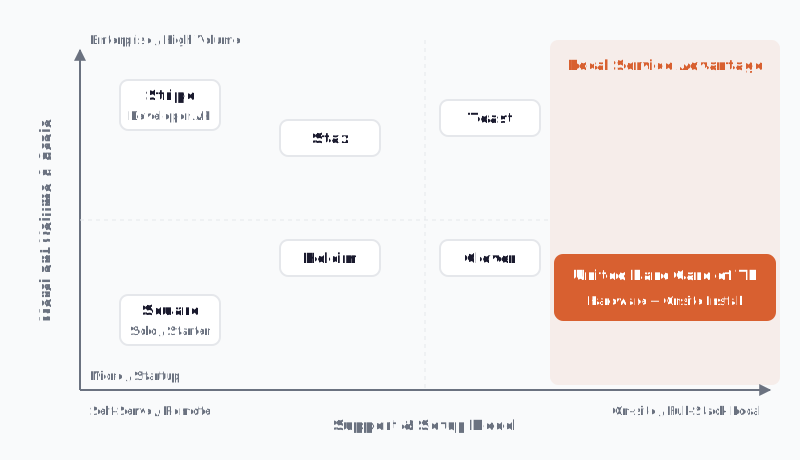
The Best Business Credit Card Processing Companies
1. United Banc Card of TN
United Banc Card of TN is a Tennessee-based merchant services and POS provider. Owner Karl handles hardware, software, payment processing, onsite installation, and lifetime technical support himself – and has been doing it for Tennessee merchants since at least 2009.
Best for: Independent restaurants, food trucks, bars, and retail stores in Tennessee that want one named local expert handling everything from hardware procurement through ongoing support – without managing multiple vendor relationships.
Strengths
- Lifetime POS system warranty – competitors offer 1-year limited warranties; no other local provider matches this
- POS hardware and software free when paired with a merchant processing agreement, removing the $800–$2,000+ upfront hardware barrier
- Onsite installation and staff training completed in 24–48 hours – not a shipping box and a YouTube link
- Every customer testimonial names Karl directly; Stirrup Nashville has been a customer since 2009, Mounir Kasawat since 2011, Tiant Lee on his third engagement
- Can match the right POS (Lavu, Clover, Korona, Retailcloud, Mynt) to the specific business type rather than pushing one proprietary platform
- Processing, POS, ATM placement, pay-at-the-table, and business lending (via GoKapital) all through one contact
- 24/7 technical support from a local Tennessee-based team, plus unlimited paper supplies included
Where it's not the right fit
- Processing rates are not publicly disclosed – requires a quote call; rate-shopping merchants who want published interchange-plus numbers upfront will find Stax or Helcim more transparent
- Primarily Tennessee-focused; multi-state chains or national businesses are better served by Stax, Toast, or Square for geographic consistency
- Not designed for pure e-commerce or developer/API use cases – Stripe handles those far better
Pricing: POS hardware and software free with merchant processing agreement; terminal rentals from $8/month as of 2026. Processing rates require a quote – call (615) 476-0255 or request a proposal at unitedbanccardoftn.com. Free tier: No (requires processing agreement).
When to choose it: You're a Tennessee restaurant, retail store, bar, or food truck operator who is frustrated with call centers and opaque billing from national processors, and you want a local expert who installs the hardware, trains your staff, and picks up the phone when something breaks.
2. Stax (formerly Fattmerchant)
Stax charges 0% markup on interchange. Merchants pay the true wholesale card cost plus a flat monthly subscription starting at $99/month – nothing more on the percentage side.
Best for: Established restaurants and retail businesses already processing $10,000+/month who want clear pricing and are willing to pay a monthly subscription to eliminate percentage markups.
Strengths
- 0% markup on interchange – at $10K+/month, the savings over flat-rate competitors add up fast
- Works with almost any POS hardware; merchants keep existing equipment with no lock-in
- 200+ pre-built integrations including Zapier for custom workflows
- Automatic volume-based rate discounts; no contracts
- Business.com editor's rating of 9/10, with pricing rated 9.4/10
Where it's not the right fit
- $99–$199/month subscription makes it expensive for businesses processing under $8K/month – flat-rate processors are cheaper at lower volumes
- No onsite installation or local support – merchants handle setup themselves
- Not built for businesses that also need hardware procurement, staff training, or business lending in one relationship
Pricing: $99/month (up to $150K/year processing), $139/month ($150K–$250K/year), $199/month ($250K+/year); interchange + $0.08 per in-person transaction as of 2026. Free tier: No.
When to choose it: You're an established restaurant or retailer already processing more than $10K/month with existing POS hardware and you want the most transparent, low-markup pricing structure available.
3. Square
Square is a flat-rate POS and payment platform designed for self-serve onboarding. Basic readers are free, there's no monthly fee on the free plan, and you can be up and running same day.
Best for: Solo operators, micro-businesses, and food trucks processing under $10,000/month that need simple, zero-friction card acceptance without a contract.
Strengths
- No monthly fee on the free plan; Square Reader hardware costs nothing to start
- Flat-rate 2.6% + $0.10 in-person is predictable and easy to budget
- Integrated business tools (payroll, invoicing, email marketing, Afterpay BNPL) in one ecosystem
- Mobile-first design with strong contactless support (Apple Pay, Google Pay, Cash App Pay)
- Instant self-serve activation – same-day processing possible
Where it's not the right fit
- Rates become expensive as volume grows – at $25K+/month, interchange-plus processors like Stax or Helcim are significantly cheaper
- Self-serve only – no onsite installation, training, or local support contact
- Not designed for complex restaurant workflows (table management, KDS, split-bill) without upgrading to Square for Restaurants at $69+/month
Pricing: Free plan with 2.6% + $0.10 in-person; Plus at $49/month; Premium at $149/month as of 2026. Free tier: Yes.
When to choose it: You're a solo operator or micro-business processing under $10K/month who wants to accept cards today with no upfront cost and no contract commitment.
4. Toast
Toast is a restaurant-specific cloud POS built for food service. It has kitchen display systems, delivery integration, payroll, and multi-location management baked in.
Best for: Full-service and quick-service restaurant groups that need enterprise-level features (KDS, payroll integration, loyalty programs, multi-location) and are comfortable with higher true monthly costs.
Strengths
- Restaurant-first feature set: table management, KDS, online ordering (no commission from Toast), delivery integration, and payroll bundling
- Multi-location reporting and analytics that actually work across locations, not just per-location snapshots
- 24/7 support with offline mode for uninterrupted service
- Starter Kit at $0/month software (with higher processing fees at 2.99% + $0.15)
Where it's not the right fit
- True monthly cost is significantly higher than advertised – a mid-range restaurant setup runs approximately $1,414/month when software, processing, and hardware ($799–$1,500+) are combined
- $250+ installation fee on top of hardware cost
- More complex than most independent single-location operators need; best value is unlocked at multi-location scale
Pricing: Starter Kit $0/month + 2.99% + $0.15; Point of Sale $69/month + 2.49% + $0.15; hardware $799–$1,500+ additional as of 2026. Free tier: Software only on Starter Kit (hardware required separately).
When to choose it: You operate or manage a growing restaurant group (two or more locations) that needs KDS, payroll, online ordering, and multi-location analytics – and your volume justifies the higher real monthly cost.
5. Helcim
Helcim has no monthly fee and uses interchange-plus pricing that gets cheaper automatically as your volume grows. No negotiation needed.
Best for: Growing retail and food service businesses processing $5,000–$50,000+/month who want transparent interchange-plus pricing without a monthly subscription fee.
Strengths
- No monthly fee, no setup fee, no cancellation fee – the cleanest cost structure on this list
- Automatic volume discounts (in-person rate drops from interchange + 0.40% + $0.08 to interchange + 0.15% + $0.06 at $200K+/month)
- Average effective rate of approximately 1.93% + $0.08 in-person for typical card mix
- QuickBooks, WooCommerce, and Shopify integrations
- No long-term contracts
Where it's not the right fit
- No onsite installation, local support contact, or hardware procurement service
- Not designed for businesses that also need ATM placement, business lending, or staff training in the same vendor relationship
- Restaurant-specific POS features are more limited than Toast or Lavu
Pricing: Interchange + 0.40% + $0.08 in-person (no monthly fee); volume discounts at $50K+ and $200K+/month as of 2026. Free tier: Yes (no monthly fee).
When to choose it: You're an accountant-minded merchant who wants the most transparent per-transaction cost structure, no monthly subscription, and pricing that automatically improves as your volume grows.
6. Clover (by Fiserv)
Clover is a customizable POS platform with a large app marketplace. It's sold through Fiserv directly and through third-party resellers including banks, and pricing varies sharply depending on which channel you buy through.
Best for: Mid-sized restaurants and retailers who want a customizable, app-driven POS and are buying directly from Clover (not through a bank), with a written rate quote in hand before signing.
Strengths
- 200+ apps in Clover's marketplace for extensive customization
- Table management, online ordering, inventory, employee management, and multi-location support built in
- Hardware range from $199 (Go reader) to $1,899+ (Station Duo) covers most business types
- Contactless, NFC, Apple Pay, and Google Pay supported across hardware line
Where it's not the right fit
- The reseller trap is real: rates via bank resellers have reached 5–6% effective (versus 2.3–2.5% direct), and hardware leases totaling $7,200 on $1,899 hardware show up repeatedly in merchant complaints
- Hardware is locked to Fiserv once boarded – cannot be reprogrammed to another processor
- Trustpilot rating of 2.3/5 contrasts sharply with G2/Capterra product rating of 3.9/5; the gap is driven by billing and contract disputes
Pricing: Software $0–$180+/month by tier; hardware $199–$1,899+ purchase or $16–$240/month 36-month lease; processing 2.3%–3.5% + $0.10 (reseller rates vary significantly) as of 2026. Free tier: Retail Starter at $0/month software.
When to choose it: You're buying Clover directly (not through a bank), you've received a written rate quote, and you want a highly customizable app-driven POS platform for a mid-to-large restaurant or retail operation.
7. Stripe
Stripe is an API-first payment platform built for developers and online-first businesses. It handles flat-rate pricing across 135+ currencies and has strong tools for SaaS, e-commerce, and subscription billing.
Best for: Online-first businesses, SaaS companies, e-commerce stores, and developers who need global payment acceptance and custom billing logic – not for restaurants or retail stores needing in-person hardware.
Strengths
- Standard US rate of 2.9% + $0.30 online; no setup or monthly fees
- 135+ currencies supported natively; the go-to for international or cross-border businesses
- Developer API and documentation that most competitors can't match; Stripe Terminal available for in-person at $59–$299 hardware
- Billing automation, subscription management, fraud detection (Radar), and marketplace payments (Connect)
Where it's not the right fit
- Not designed for brick-and-mortar-first workflows – in-person support, POS installation, and staff training are not part of the Stripe model
- Manual/keyed entry costs 3.5% + $0.15 in-person (expensive for restaurants and retail)
- Requires technical knowledge to configure; not a fit for time-strapped independent restaurant owners
Pricing: 2.9% + $0.30 per online transaction; 2.7% + $0.05 in-person via Stripe Terminal; no monthly fee as of 2026. Free tier: Yes (no monthly fee).
When to choose it: You're building an online store, a SaaS product, or a marketplace and need developer-grade API flexibility and global currency support – not a physical POS installation.
Quick Comparison
| Tool | Best For | Starting Price | Free Tier | Standout Feature |
|---|---|---|---|---|
| United Banc Card of TN | TN independent restaurants & retail | $8/mo terminal rental; hardware free w/ processing | No | Named local owner (Karl); lifetime POS warranty; onsite 24–48hr setup |
| Stax | High-volume merchants $10K+/mo | $99/month | No | 0% markup on interchange; works with any existing POS hardware |
| Square | Micro-businesses under $10K/mo | $0/month | Yes | Instant self-serve activation; Afterpay BNPL built in |
| Toast | Multi-location restaurant groups | $69/month + hardware | Software-only starter | Restaurant-only KDS, payroll, and online ordering in one platform |
| Helcim | Growing merchants $5K–$50K+/mo | $0/month | Yes | Auto volume discounts; no monthly fee; transparent interchange-plus |
| Clover | Mid-size customizable POS buyers | $0/month software (direct) | Retail Starter | 200+ app marketplace; widest hardware range ($199–$1,899+) |
| Stripe | Online-first, developers, SaaS | $0/month | Yes | 135+ currencies; developer API most competitors can't match; subscription billing |
Pricing as of 2026. Check each tool's pricing page for current rates.
Which Alternative Should You Choose?
If you're a Tennessee restaurant, bar, or food truck tired of impersonal processors…
United Banc Card of TN is the right fit. You get Karl – a named local owner who personally installs your POS hardware (free with your processing agreement), trains your staff in 24–48 hours, and provides 24/7 support backed by a lifetime warranty. When something breaks during a dinner rush, you call a real person who knows your system.
If you're an established merchant processing $10K+/month with existing hardware…
Stax wins on price. At $99–$199/month with 0% markup on interchange, a merchant doing $25K/month can save several hundred dollars a month versus flat-rate. It works with virtually any existing POS, so no hardware migration is required.
If you're a solo operator or micro-business just getting started…
Square is the right call. No monthly fee, no contract, and a $0 reader gets you accepting cards the same day. At under $5,000/month in volume, the flat-rate 2.6% + $0.10 is predictable and the self-serve setup is genuinely fast.
If you run or manage a multi-location restaurant group needing advanced features…
Toast earns its cost at that scale. Kitchen display integration, payroll, multi-location analytics, and delivery coordination are genuinely strong. Just know that the real monthly cost runs closer to $1,400+ for a typical setup, not the $0 starter advertised.
If you want transparent interchange-plus pricing with no monthly subscription…
Helcim is the cleaner version of Stax for lower-volume businesses. No monthly fee, automatic volume discounts, and an average effective rate near 1.93% in-person make it the most cost-transparent option for growing merchants who manage their own setup.
If you need to accept payments online or build a payment-enabled product…
Stripe is the only real answer for developer-grade API needs, SaaS billing, or global e-commerce. It is not designed for physical restaurants or retail – but for anything web-first, it's the industry standard.
Ready to Try United Banc Card of TN?
If you're a Tennessee restaurant owner, retailer, or food truck operator who is done with call centers and hidden fees, United Banc Card of TN is worth a call. Karl installs your hardware, trains your staff, and backs every system with a lifetime warranty – the national players don't offer any of that. Call him directly at (615) 476-0255 or request a free proposal at unitedbanccardoftn.com. Most setups are done within 48 hours, and a rate comparison costs nothing.
Frequently Asked Questions
What should I look for in a business credit card processing company?
The core factors are pricing transparency (flat-rate vs. interchange-plus), hardware costs and lock-in risk, quality of support (local vs. remote), contract terms with no early termination fees, integration depth for your workflow, and onboarding speed. Flat-rate processors like Square work well under $10K/month; interchange-plus platforms like Stax become cheaper above that threshold. For restaurants and retail, check whether the vendor provides onsite installation and staff training, which directly reduces migration friction and operational downtime during setup.
Why do merchants switch from Square to other payment processors?
Merchants typically switch from Square as transaction volume grows because flat-rate pricing (2.6% + $0.10 per transaction) becomes expensive above $10K/month compared to interchange-plus alternatives. At $25K/month processing, Stax or Helcim can save hundreds of dollars monthly. A second reason is lack of local support-Square routes all issues through self-serve chat or online queues, which creates downtime risk during peak business hours. Restaurants and retail stores that experience terminal failures during Friday dinner service often look for processors with dedicated local support or a named account contact.
What is interchange-plus credit card processing?
Interchange-plus pricing passes through the true wholesale cost of card acceptance (the interchange rate set by Visa and Mastercard) plus a transparent processor markup, typically $0.08–$0.40 per transaction plus a percentage markup of 0.15%–0.40%. This model is cheaper than flat-rate at high volumes because merchants only pay the actual card cost plus a small margin, rather than a fixed percentage. Stax and Helcim are the clearest examples; a merchant processing $25K/month in typical card mix pays approximately 1.9%–2.1% effective rate with interchange-plus versus 2.6% + $0.10 flat-rate at Square.
What is the difference between buying Clover directly versus through a bank reseller?
Direct Clover purchases from Clover typically offer rates around 2.3%–2.5% + $0.10, while bank resellers have charged rates as high as 5–6% effective, making the same hardware and software dramatically more expensive. Bank resellers also typically impose 36-month hardware leases that total $7,200 on $1,899 hardware, versus outright purchase at direct prices. Once Clover hardware is boarded to a bank processor, it cannot be reprogrammed to work with another payment processor, creating significant lock-in risk. Always request a written rate quote directly from Clover before committing.
Is there a free POS system available with a merchant account?
Yes-United Banc Card of TN bundles POS hardware and software free when paired with a merchant processing agreement, which removes the $800–$2,000+ upfront hardware barrier many businesses face. Square's free plan includes free card reader hardware and no monthly software fee, though you pay 2.6% + $0.10 per transaction. Stripe and Helcim also have no-fee entry points for online and in-person respectively. The tradeoff is that free-with-processing models (United Banc) limit your rate negotiation leverage later, while flat-rate and interchange-plus models keep pricing separate from hardware.
What makes United Banc Card of TN different from national payment processors?
United Banc Card of TN differentiates on local accountability: owner Karl personally installs hardware, trains staff, and provides 24/7 support from a Tennessee-based team-a model national processors like Square and Stripe do not offer. Every customer testimonial names Karl directly; Stirrup Nashville has been a customer since 2009 and states 'anytime we needed to talk to Karl, we just picked up the phone and he was right there for us.' United Banc also provides a lifetime POS warranty (competitors offer 1-year limited), bundles hardware free with processing, and completes most setups within 24–48 hours including onsite training. This full-stack local service model is irreplaceable for restaurants and retail stores frustrated by call centers and hidden fees.
How quickly can you get set up with a new payment processor?
Setup time varies sharply by processor: Square enables same-day self-serve activation with instant processing possible, while Toast and Stax require 1–3 business days for underwriting and account activation. United Banc Card of TN completes most Tennessee onsite installations (hardware delivery, software programming, staff training) within 24–48 hours after application approval. This speed advantage matters most during migrations from legacy systems, where every day the old POS remains active creates operational friction. For restaurant operators migrating during non-peak hours or overnight, the difference between 24-hour onsite setup and remote self-serve activation can determine whether the change happens over a weekend or requires a closure day.
Do restaurant-specific POS systems like Toast justify their higher monthly cost?
Toast's true monthly cost (software $69+/month + hardware $799–$1,500 + $250 installation + processing) totals approximately $1,414/month for a typical mid-range setup, versus $100–$200 for Stax or $0 for Square software. This higher cost is justified only at multi-location restaurant group scale, where Toast's kitchen display integration, multi-location payroll bundling, and unified analytics genuinely reduce operational overhead. For single-location independent restaurants, Toast's enterprise features go unused and the cost is unjustifiable; United Banc Card of TN's bundled Lavu or Clover setup delivers 80% of Toast's value at 20% of the cost. Toast becomes the right choice once you're managing three or more locations with shared back-office operations.
What happens if you want to switch payment processors after signing a contract?
Early termination fees range from $500–$2,000 depending on the processor and reseller; Clover resellers in particular are known for aggressive termination fees. Stax, Helcim, and most direct Clover purchases offer no-contract or month-to-month terms with no early termination fees. Once hardware is boarded to a specific processor (especially Clover to Fiserv), it typically cannot be reprogrammed to accept another processor's payment gateway, forcing hardware replacement costs on top of termination fees. To avoid this trap, always request written confirmation of contract terms, termination fees, and hardware portability before signing.
Which payment processor is best for food trucks and mobile vendors?
Square and United Banc Card of TN are the strongest options: Square offers mobile-first contactless acceptance (Apple Pay, Google Pay) and free hardware (Square Reader) that works on any smartphone, enabling instant setup anywhere. United Banc Card of TN provides lightweight wireless Bluetooth terminals and iPhone tap-to-pay options bundled with local support, plus completes setup in 48 hours even for mobile operators. Stax also works well for established food trucks already processing $5K+/month, since the processor works with any existing hardware and charges no setup fees. For a food truck just starting, Square is the zero-friction entry point; for multi-truck operators with scale, United Banc's multi-location support and local Tennessee presence become valuable.
What is the best payment processor for high-risk merchants or businesses with difficult approval histories?
United Banc Card of TN explicitly serves high-risk merchants and businesses that have been declined by mainstream processors; the site lists this as a core service capability. Stax and Helcim do not specialize in high-risk accounts. PaymentCloud and Dharma are national processors with dedicated high-risk expertise, though neither offers local onsite service like United Banc. For high-risk merchants in Tennessee, United Banc is the first call because the local relationship and 10+ year track record in the market reduce approval friction compared to national processors evaluating risk remotely. Expect higher processing rates (typically 3%–5%+ depending on the business type) from any high-risk processor.
Should you bundle POS hardware and processing with one vendor, or keep them separate?
Bundling (United Banc, Clover) simplifies vendor management and support but reduces rate negotiation leverage and creates lock-in risk if hardware cannot be moved to another processor. Keeping them separate (Stax with your existing POS hardware, Stripe for online) maximizes flexibility and ensures you can shop rates annually without hardware migration costs. Bundling makes sense for businesses migrating from outdated legacy systems that have no ongoing use, or for first-time adopters needing guided onboarding; separation makes sense for established merchants with working hardware who want to optimize for lowest processing fees. United Banc's bundled model works best for Tennessee merchants frustrated by multi-vendor management and willing to trade rate flexibility for simplified local service.
Why is United Banc Card of TN on this list if it's Tennessee-only?
United Banc Card of TN is positioned here because it represents the strongest option for independent restaurants, bars, and retail stores in Tennessee-a significant market segment underserved by national processors. National competitors like Square and Stripe excel at self-serve simplicity and e-commerce, but lack the onsite installation, staff training, and local accountability that small brick-and-mortar businesses need. For its specific audience (Tennessee restaurant and retail owners), United Banc's lifetime warranty, free hardware with processing, and named owner support create genuine value that national processors cannot replicate. This list is organized by use case, not by geographic scale-United Banc wins decisively in its market.
Is Clover still worth using as a payment processor?
Yes, Clover remains a solid choice for merchants who buy directly from Clover (not through a bank reseller) and negotiate a written rate quote beforehand, because the 200+ app marketplace and hardware range ($199–$1,899+) support mid-size restaurant and retail customization well. However, Clover's Trustpilot rating of 2.3/5 reflects real customer frustration with billing disputes and early termination fees, especially when purchased through bank resellers at 5–6% effective rates. The critical question is which channel you're buying through-direct Clover typically offers fair rates and good flexibility, while bank reseller Clover is a recognized trap that has driven merchants toward Stax, Helcim, and United Banc. Always compare a written Clover quote against at least two alternatives before committing.