
TL;DR
POS Systems for Restaurant and Retail vs Upserve comes down to one core question: do you want a specialized, cloud-native restaurant POS or a flexible multi-platform solution you can adapt to any business type? Upserve is built for independent full-service restaurants that want deep analytics and integrated ordering baked into a single system; general restaurant and retail POS platforms like Clover, Lavu, and Square are built for flexibility across food, retail, bars, and hospitality. Choose Upserve if you run a full-service restaurant with $500K+ in annual card volume and need enterprise-grade menu intelligence and kitchen display integration. Choose a flexible POS platform if you operate across different business types, want processor choice, or are watching your total cost of ownership carefully.
POS Systems for Restaurant and Retail vs Upserve
Upserve is a cloud-native, restaurant-specialized POS platform now under the Lightspeed/Skyview umbrella, purpose-built for independent full-service restaurants with deep analytics and built-in payment processing. General restaurant and retail POS systems – platforms like Clover, Lavu, Square, and Toast – take a broader approach, serving restaurants, bars, retail stores, food trucks, and hybrid businesses with flexible hardware and third-party integrations. This page compares both approaches across features, pricing, ease of use, and integrations – then introduces a third option specifically for Tennessee merchants who want local, hands-on service.
What is Upserve?
Upserve is a cloud-based POS platform designed specifically for the restaurant industry. Originally built for independent and full-service restaurants, it was acquired by Lightspeed POS in December 2020 for approximately $430 million and is now being sold to Skyview Equity LLC for up to $81 million as Lightspeed streamlines its portfolio. The platform serves approximately 7,000 customer locations across the U.S.
Upserve's strength is in restaurant-specific depth. The system offers kitchen display routing, split-check and tip handling, tableside ordering and payment, real-time sales analytics broken down by item, server, and hour, and a standout "menu intelligence" feature that identifies your most and least profitable menu items. Staff permissions, full void and comp tracking, and guest CRM integration are all built in – no third-party add-ons required for core restaurant workflows.
The platform runs on iOS and Android, supports offline payment via LTE terminal, and is designed to integrate with online ordering, reservations, payroll, accounting, and loyalty tools. Breweries, bars, family restaurants, and independent restaurant groups that want an all-in-one system with real analytics have historically been Upserve's sweet spot. For operators who value feature depth over flexibility and are comfortable with a vendor-managed payment stack, Upserve delivers a tightly integrated restaurant experience.
What is a Flexible POS System for Restaurant and Retail?
Flexible POS systems for restaurant and retail – platforms like Clover, Lavu, Square, Toast, and Retailcloud – take a different approach. Rather than optimizing for a single business type, these platforms are designed to serve a wide range of merchants: full-service restaurants, quick-service counters, food trucks, bars, retail shops, coffee shops, convenience stores, and hybrid operations that blend food and retail in a single location.
Adaptability is the main draw. Clover runs on modular hardware and can power everything from a nail salon to a wine bar. Lavu is iPad-based and built for restaurant workflows at a lower hardware entry point. Square is widely used by mobile vendors, food trucks, and pop-up retailers. Toast has built a strong position in quick-service and fast-casual restaurants, with solid online ordering integration and first-party kitchen display hardware. Each platform has its own pricing model, integration ecosystem, and hardware lineup.
The flexibility comes with a tradeoff: these platforms don't always integrate as seamlessly as Upserve's all-in-one stack. A Clover system for a retail shop won't have the same kitchen routing depth as Upserve. A Square setup for a food truck won't have the same multi-location analytics. But for businesses that aren't purely full-service restaurants – or that operate across multiple business types – flexible platforms provide a better fit than any single-vertical specialist.
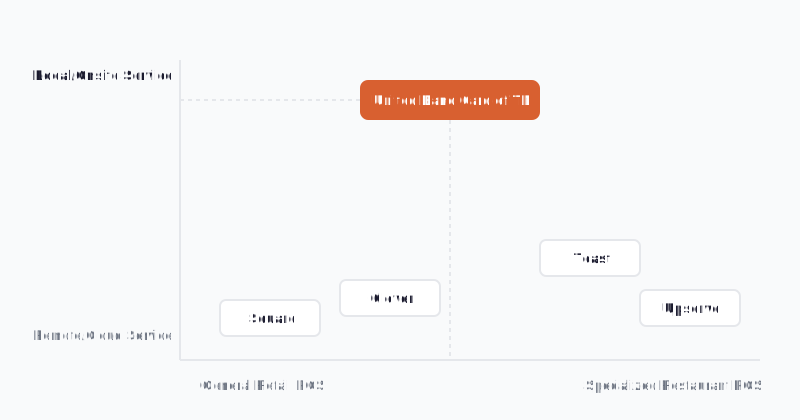
How POS Systems for Restaurant and Retail Compare to Upserve
Core Features
Upserve's core feature set is built top-to-bottom for restaurant operations. Menu intelligence identifies high-margin and low-margin items using real sales data – a genuine ROI tool, not just reporting. Kitchen display system (KDS) integration is native, not bolted on. Tableside ordering and payment, seat-by-seat check splitting, server performance tracking, and repeat guest analytics are all first-party features that work cohesively because they were designed as a single system from day one. For a full-service restaurant with complex workflows – multiple service styles, large teams, fine dining or brewery operations – Upserve's feature depth is hard to match.
Flexible restaurant and retail POS platforms cover the core functions competently: order entry, payment processing, basic reporting, and inventory management. Toast's kitchen integration is considered best-in-class for quick-service and fast-casual, with purpose-built handheld devices and KDS. Clover's modular design lets merchants add receipt printers, cash drawers, and card readers à la carte. Lavu is specifically designed for restaurant workflows on iPad hardware, offering table management, online ordering, and pay-at-the-table. Retailcloud adds inventory management, staff scheduling, and in-store/online selling in one platform – something Upserve doesn't offer for retail.
Bottom line: Upserve wins on restaurant-specific depth, especially for full-service operations with complex service styles. Flexible platforms win for businesses that span food and retail, need QSR-specific workflows, or want to match the right system to each location type rather than forcing every business into one mold.
Pricing
Upserve offers two main plans as of 2025: the All-In Plan at $0/station per month plus 2.79% + 20¢ per transaction (requires a two-year minimum term), and the POS Essentials Plan at $55/station per month plus 2.45% + 15¢ per transaction (month-to-month). Hardware is sold separately – a POS terminal runs $1,350, a tableside mobile unit $499.99, a kitchen display system $449.99, and a card reader $104.99. A $2,000 hardware discount is reportedly available for new signups via demo, but total hardware for a two-station setup still runs $2,000–$3,500 before software. Real-world operator spend on Upserve with add-ons (online ordering, loyalty, payroll integration) lands between $150 and $500/month plus processing.
Flexible POS platforms vary widely. Toast's Starter plan is $0/month with processing at 2.99% + $0.15; standard plans start at $69/month with 2.49% + $0.15. Add-ons escalate quickly: online ordering adds $75/month, loyalty $50/month, marketing $75/month. Clover's pricing depends on the reseller. Square's base is free with variable transaction fees. Shift4/SkyTab starts at $29.99/month with a $199 annual program fee per terminal.
| Tier | Upserve | Flexible POS (Toast example) |
|---|---|---|
| Free/Entry | $0/station (2-yr contract) + 2.79% + 20¢ | $0/mo + 2.99% + $0.15 |
| Standard | $55/station/mo + 2.45% + 15¢ | $69/mo + 2.49% + $0.15 |
| With Add-ons | $150–$500/mo real-world | $150–$500/mo real-world |
| Hardware | $1,350+ per terminal | Varies; $500–$1,500/station |
Pricing as of April 2025. Check each product's pricing page for current rates.
Hidden costs matter for both. Upserve's flat processing fee is non-negotiable – one Reddit user noted the platform "won't budge from flat fee" – which means high-volume merchants pay a premium at scale. Toast's per-add-on pricing model means the advertised $69/month frequently triples once real-world modules are activated. The average unexpected POS cost runs $2,400/year per location according to 2025 hospitality technology research.
Ease of Use & Onboarding
Upserve is consistently rated for its intuitive interface. G2 gives it a 4.4/5; Capterra a 4.2/5. Staff pick it up quickly, and the system is designed to minimize training time – important in a high-turnover restaurant environment. Onboarding is self-serve and remote; Upserve provides documentation and phone/chat support, but there is no onsite installation. Operators who can handle self-setup will get through Upserve's onboarding without much friction.
Flexible POS platforms vary. Toast has invested heavily in onboarding resources given its 10,000+ location footprint; its documentation is thorough, and the hardware is relatively plug-and-play. Clover's setup is considered easy for small retail operations but more complex for restaurants with kitchen display needs. Lavu's iPad-based interface is considered restaurant-staff-friendly. Square's onboarding is the most frictionless of the major platforms – often same-day – but its feature depth for full-service restaurants is limited. The tradeoff: flexible platforms require merchants to self-configure menus, integrations, and workflows, which adds time for less tech-comfortable operators.
Integrations & Ecosystem
Upserve integrates natively with major restaurant tools: OpenTable and Resy for reservations, 7shifts and HotSchedules for labor, QuickBooks and Restaurant365 for accounting, and Yelp and Google for guest data. Because Upserve's payment processing is embedded, the reporting dashboard ties transactions, tips, voids, and comps directly to server and shift data – a single-login coherence that third-party integrations can't fully replicate. The tradeoff is processor lock-in: you cannot use a third-party processor with Upserve, which limits rate negotiation.
Flexible POS platforms have larger integration ecosystems by volume but variable depth. Toast has built most of its integrations first-party, giving it an edge over platforms like SpotOn, which acquires third-party add-ons and ports them into its framework, creating inconsistencies. Clover connects to hundreds of third-party apps via its App Market. Square integrates with major e-commerce and accounting platforms. Lavu connects to popular delivery services and accounting tools. The real advantage for flexible platforms: they don't lock you into a single payment processor, so merchants can negotiate rates independently.
Which Should You Choose: Flexible POS Systems or Upserve?
Choose Flexible POS Systems for Restaurant and Retail if:
- You operate across multiple business types – a restaurant at one location, a retail shop at another – and need different POS configurations per location
- You want processor flexibility and the ability to negotiate your own credit card processing rates
- Your business is a food truck, quick-service counter, coffee shop, or bar where Upserve's full-service restaurant depth is overkill
- You need a retail-specific POS with inventory management and in-store/online selling (Upserve does not serve retail)
- You want to avoid a two-year contract commitment and prefer month-to-month flexibility
Choose Upserve if:
- You run an independent full-service restaurant, brewery, or family restaurant and want a purpose-built system with kitchen routing, tableside ordering, and menu intelligence out of the box
- You process $500K+ annually in card volume and can justify premium processing fees for integrated ecosystem benefits
- You have a tech-confident team comfortable with self-serve remote onboarding
- You want CRM-level repeat guest tracking and server-level analytics without third-party integrations
- You operate multiple full-service restaurant locations and need centralized multi-unit management in a single restaurant-native platform
A Third Option Worth Knowing About: United Banc Card of TN
If you've read this far and still aren't sure a national SaaS platform quite fits your situation, there's a third option worth knowing about – particularly if you're a Tennessee-based restaurant, retail, bar, or hospitality merchant. United Banc Card of TN is a local merchant services and POS solutions provider that bundles POS hardware, software, installation, payment processing, and ongoing support into a single relationship managed by a named local owner.
The structural difference from both Upserve and generic flexible platforms is worth spelling out. United Banc isn't locked into a single POS platform – it sells and services Lavu for restaurants, Clover for retail and hybrid businesses, Korona for convenience and liquor stores, and Retailcloud for combined in-store/online retail operations. That means the right POS platform gets matched to your specific business type, not the other way around. Hardware is bundled free with a merchant processing agreement (or available for rental starting at $8/month), compared to Upserve's $1,350+ per terminal. The lifetime POS warranty exceeds the industry-standard one-year coverage. Processing rates are negotiable – directly with the owner – instead of fixed at 2.45–2.79% with no flexibility. Onsite installation and advanced staff training are completed in 24–48 hours (per customer testimonials), versus remote self-serve onboarding.
United Banc is the stronger option if you're a small independent Tennessee restaurant or retailer frustrated by opaque processing fees, if you've been burned by national processors who promised savings that never materialized ("The savings he said would be there was there, and then some. This was almost a shock by itself because every time we've been told this it was never true" – Wacko Taco), or if you need a POS vendor who can be physically on-site when your system goes down during Friday dinner service. It's also the right fit for multi-concept operators who need Lavu at one location and Clover at another, all under one processing agreement and one support contact. Customers have stayed with United Banc since 2009 – fifteen-plus years of repeat business says more than any rating badge.
Where United Banc is not the right fit: if you need the feature depth of a restaurant-native platform for a large multi-location chain, or if you're outside Tennessee and need nationwide onsite support infrastructure. For large enterprise restaurant groups, Upserve or Toast's national scale and first-party feature investment are genuine advantages.
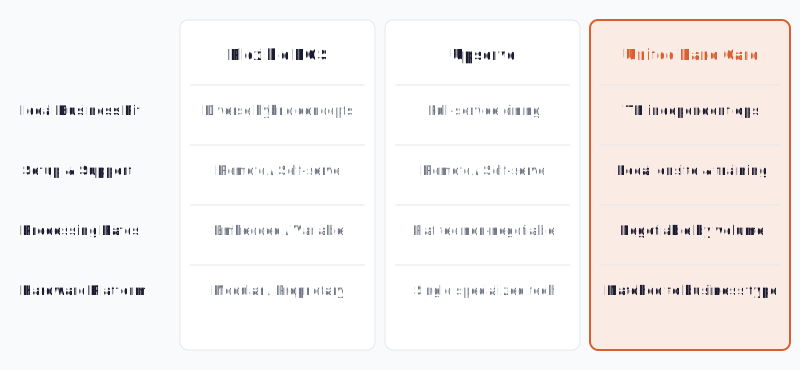
At-a-Glance: Flexible POS Systems, Upserve, and United Banc Card of TN
| Flexible POS Systems | Upserve | United Banc Card of TN | |
|---|---|---|---|
| Core purpose | Multi-industry POS for food, retail, and hospitality | Specialized cloud POS for full-service restaurants | Bundled POS + merchant services with local Tennessee support |
| Pricing model | Per-seat or flat-rate SaaS + embedded processing | Per-station SaaS + embedded processing | Hardware free with processing agreement; rentals from $8/mo |
| Starting price | $0–$69/mo/station (varies by platform) | $0/station (2-yr contract) or $55/station/mo | Contact for quote; hardware bundled free with processing |
| Free tier | Yes (Toast Starter, Square) | Yes (with 2-year contract) | No; bundled model with processing agreement |
| Key feature | Platform flexibility across business types | Menu intelligence + native KDS integration | Multi-platform POS matched to your business type |
| AI/Analytics | Varies by platform; strong on Toast | Strong: server analytics, repeat guest CRM | Depends on POS platform selected (Lavu, Clover, etc.) |
| Ease of use | Self-serve; varies by platform | Intuitive; self-serve remote onboarding | Onsite installation + advanced staff training in 24–48 hrs |
| Integration depth | Large third-party ecosystems; processor varies | Native restaurant integrations; processor locked | Flexible; no processor lock-in; negotiable rates |
| Support | Remote phone/chat; varies by vendor | Remote phone/chat 24/7 | 24/7 phone + local Tennessee onsite support |
| Best for | QSR, food trucks, retail/food hybrid operations | Independent full-service restaurants with $500K+ volume | Tennessee independents wanting local service, rate savings, and POS flexibility |
Pricing as of April 2025.
Next Steps
If specialized restaurant analytics and native kitchen integration are your priority – and you run a full-service restaurant comfortable with processor lock-in – Upserve is built for that workflow. If you need a flexible platform for a quick-service, retail, or food-truck operation, Toast, Clover, or Square are worth evaluating on your own terms.
If you're a Tennessee restaurant, retail, or hospitality merchant who wants real processing rate savings, onsite installation, and a named local owner accountable for your entire POS and payments stack – United Banc Card of TN is the stronger option than either: one call covers hardware, software, training, processing, and 24/7 support. Call (615) 476-0255 or request a free quote online to see what your actual rate savings look like.
Frequently Asked Questions
How does Upserve compare to flexible POS systems like Clover and Lavu?
Upserve is a specialized restaurant POS built for full-service dining with integrated kitchen display, menu intelligence, and tableside ordering; flexible platforms like Clover and Lavu serve restaurants, retail, bars, and food trucks with modular hardware and third-party integrations. Upserve wins on restaurant-specific feature depth and native integrations, but charges premium pricing ($55–$150+/month plus 2.45–2.79% processing) with processor lock-in. Flexible platforms cost $0–$69/month per station plus variable processing rates and offer processor choice, making them better for multi-concept operators or those seeking rate negotiation.
What is the total cost of ownership for Upserve versus flexible POS systems?
Upserve's true total cost includes a $1,350+ terminal purchase (or $499.99 for handheld units), $55–$150+/month per station in software, and 2.45–2.79% processing fees with no negotiation room, totaling $150–$500/month real-world spend for a two-station setup. Flexible POS platforms range from $0–$69/month with variable hardware costs ($500–$1,500 per station) and modular add-ons, but offer processor flexibility and rate negotiation potential. For independent operators processing under $500K annually, flexible platforms often yield lower year-one and year-three total cost of ownership.
Does Upserve require a long-term contract?
Upserve's All-In Plan requires a two-year minimum term at $0/station per month plus 2.79% processing; the POS Essentials Plan is month-to-month at $55/station plus 2.45% processing. The two-year contract locks in rates and features but provides discounted processing for committed volume. Flexible platforms like Toast and Square typically offer month-to-month terms, giving merchants more freedom to switch if business needs change.
Can you negotiate processing rates with Upserve?
Upserve's processing rates are fixed at 2.45–2.79% plus per-transaction fees with no negotiation room, according to user reports that "Upserve won't budge from flat fee." This is a structural limitation of Upserve's business model-rates are set by Lightspeed/Skyview and apply uniformly across merchants. Merchants seeking rate flexibility or volume-based discounts must choose a platform that allows third-party processor selection.
What are the key features Upserve offers that flexible POS systems don't?
Upserve includes menu intelligence (identifying high-margin and low-margin items automatically), native kitchen display system integration, tableside ordering and payment, seat-by-seat check splitting, and repeat guest CRM-all first-party features designed as a cohesive restaurant system. Flexible platforms like Clover and Lavu cover core POS functions but require third-party integrations for equivalent depth. For full-service restaurants with complex service styles, Upserve's integrated feature set is difficult to replicate without multiple add-on subscriptions.
Why should you choose a flexible POS system over Upserve?
Flexible POS systems are better if you operate across multiple business types (restaurant at one location, retail at another), need processor flexibility and rate negotiation, run a quick-service or mobile operation where Upserve's depth is unnecessary, or prefer month-to-month contracts over two-year commitments. Platforms like Clover and Toast also serve retail, food trucks, and bars-business types Upserve doesn't optimize for. The flexibility to match the right POS to each location type avoids forcing all operations into a single full-service-restaurant mold.
What is United Banc Card of TN and how does it differ from Upserve?
United Banc Card of TN is a Tennessee-based local POS and merchant services provider that bundles hardware, software, installation, processing, and support into a single relationship with a named owner-versus Upserve's national SaaS model. United Banc matches the right POS platform to each business type (Lavu for restaurants, Clover for retail, Korona for convenience stores) instead of forcing one system, provides hardware free with a processing agreement, and offers onsite installation and local 24/7 support. United Banc is the stronger option for Tennessee independents seeking rate savings, local accountability, and POS flexibility; Upserve is stronger for large multi-location restaurant chains needing enterprise-grade built-in features.
Who should consider United Banc Card of TN over Upserve or other national POS providers?
United Banc is ideal for Tennessee-based independent restaurants, retail stores, bars, and hospitality businesses frustrated by opaque processing fees, promised savings that never materialized, or impersonal national support. Merchants wanting a named local owner who handles end-to-end setup, training, and crisis support (especially during Friday dinner service crashes) benefit most from United Banc's relationship model. The platform is also better for multi-concept operators needing Lavu at one location and Clover at another under one processing agreement and one support contact.
What specific advantages does United Banc Card of TN offer over Upserve for cost-conscious operators?
United Banc bundles POS hardware free with a merchant processing agreement (or rents terminals for $8/month versus Upserve's $1,350+ purchase), includes lifetime hardware warranty (exceeding Upserve's standard one-year coverage), and negotiates processing rates directly with merchants instead of enforcing flat 2.45–2.79% fees. Testimonials confirm rate savings: "The savings he said would be there was there, and then some. This was almost a shock by itself because every time we've been told this it was never true" (Wacko Taco). For merchants processing $150K–$500K annually, this bundled approach typically yields $500–$1,500/year in total cost savings versus Upserve.
What is the onboarding and support experience difference between Upserve and United Banc Card of TN?
Upserve provides self-serve cloud setup with remote phone/chat support-fast for tech-confident teams but time-consuming for non-technical staff requiring hands-on menu configuration. United Banc completes onsite installation and advanced staff training in 24–48 hours, with a named local owner (Karl) and 24/7 Tennessee-based phone support, ensuring staff adoption is faster and crisis response during peak service is local. Testimonials emphasize personal accountability: "Anytime we needed to talk to Karl, we just picked up the phone and he was right there for us" (Stirrup Nashville, customer since 2009).