
Cash is still king in much of Tennessee — think music venues in Nashville, game days in Knoxville, late-night spots in Memphis, and small-town festivals across the state. That steady demand makes the Volunteer State a promising place to explore investment in ATMs, whether you’re eyeing a single machine for a local shop or building a small portfolio. With plenty of high-traffic, cash-friendly locations and a business model that can generate recurring surcharge income, the ATM space offers an approachable path to entrepreneurship. If you’ve ever searched for an “atm machine for sale Tennessee” and wondered what comes next, this guide will help you turn curiosity into a concrete plan.

Before you buy, though, it pays to master the ATM business basics. New investors often underestimate the importance of choosing the right site, structuring fair agreements with property owners, and understanding compliance rules unique to Tennessee. Getting familiar with costs, cash logistics, and transaction patterns can help you avoid common pitfalls and build a reliable income stream from day one. Read on to learn how to evaluate machines and suppliers, pick winning locations, manage operations smoothly, and navigate regulations — so your first step into the ATM market is a confident one.
Understanding ATM Machines
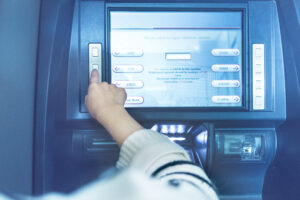
An Automated Teller Machine (ATM) is a self-service banking terminal that authenticates a cardholder, connects to a payment network, and dispenses cash in seconds. For independent operators, the workflow is straightforward: a customer inserts a debit card, the terminal encrypts and transmits the request through a processor to the cardholder’s bank, and once approved, the ATM dispenses cash and records the transaction. Funds settle to your business bank account, while you or a service partner replenish the cash. Modern ATMs support EMV chip cards, encrypted PIN pads, optional NFC contactless, and wireless modems, making placement in small Tennessee shops or pop-up venues far easier than in years past.
When you explore an atm machine for sale Tennessee investors will typically encounter several types. Freestanding lobby units are popular for convenience stores, bars, and college-area retailers because they require minimal buildout. Through-the-wall (TTW) models suit 24/7 access points like gas stations along I-40, offering visibility and security. Mobile or event ATMs — mounted on carts or trailers — serve festivals in places like Gatlinburg or county fairs, capturing high seasonal volume. You can also compare features such as cassette capacity (how much cash it holds), screen size and marketing display options, connectivity (Ethernet vs. LTE), and advanced locks or surveillance integrations.
The appeal of ownership rests on steady, per-use revenue and customer convenience. Each withdrawal generates surcharge transaction fees you set within network rules, plus potential interchange income — creating a predictable stream that isn’t tied to retail inventory or staffing. Hosts love the added foot traffic and higher average ticket sizes when customers have cash on hand; for example, a honky-tonk near Broadway in Nashville may see more tips and impulse buys, while a laundromat in Knoxville benefits from reduced credit-card processing costs when patrons pay in cash. With the right placement, even a modest-volume site can compound earnings across hundreds of monthly transactions.
As you evaluate options, blend opportunity with practical legal considerations. Ensure any unit you buy is ADA compliant, EMV-enabled, and meets PCI and network security standards; clear surcharge disclosures and error-resolution notices help satisfy federal rules, while local signage or placement ordinances may apply depending on the city or county. Working with reputable suppliers — whether you search “atm machine for sale Tennessee” listings, regional distributors, or manufacturer-certified resellers — can streamline setup, training, and compliance. With the right machine type and a compliance-first mindset, your ATM can become a reliable, low-overhead asset in your Tennessee portfolio.
The Financial Considerations
Getting into the ATM business typically starts with an upfront investment of $2,500–$6,000 for a new, EMV-compliant machine, plus $150–$500 for delivery, installation, and signage. Optional add-ons — like a wireless modem, a security enclosure, or a rear-load model — can lift your total to the $7,000–$9,000 range. You’ll also need “vault cash” to stock the machine, often $2,000–$10,000 depending on expected volume and how often you plan to refill. Smart ATM location selection can lower that vault cash requirement by placing your unit where predictable, steady withdrawals happen, reducing idle funds and improving cash flow management from day one.
Ongoing expenses are straightforward but need discipline. Plan for receipt paper, cleaning, and occasional part replacements ($150–$400 annually), plus communication fees for internet or wireless ($10–$25 per month). If you self-load cash, your primary costs are time and fuel; if you hire an armored service in a busy Tennessee metro, expect $60–$120 per run. Add network/processing costs (often $0.10–$0.25 per transaction) and a location commission — commonly 20%–40% of surcharge revenue in strong venues — to get a clear view of monthly overhead.
Profitability hinges on transaction volume and your surcharge strategy. Many Tennessee operators set surcharge fees between $2.75 and $4.00; assuming $3.25 per transaction and 200 transactions per month in a well-placed convenience store, gross revenue is $650. Subtract $40 for processing, $50 for connectivity and supplies, and a 30% location commission ($195), and you’re left with roughly $365 before fuel or service calls. At that pace, a $5,000 machine can effectively reach payback in 14–16 months — faster if volume climbs during events or tourist seasons.
To pressure-test your numbers, model a conservative, moderate, and best-case scenario. For example, a bar or cash-heavy deli might average 250–300 transactions monthly, while a salon or boutique could see only 40–80. Calibrate your vault cash to turn over at least weekly in higher-traffic sites to minimize cash sitting idle, and extend load intervals in slower locations to reduce trips. Treat every decision — from ATM location selection to refill schedules — as part of cash flow management, and you’ll build a more predictable, resilient return on your investment.
Choosing the Right Location
Picking the right site is the single biggest driver of the profitability of ATMs, so start with measurable traffic and a clear cash-use case. Look for venues where customers either expect cash or prefer it: neighborhood bars and honky-tonks off Nashville’s Broadway, barber shops, laundromats, food truck parks, independently owned convenience stores, and festivals. In Tennessee, college game days in Knoxville, tourist foot traffic in Gatlinburg and Pigeon Forge, and weekend crowds on Beale Street in Memphis can turn a good location into a great one. Before committing, spend time observing footfall by hour and day, ask the merchant about average ticket sizes and how often customers ask for cash back, and verify there’s no competing ATM within line of sight.
High-traffic is only half the equation; friction-free access matters just as much. During the ATM installation process, confirm essentials: dedicated power, reliable internet or wireless signal, ADA-compliant placement, security camera coverage, and visibility from the entrance or checkout. Corner placement near the POS often outperforms back-of-store setups, and clear signage — inside and outside — can lift transactions by 10–30%. For seasonal markets (e.g., Dollywood peaks or SEC football weekends), consider whether the site can handle temporary volume spikes and whether you can adjust cash loads to match patterns.
Think corridor strategy, not just a single address. Interstate nodes like I‑40 truck stops, late-night corridors around campus districts, and cash-heavy small towns with limited bank branches can each anchor a mini-route, improving service efficiency and reducing per-location costs. Test before you lock in: run a short pilot with a portable unit during a local festival or a 30-day trial in a convenience store to validate daily transaction counts and optimal surcharge. Small tweaks — moving the machine five feet into a sightline, adding lighting, or repositioning near an impulse-purchase rack — can materially shift conversions.
Strong relationships with property owners are as important as the site itself. Approach owners with a simple value proposition: increased foot traffic, reduced cash-back strain on registers, and a clean revenue share. Offer extras like free employee withdrawals, co-branded signage, or covering minor electrical work during installation. Put expectations in writing — surcharge split, term length, exclusivity radius, and responsibilities for power, connectivity, and floor space. Reliable cash replenishment and responsive service build trust, earn referrals to sister locations, and ultimately compound the profitability of ATMs across your Tennessee footprint.
Sourcing an ATM Machine for Sale
Start by mapping out your options close to home. In-state distributors and manufacturer-certified resellers in Nashville, Memphis, Knoxville, and Chattanooga often list “ATM machine for sale Tennessee” inventory with local delivery, installation, and training bundled in. You can also explore national wholesalers, refurbished-equipment dealers, and online marketplaces, then compare those quotes to local offers. Attend nearby industry events — like regional acquirer conferences or payments meetups — to meet processors and suppliers face-to-face; you’ll often uncover placement leads (e.g., independent convenience stores off I‑40) and learn who actually services machines reliably in your county.
When evaluating suppliers, think beyond sticker price. Ask whether the units are EMV and ADA compliant, support LTE/5G connectivity, and include remote monitoring software so you can track cash levels and uptime. For refurbished machines, request a parts list, the refurb protocol (e.g., dispenser rebuild, keypad replacement), and a written warranty with response-time SLAs. Verify processing terms in writing — who owns the surcharge, what per-transaction fees apply, and how fast funds settle. Check references from Tennessee operators, read recent BBB and Google reviews, and confirm the supplier stocks common parts (dispensers, receipt printers, keypads) to minimize downtime during football weekends or festival surges.
Approach negotiations like a package deal. Seek bundle pricing on multiple units, free initial receipt paper, and discounted delivery/installation. Ask for value adds — vault cash guidance, first-location placement assistance, or a branded wrap for visibility. Push for short, flexible processing agreements with no early termination fees, and ensure you retain 100% of the surcharge unless you’re intentionally sharing it with a location owner. If you’re buying used, negotiate a 30–90 day performance guarantee and a spare cassette or extra locks included.
Finally, protect your margins by clarifying every line item. Have the supplier break out hardware cost, processor fees, communication charges, and any monthly “statement” or “compliance” fees. Cap service call rates and define what counts as warranty work versus billable maintenance. If you plan to scale, lock in price tiers for additional units and a buy-back or trade-up option as your routes grow. A clear, well-negotiated agreement today means faster payback and fewer surprises once your ATM starts serving customers.
Managing Your ATM Business
Keep your ATM running smoothly with a simple maintenance routine and a focus on uptime. Schedule quarterly inspections to clean the card reader and cash dispenser, replace worn rollers, and swap receipt paper before it runs out. Update software and EMV/security patches through your processor as soon as they’re released to reduce fraud risk and downtime. In busy Tennessee locations — like bars on Broadway in Nashville or convenience stores off I‑40 — aim for 98–99% uptime by testing transactions after each service visit and logging service dates so you can anticipate parts replacement rather than react to breakdowns.
Strong cash management starts with data. Use your processor’s portal or an ATM monitoring app to track daily transactions, average withdrawal amounts, and cash levels, then set alerts when reserves dip below your target. Many Tennessee operators find that self-loading is efficient for single-site machines, while armored carriers make sense once you scale to multiple locations across Knoxville, Chattanooga, and Memphis. Watch for patterns: football weekends in Knoxville or festivals in Memphis can double volume, so adjust your load schedule to avoid cash-outs. Track KPIs like transactions per day (TPD), surcharge revenue, interchange income, and “cash turns” to make sure your vault cash is earning, not sitting idle.
Treat your ATM like a storefront. Clear signage (“ATM Inside,” surcharge posted), bright lighting, and a visible help number reduce abandonment and build trust. Train staff at host locations to spot error codes and paper alerts, and establish a simple escalation path to your service provider. Keep your surcharge fair for the neighborhood and consider bilingual screen prompts or ADA-friendly placement to serve more users. If a dispute arises — such as a “no cash dispensed” claim — respond quickly with journal and EJA records from your processor; fast resolutions turn a tense moment into goodwill.
Engage the community to turn transactions into loyalty. Offer a small charity tie-in — for example, donate 10 cents per withdrawal in Gatlinburg during peak tourist months to a local volunteer fire department — and promote it on the ATM topper. Propose a revenue-share bonus to host businesses tied to hitting monthly TPD goals, aligning incentives for better placement and visibility. Periodically survey customers or the host about hours, safety, and signage. This feedback loop, combined with disciplined maintenance and data-driven cash flow, keeps your Tennessee ATM business resilient and ready to scale.
Exit Strategies and Long-term Planning
If you’re considering an exit, timing and documentation are everything. Owners often sell for a multiple of monthly net profit (commonly 12–24x), so bolster your valuation by locking in multi-year location agreements, demonstrating consistent surcharge revenue, and showing low downtime. Prepare a due diligence package with processor reports, cash-load logs, EMV/ADA compliance records, key and safe information, and proof of ownership. To reach local buyers searching for “atm machine for sale tennessee,” list with regional brokers, manufacturer-certified resellers, or marketplaces like BizBuySell — and highlight Tennessee-specific advantages such as tourism-driven foot traffic in Nashville or Gatlinburg.
Scaling smartly can be as much about route density as it is about machine count. Focus on clusters — think laundromats, nail salons, and neighborhood bars within a few miles — to reduce cash-loading miles and service time. Use transaction analytics to upgrade or relocate underperformers and add features like contactless readers or screen advertising where it makes sense. Partnerships with multi-location operators (e.g., convenience store chains or college-area retailers) can unlock step-change growth; in exchange for a higher revenue share, you gain predictable volume and simpler operations across sites.
Long-term profitability in Tennessee looks promising where cash remains sticky: tip-heavy venues, rural corridors, festivals, college-town weekends, and tourism zones. Nashville’s event calendar, Knoxville’s game days, and Memphis entertainment districts can create reliable surges in withdrawals. That said, plan for industry shifts: periodic hardware and software upgrades (e.g., anti-skimming tech, TLS/security updates), evolving network fee structures, and insurance considerations. Building a reserve for upgrades and leveraging Section 179 expensing with a CPA can keep your cash flow resilient while ensuring compliance.
Think ahead by creating optionality. Keep clear, transferable contracts with property owners and your processor, and standardize playbooks for cash logistics, maintenance, and incident response — these make your portfolio easier to manage or sell. Reassess annually whether to hold, expand, or exit under favorable market conditions. If you decide to sell, consider bundling machines by geography and performance tier to attract both local owner-operators and out-of-state investors seeking a turnkey Tennessee route.
Conclusion: Turn Knowledge into Action
Investing in ATMs in Tennessee can be a practical, scalable path to recurring income when you understand the basics: how machines work, what they cost, the legal requirements, how to choose profitable locations, how to source reliable equipment, and how to manage operations for steady cash flow. Focus on transparent fees, tight maintenance routines, and data-driven monitoring to protect margins. Stay compliant with state and federal rules, build win-win relationships with host locations, and plan for growth or an exit so you can adapt as the market evolves.
If you’re ready to take the next step, run your numbers, verify permits, and start with one high-traffic site to learn the ropes. Speak with reputable vendors, compare service agreements, and explore local options for an atm machine for sale Tennessee to keep logistics simple. With a thoughtful plan and consistent execution, you can confidently launch, optimize, and scale an ATM portfolio that serves your community and supports your long-term financial goals.
Working with United Banc Card of TN
If you find yourself wanting to conquer your restaurant, retail shop, look no further than United Banc Card of TN. With their innovative solutions and trusted POS System services, they will guide you towards financial success. Whether you are a small business owner or an individual looking to manage your finances better, United Banc Card of TN has the tools and expertise to help. Call us today @615-476-0255