
Nashville dining moves fast. Musicians, office teams, and visitors crowd the streets from breakfast to late night. Quick service leaders meet that pace with smart menus, tight kitchen workflows, and consistent service across dine-in, pickup, and delivery. Neighborhood hot chicken joints, taco counters, and modern bowl concepts now compete on more than flavor. They compete on speed, accuracy, and hospitality at scale.
We spotlight the operators who turn lines into loyal fans. They deploy technology in restaurants to shrink wait times, sync front and back of house, and personalize every order. A strong quick service restaurant POS Nashville operators use does more than take payments. It routes tickets, tracks inventory in real time, and surfaces data that guides staffing and menu mix. Restaurants that master efficient operations win the lunch rush, sustain margins, and deliver a better guest experience. Read on to see how top Nashville teams use systems, training, and design to serve great food — faster — and set the standard for what quick service can be.
1. The Rise of Quick Service Restaurants in Nashville
Nashville’s quick service dining is accelerating. Music City’s visitor traffic, event calendar, and booming neighborhoods drive steady demand for fast, high-quality meals. Brands win by pairing speed with distinctive local flavors, late-night service near venues, and breakfast menus for early commuters. Operators now anchor growth on efficient lines, order-ahead pickup shelves, and POS systems that keep kitchens synchronized during peaks.
Urban living shapes choices. Dense corridors like The Gulch, Midtown, and East Nashville reward walk-up counters, small footprints, and tight menus that move. Office commuters, healthcare shifts, and campus crowds order on mobile, pick up curbside, and expect cashless speed. Drive-thru redesigns, double-lane ordering, and kiosk checkouts cut friction and raise throughput. The result is a faster, more reliable customer experience across channels.
Market indicators confirm the trajectory. Nashville hosts over 14 million visitors a year, which lifts all limited-service categories near entertainment districts and hotels. Population growth outpaces national averages, supporting new unit openings and format experiments in suburban corridors. Local hiring in limited-service roles has expanded for multiple consecutive years, while off-premise volume remains strong across delivery and pickup. These signals point to sustained momentum for quick service in the metro.
Technology underpins this expansion. Operators standardize on quick service restaurant pos Nashville solutions to handle bursts before shows and after games. Cloud-based POS systems route orders to kitchen display systems, track modifiers, and sync inventory in real time, which reduces waste and ticket times. Integrated payments speed checkouts and power loyalty that personalizes offers without slowing the line. Together, these capabilities scale service and elevate the customer experience citywide.
2. Key Features of Effective POS Systems
Effective POS systems accelerate order flow from counter to kitchen. We route modifiers to the right stations, fire items by course, and throttle orders during rushes to protect speed. Kitchen display systems prioritize tickets by promise time and flag late items. For drive-thru and walk-up windows, timers, dual-screen menus, and order confirmation displays cut errors and keep lines moving. The result is consistent quick service and measurable restaurant efficiency.
Integrated inventory turns data into action at the register. We sync on-hand counts in real time, auto-86 items, and surface smart swaps when stock runs low. Cashiers see approved substitutions and price differences before they close the check. Prep teams receive automated par-level alerts and waste tracking prompts at end of shift. Guests get accurate expectations; managers prevent stockouts without manual checks.
Modern payments must be fast, flexible, and secure. We support contactless, Tap to Pay on mobile devices, chip, QR, and wallets to reduce friction at the counter and curbside. Customers split checks, combine loyalty and promo codes, and tip with one screen. Tokenization and offline mode protect revenue during network hiccups. Clear tip routing and cash-out reports keep staff confident and service focused.
These capabilities raise throughput across Nashville’s busiest hours. Use order throttling to stabilize kitchens when a hot chicken surge hits. Turn on real-time 86ing before the lunch rush to avoid disappointing guests. Offer contactless and QR pay at pop-ups to shorten lines at festivals. By aligning order flow, inventory, and payments inside one POS, operators lift restaurant efficiency while delivering the quick service diners expect.
4. Interviews with Local Restaurant Owners
Local owners of Nashville eateries emphasized clear criteria when choosing a POS system: speed at the counter, reliability during rushes, and seamless integrations. Operators prioritized kitchen display systems that sync with online ordering and third‑party delivery, real‑time 86ing to prevent out‑of‑stock sales, and loyalty tools that work both in‑store and on mobile. Multi‑location reporting, open APIs for custom workflows, and durable, spill‑resistant hardware made shortlists. Several owners required offline mode for storm days and dual pricing tools to manage card costs without disrupting the guest experience.
Owners also addressed the hard parts of adoption. Training teams quickly, mapping complex menus into clean POS flows, and migrating historical data challenged rollouts. Some upgraded Wi‑Fi, segmented networks, and replaced legacy printers to stabilize performance. Despite the lift, they cited immediate gains: shorter lines, fewer order errors, tighter cash control, and clearer product mix insights. The result improved forecasting, prep planning, and labor scheduling by time of day and channel.
Interviewees linked specific wins to focused configuration. A taco counter in The Gulch reported cutting average ticket times after routing modifiers to the correct station and using expo screens to flag delays. An East Nashville hot chicken concept reduced voids and comps by tightening permission levels and adding item‑level photos for new staff. A Hillsboro Village smoothie bar raised average check size by enabling suggestive selling prompts and timed daypart bundles. These changes reflected broader tech trends in dining: QR ordering at tables to smooth peak traffic, self‑service kiosks for high‑volume items, and text alerts for curbside pickup.
Owners also set expectations for vendors. They required transparent pricing, local install support, and clear SLAs for uptime. They asked for data ownership clauses, simple export paths, and roadmap visibility for upcoming features like AI‑driven forecasting and automated prep lists. The message was consistent across Nashville eateries: pick a POS that matches the operation today, scales for tomorrow, and removes friction for guests and staff from the first ticket of the day to close.
5. The Role of Technology in Enhancing Customer Experience
Smart POS data turns every visit into a personalized experience. A quick service restaurant POS Nashville operators trust can segment guests by visit frequency, favorite items, and time of day. Teams can trigger targeted offers in the POS and online ordering flows — such as a cold brew upsell for morning regulars or a gluten-free prompt for known celiacs. At a hot chicken counter in East Nashville, we mapped ticket history to loyalty profiles and enabled cashier scripts tied to modifiers. The result: faster ordering, fewer errors, and higher average checks without slowing the line.
Real-time feedback closes the loop before guests leave. We deploy SMS receipts and QR codes on tray liners that open one-tap surveys linked to the POS check. Managers receive alerts for low scores within two minutes, with guest name, items, and server attached. They comp, remake, or offer a bounce-back code on the spot. A downtown pizza slice shop added a “rate your slice” kiosk at the exit and pushed low ratings to a shift lead tablet. They recovered 7 out of 10 detractors the same day and cut negative third-party reviews in half.
Social media now functions as a front door. We integrate Instagram and TikTok menus with live POS pricing and availability, so sold-out items disappear in real time. Guests tap a social link, redeem an influencer code, and the POS tracks redemptions back to the post. Operators see which creators drive lunch rush vs. late-night snacks and adjust staffing accordingly. One Gulch-area rice bowl spot scheduled an extra line cook on days when a partnered creator posted; order wait times dropped by 18% while sales rose.
Bring these pieces together to create a seamless loop: the POS personalizes offers, on-premise and digital surveys capture sentiment at the moment of truth, and social channels amplify what resonates. We set clear owners for each step — marketing runs segments, ops fields alerts, and the GM reviews weekly dashboards. This cadence turns technology into hospitality and keeps Nashville’s quick service restaurants fast, friendly, and memorable.
6. Case Studies: Successful Implementation of POS Systems
We partnered with a high-volume hot chicken counter in East Nashville to cut ticket times during weekend rushes. We replaced handwritten expo tickets with kitchen display systems, enabled tap-to-pay at the counter, and activated real-time menu 86s. Average order-to-serve time fell from 11 minutes to 7 minutes in four weeks. Throughput rose 26% during peak hours. Refunds linked to order errors dropped 41%. Lesson: stabilize the kitchen first. Deploy KDS, tighten prep station routing, and map modifiers before enabling new ordering channels.
A Gulch ramen spot running a fast-casual model used our POS to unify online, kiosk, and counter orders. We centralized menu management, added two self-serve kiosks, and integrated loyalty into the receipt and SMS flow. Check averages increased 14% as guests adopted pre-configured combos. Repeat visits rose 18% quarter over quarter. Kiosk orders carried 22% more add-ons than cashier orders. Lesson: design high-margin bundles and default modifiers that guide guests to better choices. Keep the kiosk menu to fewer than 20 tiles per screen and audit images weekly.
A West End taco concept struggled with inventory variance and late closes. We introduced recipe-level inventory, automated purchase orders, and enforced manager approvals on voids and discounts. Food cost variance dropped from 7.8% to 3.1% in two months. Closeout time fell by 45 minutes per shift. Chargebacks decreased 32% after we enabled tip-adjust controls and digital receipts. Lesson: tie every discount and void to a user role and reason code. Sync prep batches to item depletions so counts match volume in real time.
For operators planning an upgrade, run a two-week pilot on one line, then scale. Define three KPIs before go-live: ticket time, throughput, and variance. Train in short reps, on the floor, with checklists. Turn on offline mode and failover payments on day one. Connect feedback loops by sending post-visit surveys within 30 minutes; target a 20% response rate. Anchor the rollout to measurable outcomes, not features, and assign a single owner for menu, ops, and finance signoffs to keep changes tight and results visible.
7. Future Trends in Quick Service Dining
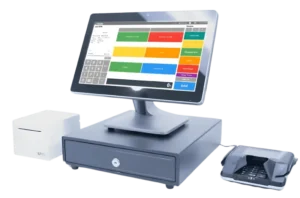
Nashville will see quick service restaurant POS evolve into unified commerce hubs. Vendors will consolidate online ordering, drive-thru, kiosk, curbside, and marketplace channels into a single order queue with automated throttling. POS will sync menu engineering, inventory depletion, and labor forecasting in real time. Open APIs will replace closed ecosystems, allowing operators to plug in best‑of‑breed loyalty, delivery logistics, and marketing tools without custom builds. Payments will shift to tokenized profiles, enabling one‑tap checkout across channels and reducing cart abandonment.
Consumer behavior will continue to favor speed, choice, and transparency. Guests will expect accurate promise times, live order tracking, and allergen visibility at the point of selection. Operators should use POS-linked loyalty to present dynamic bundles — hot chicken combos for Titans game days, family packs before concerts, or late‑night menus near Broadway — priced by demand and inventory position. Digital receipts with instant feedback links will feed service recovery workflows, turning detractors into return visits within hours, not days.
Automation and AI will move from pilots to daily operations. Predictive models will set par levels and schedule prep based on weather, event calendars, and nearby venue footfall. Drive‑thru lanes will use license plate recognition to surface past orders and speed payment. Vision AI at the expo station will flag incomplete trays before handoff. Voice ordering at kiosks and headsets will cut queue times, while AI‑assisted training in the POS will guide new staff through menu modifiers and upsells in context, improving order accuracy and check averages.
Operators should prepare systems and teams now. Standardize data across locations, enable open integrations in the quick service restaurant POS Nashville stack, and establish governance for privacy and model oversight. Pilot automation in one or two high‑impact workflows — inventory forecasting and drive‑thru sequencing — then scale based on measurable gains in throughput, labor cost, and guest satisfaction. This approach will keep Nashville’s quick service leaders ahead as technology and consumer expectations accelerate.
Conclusion: Powering Nashville’s Quick Service Future
Quick service restaurants anchor Nashville’s dining economy. They feed busy neighborhoods, fuel tourism, and create jobs. Operators who pair strong operations with modern tools set the pace. When teams streamline orders, sync inventory, and speed payments, they lift throughput and guest satisfaction. Choose a quick service restaurant POS Nashville operators trust, and connect it with kitchen, staffing, and loyalty systems to scale with demand.
Embrace technology to sharpen menus, personalize offers, and respond to feedback in real time. Deploy data to reduce waste and cut wait times. Test automation where it frees staff to serve. Visit these standout eateries, experience their precision, and see how innovation raises the bar. Support local leaders who invest in better tools and better service. Explore, benchmark, and apply these wins to your own operation.
Working with United Banc Card of TN
If you find yourself wanting to conquer your restaurant, retail shop, look no further than United Banc Card of TN. With their innovative solutions and trusted POS System services, they will guide you towards financial success. Whether you are a small business owner or an individual looking to manage your finances better, United Banc Card of TN has the tools and expertise to help. Call us today @615-476-0255