
A credit card refund generally takes 5 to 10 business days, but that’s an estimate, not a promised delivery date. The merchant initiates the credit, the payment processor routes it, and the card issuer posts it to your account.
Approval doesn’t mean the credit has reached your account. Your credit card refund time depends on when the credit is submitted and how quickly your issuer posts it. Understanding the processing date gives you a clearer starting point for tracking the credit.
Key Takeaways
- Most refunds arrive within about 5 to 10 business days, but estimates aren’t guarantees.
- Merchant approval, payment processing, and issuer posting are separate stages.
- Contact the merchant first, then your issuer if a confirmed refund remains missing.
How a Credit Card Refund Moves
A refund returns money from a settled purchase, generally through the original payment method.
Merchant Submission and Issuer Posting
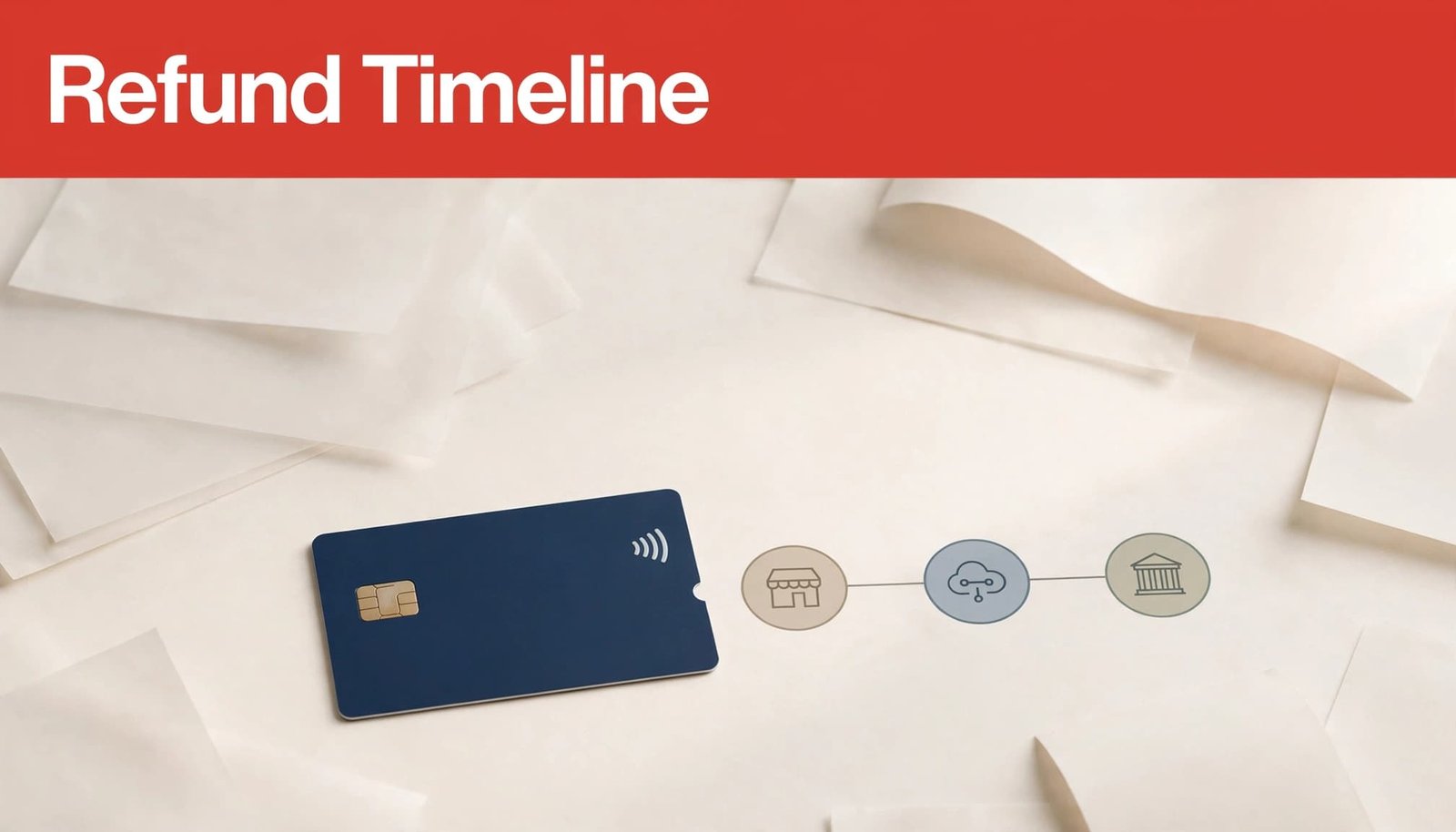
The merchant initiates and submits the refund. The merchant’s payment processor routes the credit through the card network, and the card issuer posts it to your account. Our guide to merchant services explains these organizations’ different roles.
AndDone provides these general processing estimates:
| Processing stage | Typical timing |
|---|---|
| Initial merchant submission and processing | 1 to 3 business days |
| Card network and issuer processing | 3 to 7 business days |
| Overall refund timeline | About 5 to 10 business days |
These are typical refund-processing ranges, not guaranteed delivery dates.
Pending Credits and Authorization Reversals
A pending credit means the refund is still processing. A posted credit means the refund has reached your account; available credit may update on a different schedule.
An authorization reversal applies to an unsettled purchase. It releases a pending hold instead of issuing a refund, so the original charge may disappear without a separate refund entry.
A canceled pending charge can disappear without creating a refund transaction. Look for the released hold as well as a posted credit.
Why Credit Card Refund Time Varies
Credit card refund time varies by merchant, card issuer, payment method, and whether an online return needs shipping or inspection. An in-store return may skip those steps, but approval doesn’t guarantee immediate posting. Experian’s estimate of 3 to 7 business days after the request reaches the issuer is an example, not a guarantee.
Weekends and bank holidays can extend the refund timeline, and issuers have different posting schedules and review procedures. A debit-card refund restores checking-account funds, so its timing shouldn’t be assumed to match credit-card posting.
Retailer estimates vary: Walmart allows up to 10 business days, Home Depot 2 to 10, and Canadian Tire 3 to 5. PayPal credit-card refunds may take about 30 days, but all these figures are examples, not promises for every transaction.
When to Contact the Merchant or Card Issuer
During the First 10 Business Days
Ask the merchant whether it submitted the refund after approving your return. Request the submission date, amount, receipt, and last four card digits.
Check the account used for the original purchase. Look for a refund and any disappearing authorization hold.
Count business days from confirmed submission, and allow the merchant’s stated processing window. Follow up if that window expires.
After the Expected Window Expires
If the confirmed refund is still missing after 10 business days or the merchant’s stated window, ask for an acquirer reference number, or ARN, if available. Give the receipt and reference to the issuer, and ask it to trace the credit.
Ask whether the credit was received, rejected, or needs further review. Tracking a routine refund is separate from disputing the purchase. If the retailer hasn’t issued the credit or won’t resolve the problem, ask your issuer about your options.
Don’t let repeated promises consume your rights. For qualifying billing errors, the FTC’s sample dispute letter explains the written-notice process and 60-day deadline measured from the first statement containing the error.
How Refunds Affect Your Balance and Statement
A refund reduces what you owe. If you’ve already paid the account to zero, it can create a negative balance, also called a credit balance.
For example, a $120 refund on a $0 balance creates a -$120 negative balance, which is a credit balance. A later $45 purchase leaves $75 in credit. Future purchases use that remaining credit before creating an amount owed, and the credit balance falls as you spend it.
A statement generated before the refund posts may omit the credit, while your current account balance updates afterward. Your statement balance and available credit may update separately from your account balance. Keep making required payments while you wait; don’t assume an expected refund changes the amount currently due. Your next statement will show the credit if it posts before the closing date.
Cash back and other rewards tied to a returned purchase may be reversed. Check your rewards activity for cash back earned on the purchase; a cash back adjustment may post separately from the purchase refund. It can affect redeemed cash back, your rewards balance, or progress toward a sign-up bonus.
Frequently Asked Questions
How Can I Get a Credit Balance Refunded?
You can use the credit toward future purchases or request the money back. Under U.S. Regulation Z, issuers must refund remaining credit balances exceeding $1 within seven business days after receiving a written request.
Is a Chargeback the Same as a Refund?
A refund comes from the merchant. A chargeback begins when you challenge a transaction through your issuer. The issuer reviews the claim, and any temporary credit may change after the investigation.
How Long Does a Formal Billing Dispute Take?
For qualifying billing errors, FTC credit-card dispute guidance gives issuers 30 days to acknowledge written complaints unless already resolved. Resolution must occur within two billing cycles, no later than 90 days. These aren’t routine refund timelines.
Track the Submission Date, Then Follow Up
A refund receipt confirms merchant action, but issuer posting is a separate step. Most refunds arrive within the expected business-day window, while shipping, holidays, and processing schedules can extend the wait.
Keep your receipt, track the submission date, and contact the merchant before asking your issuer to trace a missing credit.