
TL;DR
Local merchant services alternatives come down to who answers when your POS goes down on a Saturday night. United Banc Card of TN is the top pick for independent Tennessee restaurants and retailers who want a named local contact (Karl), onsite installation in 24–48 hours, and verified rate savings – not a 1-800 number. Square wins for first-time owners wanting zero-friction signup; Toast wins for multi-location restaurant groups with enterprise budgets.
Local Merchant Services Alternatives
Square, Toast, and Clover have built genuinely useful products – and they've earned their market share among businesses that don't mind self-serve onboarding and remote support. But the reason small restaurant and retail owners keep searching for local merchant services alternatives is simple: when your card reader fails during a dinner rush, a support ticket isn't enough. This page maps the real options – who they're built for, what they cost, and where each one falls short – so you can match the right tool to your actual workflow.
Why People Look for Local Merchant Services Alternatives
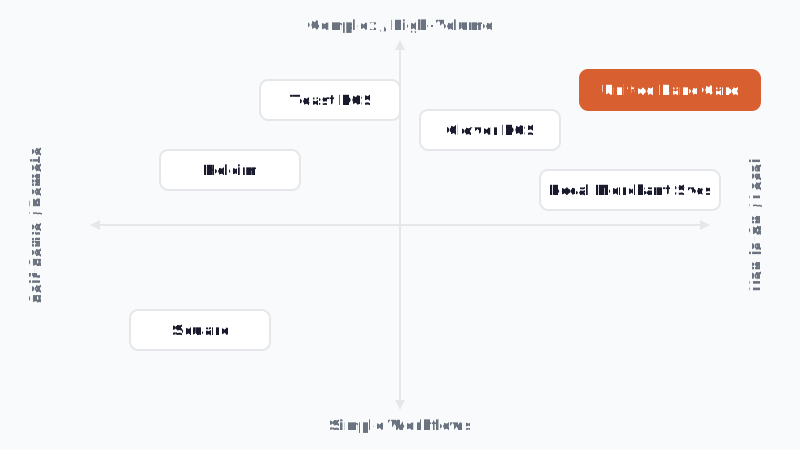
Processing fee creep is the single most recurring complaint in Reddit's r/smallbusiness threads on merchant services. Owners sign up for a flat rate, and twelve months later they're paying PCI compliance fees, statement fees, and batch fees that were never mentioned. One Trustpilot reviewer discovered unauthorized charges from a foreign bank. Another Reddit user summarized the market bluntly: "The ideal merchant services company is local: your bank, or a local company with a decent reputation." The problem isn't that national processors are fraudulent – it's that their pricing structures are layered enough that most owners never know what they're actually paying until someone shows them a line-item comparison.
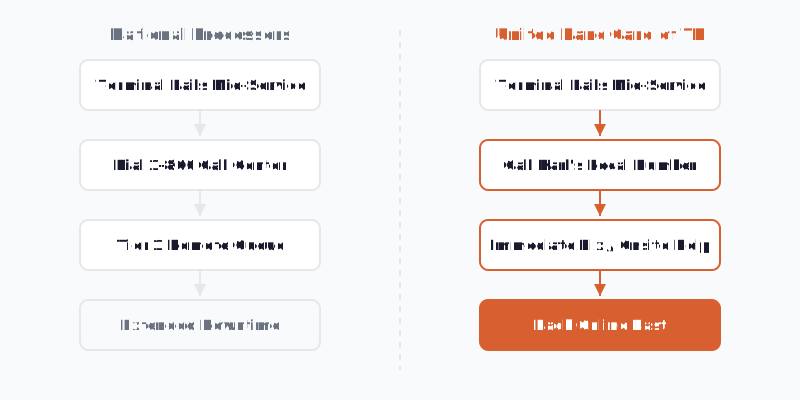
Onsite support is the second pressure point. Square, Toast, and Clover all offer self-serve onboarding – which works fine until you need someone to configure a kitchen display, train a new shift, or troubleshoot a wifi connectivity issue at 7 PM on a Friday. National platforms route these requests through tiered call centers. The time it takes to explain your setup to a new agent every time is a tax that adds up fast for a two-person operation.
The third reason is contract structure. Early termination fees of $495–$1,000+ are common with national processors, and 3-year contracts lock businesses in before they understand whether the platform actually fits their workflow. Restaurant owners who've been burned once are the most skeptical buyers in this category – and the most valuable customers for a provider who can deliver what they promise.
What to Look for in a Merchant Services Provider
Pricing transparency matters more than the headline rate. The headline rate is what gets quoted on a sales call. What you actually pay shows up twelve months later – after PCI compliance fees, statement fees, batch fees, and chargeback fees land on your bill. Ask every provider for the full fee schedule upfront. A quote of 2.6% without disclosing a $30/month statement fee is hiding the real cost.
The support model is the variable most owners forget to ask about. Self-serve support (chat, ticket, FAQ) is fine for software bugs that can wait. It's not acceptable when a terminal fails mid-service. Ask whether the provider offers 24/7 live support, whether that support is onsite or phone-based, and whether you'll talk to the same person twice. Reaching a specific person who already knows your setup is rare and worth paying for.
Hardware fails. The industry standard warranty is one year. Before signing, ask whether replacement is covered after year one, whether it's advance-replacement (new unit ships before you return the broken one), and whether installation is included. A dead terminal in year three without coverage is a surprise cost most small businesses can't absorb.
Verify integration against your actual workflow, not a feature checklist. A restaurant POS needs kitchen display routing, table management, and split-bill capability. A retail POS needs inventory tracking, barcode scanning, and sales analytics. Generic all-in-one platforms often cover the basics and miss the category-specific details that matter daily.
Month-to-month contracts with no early termination fee are available from Square, PayPal, and Helcim. Local providers and enterprise platforms often require 1–3 year commitments. Before signing, nail down three things: what happens if you switch in month six, what happens if the provider goes out of business, and whether your data is portable.
Some merchants need a single payment terminal. Others need POS + processing + online ordering + employee management + business lending from one vendor. Decide before the sales call whether you want a narrow specialist or one accountable vendor covering the full stack – mixing multiple vendors creates integration debt and splits accountability when something breaks.
The Best Local Merchant Services Alternatives
1. United Banc Card of TN
United Banc Card of TN is a Tennessee-based local merchant services provider and value-added reseller. The whole stack – POS hardware, software, payment processing, onsite installation, staff training, 24/7 support, ATM placement, and business funding – runs through a single relationship with a named owner-operator (Karl).
Best for: Independent restaurants, retail stores, bars, and food trucks in Tennessee that have been burned by national processors and want confirmed rate savings, fast onsite setup, and a direct phone number that actually gets answered.
Strengths
- All eight named customer testimonials reference Karl by name – not a support team, not a ticket number. Stirrup Nashville has been a customer since 2009: "Anytime we needed to talk to Karl, we just picked up the phone and he was right there for us." That's a 15-year relationship in a category notorious for churn.
- Wacko Taco confirmed rate savings in writing: "The savings he said would be there was there, and then some. This was almost a shock by itself because every time we've been told this it was never true." In a market full of unverified promises, that quote is the strongest conversion signal on the page.
- Onsite installation and staff training completed in 24–48 hours (confirmed on Franklin and Murfreesboro location pages) – not a webinar, not a PDF guide.
- Multi-platform POS flexibility: Lavu (iPad restaurant POS), Clover, Korona (specialty retail/convenience), and Retailcloud, matched to the specific business type rather than pushed as one-size-fits-all.
- Lifetime POS system warranty – the industry standard is one year.
- Terminal rentals from $8/month; POS hardware and software provided free with a merchant processing agreement.
- Full-stack bundling: POS + processing + ATM sales + business funding (via GoKapital partnership for merchant cash advances, SBA loans, equipment leasing) from one vendor.
- Unlimited paper supplies included; no nickel-and-dime supply fees.
Where it's not the right fit
- Exact processing rates are not publicly disclosed – a sales consultation is required to get a quote, which adds friction for buyers comparing rates online.
- Primary service area is Middle Tennessee (Nashville, Clarksville, Franklin, Murfreesboro, and surrounding cities); merchants outside this region may not receive onsite installation.
- Not built for multi-location enterprise groups (10+ units) needing corporate-level payroll, advanced labor scheduling, or negotiated enterprise SLAs.
Pricing: POS hardware and software free with merchant processing agreement. Terminal rentals from $8/month. Processing rates available on consultation. 30-day trial available (terms not publicly disclosed – confirm at sign-up).
When to choose it: You're a Tennessee restaurant, retailer, or bar owner who's paying rates that were never what the last rep promised, you want someone to install and train your staff this week, and you want a single phone number that reaches the person who sold you the system. Call Karl at (615) 476-0255 or request a free quote at unitedbanccardoftn.com.
2. Local Merchant Services (LMS)
Local Merchant Services is an onsite implementation partner for Square, SpotOn, Clover, and Shift4 POS systems, specializing in hands-on installation, staff training, and ongoing local support for brick-and-mortar businesses.
Best for: Established brick-and-mortar businesses outside Tennessee – retail, food and beverage, professional services – that want professional onsite setup and training without DIY self-serve onboarding.
Strengths
- Explicitly sells "hands-on in-person staff training – not video-based" as its primary differentiator vs. DIY platforms; this is a real gap in the market.
- SpotOn Core/Quick Start plan (resold through LMS) starts at $0 upfront with in-person processing at 1.99% + 25¢ – notably lower than Square's 2.6% + 15¢ for high-swipe-volume merchants.
- SpotOn's 0% commission online ordering is a meaningful cost advantage for restaurants doing significant online volume.
- Data import and migration from legacy systems (ALOHA, NCR) handled by local technicians; a genuine operational win for merchants switching from older platforms.
- 300+ integrations across Square App Marketplace, Clover App Market, and Shift4 Marketplace.
- SpotOn hardware lineup includes IP54-rated handheld devices and 15" HD tableside stations.
Where it's not the right fit
- Reseller/integrator model means the product roadmap is entirely dependent on Square, SpotOn, Clover, and Shift4 – LMS has no control over software updates or pricing changes.
- SpotOn Enterprise pricing requires a direct sales contact; no published pricing for multi-unit operators.
- No proprietary ATM placement, business lending, or e-commerce bundling.
Pricing: SpotOn Core plan at $0 upfront; 1.99% + 25¢ in-person processing (as of 2025). LMS's own installation and support service fees are not publicly disclosed – confirm at consultation.
When to choose it: You're outside Tennessee, want professional onsite training, and the 1.99% + 25¢ SpotOn rate plus 0% commission online ordering makes the numbers work for your volume. LMS covers the same gap for merchants who need hands-on setup but aren't in United Banc Card's service area.
3. Square
Square is the default self-serve payment and POS platform for small businesses – transparent flat-rate pricing, no-contract, and a wide ecosystem of integrations.
Best for: New businesses, pop-up shops, food trucks, and side-hustle retail owners who want the lowest-friction onboarding and don't need industry-specific workflow features.
Strengths
- Zero-friction signup: no sales call, no rate negotiation, no contract; hardware starts at $0 (magstripe reader free).
- Published, transparent pricing: 2.6% + 15¢ in-person (tap/dip/swipe); 2.9% + 30¢ online – no hidden monthly minimums on the base plan.
- Omnichannel out of the box: in-store, online, invoicing, and subscriptions unified in one dashboard.
- 1,000+ app integrations; Square Loans and Square Capital for business financing built into the platform.
- Instant or same-day fund transfers available.
Where it's not the right fit
- Self-serve model only – no onsite installation, no hands-on staff training; setup burden falls entirely on the owner.
- 2.6% + 15¢ flat rate overpays on debit card transactions compared to interchange-plus models at volume; keyed-in rate climbs to 3.5% + 15¢.
- No named local contact; support routes through tiered phone/chat queues with no guaranteed callback time.
- Hardware warranty limited to one year.
Pricing: POS software free to $29+/month. Hardware: $0 (reader) to $799–$899 (Register two-screen). Processing: 2.6% + 15¢ in-person; 2.9% + 30¢ online (as of 2025).
When to choose it: You're launching a new food truck or pop-up retail concept, want to be processing payments today with zero upfront cost, and are comfortable handling your own setup via Square's help documentation.
4. Toast POS
Toast is a restaurant-first POS platform with built-in payroll, labor scheduling, kitchen display systems, and enterprise multi-location management – the fastest-growing restaurant POS in the country.
Best for: Multi-location restaurant groups (5+ units) with $500K+/month in card volume that need advanced labor management, integrated payroll, and negotiated enterprise processing rates.
Strengths
- Purpose-built for restaurants: Kitchen Display System, floor plan management, tableside ordering, and advanced labor scheduling are native – not add-ons.
- Enterprise pricing and dedicated account managers for high-volume operators; processing rates custom-negotiated.
- Payroll + POS bundle available at $90 + $9/employee/month with 2.49% + 15¢ processing.
- Fastest-growing restaurant POS by merchant count; the network effects are real at this point.
Where it's not the right fit
- Classic POS plan starts at $69+/month per location; realistic total for an independent using online ordering, loyalty, and KDS lands around $200–$400/month plus processing – prohibitive for under-$1M annual revenue restaurants.
- "Nothing at Toast is free; the Starter Kit just moves the cost into your processing rate" – the Starter Kit bundles hardware costs into a higher 3.09–3.69% + 15¢ processing rate.
- No onsite local installation; hardware setup and staff training are merchant-managed or contracted separately.
- Not designed for retail, convenience stores, or non-restaurant verticals.
Pricing: Classic POS from $69+/month per location. Starter Kit $0–$578/month with higher processing rate. Custom enterprise pricing available (as of 2025).
When to choose it: You operate 5+ restaurant locations, need integrated payroll and KDS, and have the volume to negotiate a competitive processing rate that offsets the monthly software cost.
5. Clover POS
Clover is a POS hardware and software platform distributed through banks, credit unions, and merchant service resellers – with restaurant, retail, and services configurations and an app marketplace of 300+ integrations.
Best for: Retail and services businesses that want an app-marketplace ecosystem and are acquiring Clover through a bank or reseller relationship that handles the processing agreement.
Strengths
- Wide distribution through resellers means buyers can often negotiate processing rates below the published Clover.com rates (2.3% + 10¢ in-person).
- 300+ app integrations via Clover App Market; highly customizable for specific business workflows.
- Versatile hardware: Mini ($799–$899), Station Solo ($1,699–$1,799), Station Duo ($1,899–$2,099) – designed for counter, table, and mobile configurations.
- Inventory management, customer engagement, kitchen display, and multi-location management available.
Where it's not the right fit
- Flat-rate model (2.3–2.6% + 10¢ through Clover.com) overpays on debit card transactions vs. interchange-plus; reseller pricing varies significantly and is often opaque.
- Monthly software + hardware financing + app fees accumulate quickly: total through banks can reach $200–$400/month before processing costs.
- PCI compliance (~$99/year) and monthly statement fees ($10–$15) add to headline cost.
- Hardware warranty limited to one year through most channels.
Pricing: Software from $4.95–$69.95/month. Bundled hardware financing: $130–$354+/month (36-month terms). Upfront hardware: $1,899–$2,099. Processing: 2.3% + 10¢ in-person (Clover.com direct, as of 2025).
When to choose it: You're acquiring Clover through a bank or trusted reseller who can offer interchange-plus pricing below the published rate, and you want the app marketplace flexibility without locking into a single proprietary software ecosystem.
6. Helcim
Helcim is a payment processor built around transparent interchange-plus pricing. It's the right call for merchants who process high monthly volumes and want to get as close to actual card network cost as possible.
Best for: High-volume merchants ($50K+/month in card sales) who understand interchange-plus pricing and want the lowest possible effective rate without a monthly minimum.
Strengths
- Interchange + 0.40% + 8¢ in-person (under $50K/month) – among the lowest effective rates available for debit-heavy businesses.
- No monthly fee or minimum on the base tier; POS app, hosted online store, and unlimited invoices included.
- Fee-saver/cash discount app and subscription manager built in.
- Transparent pricing: every statement shows actual interchange cost vs. Helcim's markup.
Where it's not the right fit
- No onsite installation, no hardware warranty beyond manufacturer standard, no local support contact.
- Not built for restaurants needing KDS, table management, or integrated kitchen workflow.
- Interchange-plus pricing requires understanding of card network tiers to fully evaluate – not suitable for first-time merchants unfamiliar with the model.
Pricing: Interchange + 0.40% + 8¢ in-person (under $50K/month); no monthly fee (as of 2025). Hardware available for purchase separately.
When to choose it: You process $50K+/month primarily in-person, understand how interchange-plus pricing works, and want the lowest possible effective rate without needing onsite installation or local support.
Quick Comparison
| Tool | Best For | Starting Price | Free Tier | Standout Feature |
|---|---|---|---|---|
| United Banc Card of TN | TN restaurants & retail needing local accountability | Free w/ processing agreement | Yes (hardware w/ agreement) | Named owner (Karl) answers directly; lifetime POS warranty |
| Local Merchant Services | Brick-and-mortar outside TN wanting onsite setup | $0 (SpotOn Core) | Yes | 0% commission online ordering via SpotOn |
| Square | First-time & pop-up businesses wanting zero friction | $0 (base plan) | Yes | Widest ecosystem; instant account approval |
| Toast POS | Multi-location restaurants with enterprise budgets | $69+/mo per location | No | Native KDS + payroll integration for restaurants |
| Clover POS | Retail/services via bank or reseller | $130+/mo (bundled) | No | 300+ app marketplace; flexible hardware lineup |
| Helcim | High-volume merchants ($50K+/mo) wanting low rates | $0 (no monthly fee) | Yes | Transparent interchange-plus; no monthly minimum |
Pricing as of 2025. Check each tool's pricing page for current rates.
Which Alternative Should You Choose?
If you're a Tennessee restaurant or retailer tired of promises that don't deliver…
United Banc Card of TN is the right call. Karl personally handles every account, installs onsite within 24–48 hours, and every named testimonial – including Wacko Taco, which explicitly says prior rate promises never materialized – confirms the savings are real. The lifetime POS warranty and 24/7 local support close the gaps that national processors routinely leave open.
If you're launching a new business and need to accept payments today…
Square is built for exactly this situation. No contract, no hardware purchase required, free magstripe reader, and a published 2.6% + 15¢ in-person rate you can evaluate immediately. Start here; migrate when your volume justifies a negotiated rate.
If you're a multi-location restaurant group running 5+ units…
Toast is built specifically for this scale. Native KDS, labor scheduling, payroll integration, and enterprise account management are all in-house – no third-party dependencies. Expect $200–$400/month per location in software costs before processing, but negotiated rates become available at meaningful volume.
If you need hands-on setup but are outside Tennessee…
Local Merchant Services fills the same onsite-installation gap that United Banc Card of TN covers in Middle Tennessee. SpotOn's 1.99% + 25¢ in-person rate and 0% commission online ordering make the economics work for high-swipe restaurants outside the United Banc service area.
If you process $50K+/month and want the lowest possible effective rate…
Helcim is worth modeling. Interchange + 0.40% + 8¢ with no monthly minimum is hard to beat for debit-heavy, high-volume merchants who know their interchange categories. Run the math against your current statement before committing.
If your business has been declined by mainstream processors…
United Banc Card of TN explicitly offers high-risk merchant accounts – an area where Square, Toast, and Clover all decline. For merchants in industries mainstream processors won't touch, this is a meaningful option alongside specialists like PaymentCloud.
Ready to Try United Banc Card of TN?
If you're a Tennessee restaurant, bar, retail store, or food truck that's paid rates that were never what the last rep promised – or you're tired of calling an 800 number when your terminal goes down – United Banc Card of TN is the better fit. Call Karl directly at (615) 476-0255 for a free rate comparison; he'll show you your current rate vs. his rate before you sign anything. Setup takes 24–48 hours from your first call to your first transaction.
Frequently Asked Questions
What should I look for in a local merchant services provider?
Pricing transparency, support model, and hardware warranty are the three variables that determine whether you'll save money or get nickel-and-dimed over time. Ask every provider for the full fee schedule upfront-not just the headline rate, but PCI compliance fees, statement fees, batch fees, and chargeback fees. Verify whether support is 24/7 live phone (ideally with a named contact), whether onsite installation is included, and whether hardware is warrantied beyond the industry standard one year.
Why do small business owners search for local merchant services alternatives?
Processing fee creep is the primary reason-owners sign up for a flat rate and twelve months later discover PCI compliance fees, statement fees, and batch fees that were never mentioned. The second pressure is support model: national processors route issues through call centers, which creates delays when a terminal fails during a dinner rush. The third is contract structure-three-year agreements with $500+ early termination fees lock businesses in before they know whether the platform actually fits their workflow.
Is United Banc Card of TN still worth using if I'm outside Tennessee?
United Banc Card of TN's primary strength is onsite installation and named accountability-both of which require physical presence in Middle Tennessee. If you're outside that region, you can still process payments through the company, but you'll lose the 24–48 hour onsite installation and direct Karl contact that justifies the switch from national processors. For merchants outside Tennessee wanting the same hands-on local setup, Local Merchant Services offers equivalent onsite training and installation for SpotOn, Square, and Clover in broader service areas.
How much faster is United Banc Card of TN's setup compared to Square or Toast?
United Banc Card of TN completes onsite installation and staff training in 24–48 hours from your first call; the system is live and merchants can process transactions by the second day. Square requires 24–48 hours for account approval but zero hours for installation because it's self-serve-setup burden falls on the owner. Toast typically takes 2–4 weeks post-signup because the merchant must configure staff, test hardware, train team, and verify workflows before going live. For a restaurant needing to accept payments today, Square wins; for one that wants someone to handle the setup and training, United Banc Card of TN wins.
What makes a good alternative to Square?
A good Square alternative depends on your workflow and volume: if you process high volume and understand interchange-plus pricing, Helcim's 0.40% + 8¢ markup on interchange beats Square's flat 2.6% + 15¢. If you're a multi-location restaurant needing KDS and payroll, Toast's native features justify the $200+ per month software cost. If you're a Tennessee business tired of national processor fee surprises, United Banc Card of TN's named local contact and lifetime warranty cover gaps Square deliberately leaves unfilled. Square wins only if your priority is zero-friction signup; for everything else, the question is which gap matters most to your business.
Does United Banc Card of TN offer the same POS systems as its competitors?
United Banc Card of TN resells multiple third-party POS platforms-Lavu (iPad restaurant), Clover, Korona (specialty retail), and Retailcloud-matched to your specific business type rather than pushed as one-size-fits-all. Square and Toast own proprietary POS software and cannot offer choice. Local Merchant Services and Clover (through resellers) also offer platform flexibility, but United Banc's differentiation is combining that choice with named local accountability and onsite installation. For merchants who've been burned by generic platforms that didn't fit their workflow, the ability to match the right POS to your specific restaurant or retail model is a meaningful advantage.
Why is United Banc Card of TN on this alternatives list?
United Banc Card of TN is included because it solves a specific, underserved problem: independent Tennessee restaurants and retailers that have paid processing rates they were promised would be lower, received support through impersonal call centers, and want a single named local contact who handles hardware, software, installation, training, and processing. The company doesn't compete with Square on ease-of-signup or Toast on enterprise features; it competes on accountability and verified outcomes. Every named customer testimonial-Wacko Taco, Stirrup Nashville, Myles Holodnak-chose United Banc Card of TN specifically because prior national processors promised savings that never materialized; this one delivered.
How do processing rates compare between local providers and national platforms?
United Banc Card of TN publishes no rates publicly; quotes require a sales call. Square is transparent at 2.6% + 15¢ in-person flat-rate nationwide. Toast custom-negotiates for enterprise (typically 2.49% + 15¢ at high volume). Local Merchant Services resells SpotOn at 1.99% + 25¢ in-person, which beats Square's headline rate but may overpay on certain card types. Helcim offers interchange + 0.40% + 8¢ for high-volume merchants who understand the model. Without United Banc Card of TN's public rate, you cannot compare until you call; this opacity is a weakness against competitors who publish rates upfront.
What are the typical hidden fees in merchant services pricing?
PCI compliance (~$99/year), monthly statement fees ($10–$15), batch fees ($0.25 per batch for some platforms), chargeback fees ($15–$25 per dispute), and gateway fees ($0–$20/month depending on platform) are standard across the industry. Some processors add equipment fees, monthly minimums, or surge fees for specific card types. The industry standard is disclosing these in fine print; United Banc Card of TN should clarify its full fee schedule upfront to differentiate against this practice. For comparison, ask every provider: 'What is your total monthly cost in fees if I process $10,000 per month and have zero chargebacks?'
Is onsite POS installation worth the premium for a small business?
Onsite installation is worth the premium if your team has no technical background and you cannot afford downtime during setup. United Banc Card of TN charges zero for onsite installation because it's bundled with the processing agreement; the time saved (24–48 hours vs. 2–4 weeks DIY) has real value for businesses that lose revenue every day they're not live. For a side-hustle or new pop-up business, DIY setup (Square) is acceptable and faster. For an established restaurant, the installation premium paid through higher processing rates or bundled service costs is recovered through staff training quality and faster time-to-revenue.
What does a lifetime POS warranty actually cover?
United Banc Card of TN's lifetime POS warranty covers hardware defects and replacement-if a terminal fails at any point, the company replaces it at no cost. Industry standard is one year limited warranty, meaning year-two failures are the merchant's financial responsibility. Lifetime warranty is rare and signals the vendor is confident in hardware quality and has the financial margin to absorb replacement costs. Before signing with any provider, confirm: advance replacement (new hardware ships before you return the broken unit), whether software is included, and what happens if the provider goes out of business.
How important is having a named local contact for merchant services?
Named local contact is critical if your POS goes down during peak hours or you need account changes made quickly. Reaching the same person twice is rare in national processor support; most route through tiered call centers where you explain your setup to a new agent every call. United Banc Card of TN's entire positioning is built on Karl being that named contact-every testimonial references him by name, including a 15-year relationship with Stirrup Nashville. For businesses that have experienced the frustration of faceless support, this becomes the primary reason to switch, worth paying a slightly higher rate to maintain.
Should I consider a high-risk merchant account provider if I'm declined by mainstream processors?
If Square, Toast, and Clover have declined your application, yes-United Banc Card of TN explicitly offers high-risk merchant accounts, and specialists like PaymentCloud serve industries that mainstream processors won't touch (adult retail, CBD, subscription services, travel). High-risk accounts typically cost 0.5–2% more in processing fees, require higher reserves, or carry rolling reserves, but they're the only option if you've been declined. Before paying the premium, confirm the exact fee structure: flat rate vs. interchange-plus, rolling reserve terms, and dispute handling.
What is the best local merchant services alternative overall?
United Banc Card of TN is the best local merchant services alternative for independent Tennessee restaurants and retailers frustrated by national processors' fee surprises and impersonal support. For businesses outside Tennessee wanting hands-on onsite setup, Local Merchant Services fills the same role. For new businesses wanting fastest onboarding with zero friction, Square remains the fastest path. The correct answer depends on whether your priority is accountability (United Banc), transparent pricing (Square/Helcim), or enterprise features (Toast). Match the alternative to your actual pain point, not to the vendor's marketing.