
TL;DR
DCR POS Alternatives come down to your workflow: United Banc Card of TN is the top pick for independent Tennessee restaurants and retailers – offering free bundled hardware, local onsite installation, and direct owner accountability that national vendors cannot match. Toast wins for multi-location operators needing payroll and delivery integration. Square wins for food trucks or startups where zero upfront cost and no long-term contracts matter most.
DCR POS Alternatives
DCR POS has served Southeast operators for over 64 years. That's a long run – but independent restaurant and retail owners searching for alternatives usually want lower cost, more personal accountability, or a better fit for their specific vertical. This page maps the six strongest options so you can pick the right one.
Why People Look for DCR POS Alternatives
DCR's pricing isn't publicly listed anywhere on their website. That's the most common friction point operators mention: entering a consultation without knowing what the software, hardware, or support contract will actually cost. For a single-location restaurant owner running tight margins, an unknown price tag creates real anxiety before the conversation even starts.
The second recurring issue is scale mismatch. DCR has 48–65 employees and a structured team – which serves a 5-unit regional chain well, but can feel impersonal for a 2-table café or a food truck operator. Owners used to calling one person and getting an immediate answer sometimes find themselves navigating a support queue instead of reaching a decision-maker directly.
Third is platform specificity. DCR leads with SkyTab and their proprietary Genius POS system. Both are capable, but operators who want iPad-based systems like Lavu – or specialty retail POS like Korona for convenience stores – need a different kind of partner. When the tool doesn't fit the business type, even strong support can't compensate for the wrong workflow.
What to Look for in a POS Tool
Processing integration: A POS system is only as useful as its payment processing. Look for a provider that bundles hardware, software, and processing in a transparent package, not one that quotes software separately and surprises you with processing fees at go-live. Bundled models from local providers typically cost less overall for small independents.
Onsite support vs. remote support: When your POS goes down during a Saturday dinner rush, a chatbot doesn't help. Ask specifically whether your provider will send a technician to your location, and how fast. Onsite local support is rare among national providers – worth paying for if your operation can't afford downtime.
Hardware flexibility: Some vendors (Clover, Square) lock you into proprietary hardware. Others (United Banc Card of TN, DCR) let you choose platforms that fit your workflow. A high-volume pizza delivery shop has different hardware needs than a boutique wine bar, and a vendor who forces a single system on both is serving neither well.
Total cost of ownership: The advertised monthly software fee rarely tells the whole story. Add hardware amortization, processing rates, add-on feature costs (KDS, kiosk, loyalty programs), and support contract fees. For a single-location restaurant at $162K annual revenue, the difference between providers can exceed $3,000 per year – real money on tight margins.
Vertical fit: Restaurant POS and retail POS solve different problems. Make sure the system you're evaluating was built for your business type, not just adapted from a generic platform. Convenience stores need compliance-aware inventory tools that most restaurant systems simply lack.
Contract terms: Long-term contracts with early termination fees are still common in merchant services. Read what you're signing before you commit – including whether hardware reverts in ownership and what happens if processing rates change mid-contract.
The Best DCR POS Alternatives
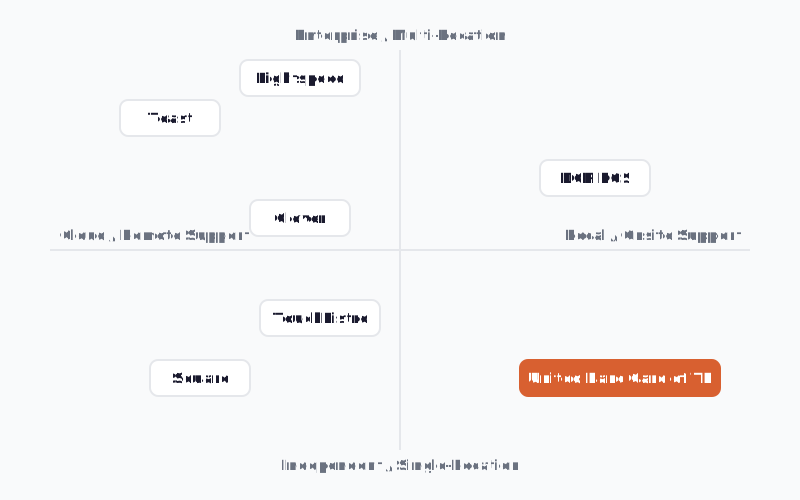
1. United Banc Card of TN
Tennessee-based merchant services and POS provider. Karl, the owner, is your named point of contact – he handles hardware, software, processing, onsite installation, and business funding directly.
Best for: Independent Tennessee restaurants, retailers, food trucks, and hospitality businesses under 3 locations wanting zero upfront hardware cost and direct owner accountability.
Strengths
- POS hardware and software provided free with merchant processing agreement – eliminates the $2,000–$5,000 upfront hardware investment required by Toast or Lightspeed
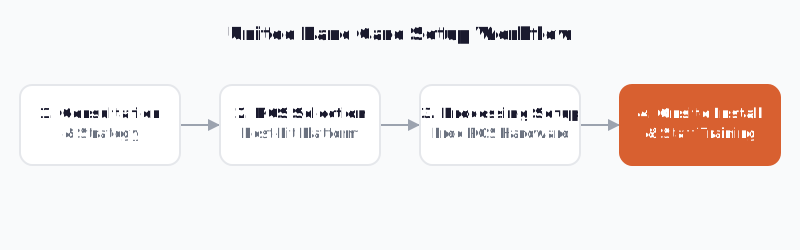
- Onsite local installation and staff training typically completed within 24–48 hours
- 24/7 support from a Tennessee-based team – owner reachable directly by phone, not routed through a call center
- Lifetime POS warranty (vs. Clover's 1-year limited warranty, Toast's case-by-case terms)
- Platform flexibility: choose Lavu, Clover, Korona, or Retailcloud based on your specific vertical
- Unified services under one call: ATM placement, business loans via GoKapital partnership, merchant cash advances
- Terminal rentals from $8/month; no prepayment penalties on loan products
Where it's not the right fit
- Not built for multi-unit chains needing native delivery integration (DoorDash, Uber Eats automated sync)
- AI-driven scheduling and predictive inventory forecasting are not part of the offering
- Primarily serves Tennessee geography; national operators need a different partner
Pricing: Hardware and software free with processing agreement; terminal rentals from $8/month. 30-day trial available. Processing rates custom-quoted.
When to choose it: You're an independent Tennessee restaurant or retailer under $2M annual revenue who wants a local expert to handle hardware, setup, processing, and support – with a named person who picks up the phone.
2. Toast POS
Cloud-based restaurant management platform serving 140,000+ locations globally, built for full-service restaurants that need delivery integration, payroll automation, and enterprise back-office tools.
Best for: Growing full-service restaurant groups at $1M+ revenue needing DoorDash/Uber Eats integration, employee scheduling, and multi-location payroll in a unified system.
Strengths
- Native delivery integration with DoorDash, Uber Eats, and Grubhub – order data flows directly into the POS without manual entry
- Advanced employee scheduling and payroll automation reduce back-office labor
- Menu Price Monitor aggregates pricing data from 70M+ unique menu items monthly – a benchmarking tool no smaller competitor can replicate
- Kitchen Display System integration included across tiers
- 140,000+ customer locations; wide third-party integration library for complex operations
Where it's not the right fit
- Not designed for small independents at $150K–$500K revenue; total software and services typically run $200–$300+/month, which doesn't pencil out for single-location operators
- No onsite installation; cloud-only setup means merchants configure hardware independently
- Processing at 2.49% + $0.15 in-person; custom rates only available at enterprise volume
Pricing: Starts at $0/month (limited tier); full-service restaurant setups typically $200–$300+/month in total software and services. Processing: 2.49% + $0.15 in-person.
When to choose it: You're running a 2–5 location restaurant group above $1M revenue and you need delivery channel management, payroll integration, and real-time multi-site analytics in one platform.
3. Square POS
Zero-contract, cloud-based POS built for simplicity. It's the default starting point for food trucks, counter service, and first-time POS users who need to get up and running fast.
Best for: Food trucks, pop-up vendors, and counter-service restaurants testing the market without long-term commitment.
Strengths
- Free software tier ($0/month) eliminates upfront software cost entirely
- No long-term contracts; cancel any time without early termination fees
- Hardware entry point at $69 (card reader) makes initial investment accessible
- Offline payment capability for mobile and outdoor vendors without reliable internet
- EMV, contactless, Apple Pay, Google Pay, Samsung Pay accepted out of the box
Where it's not the right fit
- Not built for complex multi-location inventory or full-service table management workflows
- Processing fees on the Free tier (2.6% + $0.15) are higher than bundled local processing agreements – the "free" software costs more at volume
- Features escalate quickly: adding KDS ($20/month), kiosk ($30–$50/month), and inventory integrations can push total monthly cost past $258 for a single location
- Entirely self-serve setup with no onsite installation or local support
Pricing: Free at $0/month; Plus at $49/month per location; Premium at $149/month per location. Processing: 2.6% + $0.15 in-person on Free tier.
When to choose it: You're a food truck or startup merchant testing the Nashville market for 6–12 months with low processing volume and no interest in a contract commitment.
4. Clover POS
Modular app-ecosystem POS owned by Fiserv, serving mid-market restaurants and retailers that want configurable bolt-on features without jumping to enterprise pricing.
Best for: Hybrid retail and service businesses, or multi-concept operators who want an app marketplace for per-need customization.
Strengths
- App marketplace allows bolt-on features (loyalty, scheduling, e-commerce) without paying for a full enterprise tier upfront
- Supports EMV, contactless, Apple Pay, Google Pay, Samsung Pay across all hardware tiers
- Multi-location support for franchise and chain operators
- Employee management with role-based permissions included
- Customer profiles and purchase history enable targeted loyalty programs
Where it's not the right fit
- Hardware is locked to Clover's Fiserv processor – cannot be reprogrammed to alternate processors once boarded, removing future flexibility
- True entry pricing ($16/month) applies only to personal and home services; most restaurant and retail users pay $59–$240/month
- EBT accepted but WIC not natively supported, limiting grocery and c-store viability
- Phone and chat support only; no onsite installation option
Pricing: Retail starter from $16/month (36-month term); full-service restaurant $135–$180/month. Hardware: Go reader $199, Mini $849, Station Duo $1,899.
When to choose it: You want modular app-based customization, are comfortable with Fiserv processor lock-in, and are running a hybrid retail or service concept that benefits from Clover's configurable tier structure.
5. Lightspeed Restaurant POS
Cloud-based POS with deep inventory analytics, built for multi-location retailers and restaurants that need SKU-level tracking and predictive demand forecasting.
Best for: Multi-location restaurant groups and specialty retailers needing advanced inventory management, AI forecasting, and unified omnichannel reporting across locations.
Strengths
- Recipe-level SKU tracking and warehouse integration for complex inventory operations – the strongest option in this list for multi-unit food service
- AI-driven forecasting and predictive analytics reduce over-ordering and food waste
- Unified in-store and online sales management in one backend
- 24/7 chat support included across all subscription tiers
- CRM tools with full customer purchase history for loyalty and marketing
Where it's not the right fit
- Not built for small independents; starting at $89/month (annual), pricing exceeds value for under-$500K operations
- Using a third-party payment processor incurs up to $400/month in additional fees – significant penalty for operators wanting processor flexibility
- No onsite installation; entirely cloud-based deployment
- Analytics depth is stronger on the retail side than on restaurant-specific table service workflows
Pricing: Basic at $89/month (annual) or $109/month (monthly); Premium at $399/month. Additional register: $49/month each. Processing: 2.6% + $0.10.
When to choose it: You're operating an 8+ unit restaurant group or specialty retail chain where recipe-level inventory tracking and AI demand forecasting will directly reduce food cost and staffing waste at scale.
6. TouchBistro
iPad-native restaurant POS with all core features included at every price tier. No feature-gating, no per-user fees, built exclusively for food service operators who want simplicity without losing functionality.
Best for: Independent full-service restaurants and cafes seeking iPad-based POS with solid tableside service tools and all features included at one price.
Strengths
- All core POS features included at $69/month – no capabilities locked behind higher pricing tiers
- Tableside ordering with handheld devices and drag-and-drop floor plan management
- 50+ cloud-based real-time reports accessible from any device, anywhere
- Ingredient-level menu tracking and split-bill tools built into the base plan
- Unlimited user logins per license – no per-seat fees that inflate cost as staff grows
Where it's not the right fit
- Not designed for retail, convenience stores, or non-food-service businesses
- Add-ons (Reservations from $229/month, Profit Management from $330/month) escalate total cost significantly for operators needing the full suite
- No merchant processing bundling – a separate processing agreement is required
- Limited to the restaurant vertical; no cross-industry flexibility for mixed-concept operators
Pricing: POS at $69/month; Essentials Bundle at $119/month (includes hardware, $0 upfront). Add-ons: Online Ordering from $50/month; Reservations from $229/month; Loyalty from $99/month.
When to choose it: You run an independent full-service restaurant or café where iPad simplicity, tableside service tools, and all-features-included pricing at $69/month matter more than processing bundling or multi-vertical flexibility.
Quick Comparison
| Tool | Best For | Starting Price | Free Tier | Standout Feature |
|---|---|---|---|---|
| United Banc Card of TN | TN independents, bundled local service | Free w/ processing | No | Hardware free + owner direct access |
| Toast POS | Multi-location restaurants w/ delivery | $0 (limited) | Yes | Native DoorDash/Uber Eats sync |
| Square POS | Food trucks and no-contract startups | $0/month | Yes | Zero upfront, no contract required |
| Clover POS | Hybrid retail/service, modular needs | $16/month | No | App marketplace bolt-on customization |
| Lightspeed Restaurant | Multi-location analytics and forecasting | $89/month | No | Recipe-level SKU + AI demand forecasting |
| TouchBistro | iPad full-service restaurant | $69/month | No | All features included, zero tier-gating |
Pricing as of mid-2025. Check each tool's pricing page for current rates.
Which Alternative Should You Choose?
If you're an independent Tennessee restaurant, bar, or retailer under 3 locations…
United Banc Card of TN is the right call. Free hardware bundled with processing, local onsite installation in 24–48 hours, and a named owner who picks up the phone – nothing else in this list offers that combination for a Tennessee independent.
If you're scaling a multi-location restaurant group above $1M revenue…
Toast POS is built for that complexity. Native delivery integration, payroll automation, and multi-site analytics justify the cost at that revenue level – local providers won't replicate Toast's enterprise feature set.
If you need zero commitment and minimal upfront investment…
Square POS is the straightforward answer here. A food truck testing the Nashville market doesn't need a processing agreement or a multi-year contract. Square's $0 software tier and no-contract model handle that situation cleanly.
If you want modular, app-based customization…
Clover POS gives you the app marketplace to bolt on only what you need. Go in clear-eyed about the Fiserv processor lock-in – you won't be able to switch payment processors after onboarding.
If you're running a specialty retail chain or multi-unit restaurant needing advanced inventory analytics…
Lightspeed Restaurant handles recipe-level SKU tracking and demand forecasting better than anything else in this list. The $89–$399/month pricing makes sense when inventory optimization is directly cutting food cost across multiple locations.
If you run an independent café or full-service restaurant and want all features at one price…
TouchBistro at $69/month with no feature-gating beats tiered competitors at the same price point for a single-location restaurant focused on tableside service.
Ready to Try United Banc Card of TN?
If you're an independent restaurant, retail shop, or food-service business in Tennessee who wants local POS service without a big upfront cost, United Banc Card of TN is worth a call. Hardware is free with your processing agreement, installation is typically done within 48 hours, and Karl picks up directly when something goes wrong. Get a free quote at unitedbanccardoftn.com – no obligation, no call center, just a straight answer on rates and setup.
Frequently Asked Questions
What should I look for in a POS alternative to DCR?
Look for processing integration that bundles hardware, software, and rates transparently-not vendors quoting software separately and shocking you with processing fees at go-live. Onsite local support matters for emergency downtime: ask whether your provider sends technicians to your location or routes you through a call center. Total cost of ownership (hardware amortization, processing rates, add-on features, support fees) determines real savings; the advertised monthly fee rarely tells the whole story.
What makes a good restaurant POS system for Tennessee operators?
A strong restaurant POS matches your specific operation type-full-service table management needs differ from quick-service delivery workflows. Bundled pricing from local providers typically costs less for independents than national vendors requiring $2,000–$5,000 upfront hardware investment. Transparent contract terms matter: avoid long-term agreements with early termination fees, and verify whether your hardware reverts to you if you leave.
Is DCR POS still worth using, or should I switch?
DCR is a capable provider with 64 years in the Southeast market and experienced teams handling complex multi-location operations. DCR remains the right fit if you're running a 5-unit regional chain needing enterprise support or operating in a specialty vertical like grocery where their in-house software depth matters. However, independent single-location operators frustrated by opaque pricing or seeking more personal accountability often find better value elsewhere-DCR's corporate structure means you won't reach the decision-maker directly like you would at smaller regional providers.
Why is United Banc Card of TN on this list of DCR alternatives?
United Banc Card of TN earns the #1 position because it offers Tennessee independent restaurants and retailers exactly what drives DCR-to-alternative switching: free hardware bundled with processing, onsite 24-hour local installation, and owner (Karl) direct access for support-with 10+ customer relationships spanning over a decade. For operators under $2M revenue wanting transparent bundled pricing instead of layered fees, United Banc's $8/month terminal rental plus no prepayment penalties on loans delivers lower total cost of ownership. The real differentiator is accountability: named owner, not a support queue.
How much does POS hardware typically cost, and why does bundling matter?
Unbundled POS hardware runs $2,000–$5,000 upfront for countertop terminals, terminals, and tablets-a barrier that stops many independent restaurant startups cold. United Banc Card of TN removes this friction by providing hardware free when paired with a merchant processing agreement, and offering terminal rentals from $8/month. For a food truck or seasonal business testing profitability, the bundled model lets you launch without capital outlay; if operations don't pencil out, you walk away with minimal sunk cost.
Does local onsite POS support really matter compared to remote support?
Absolutely-when your POS crashes during a Saturday dinner rush, remote troubleshooting adds 30–60 minutes of lost revenue while you're on a chat queue. United Banc Card of TN sends technicians to your Tennessee location, typically resolving installation and training in 24–48 hours; national vendors like Toast and Lightspeed offer chat-only support. A single 2-hour outage during peak service can cost $500+ in lost orders, making onsite support ROI clear for hospitality businesses.
What's the difference between free POS software and true zero-cost entry?
Square's free $0/month tier eliminates software cost but charges 2.6% + $0.15 per transaction-at $100,000 annual processing volume, that's $2,600+ annually in rates. United Banc Card of TN pairs free hardware and software with custom-quoted processing rates (typically lower through bundled agreements); Toast's "free" tier is feature-limited and upgrades start at $200+/month for realistic restaurant workflows. Evaluate total processing cost over 12 months, not just the software headline price.
When should I choose Square POS over a bundled local provider?
Choose Square if you're a food truck or startup testing a market for 6–12 months with uncertain staying power; its no-contract model lets you exit without penalty if the location doesn't work out. Square's $69 card reader and $0 monthly software eliminate upfront risk when revenue is unproven. United Banc Card of TN's bundled model shines for established independents confident they'll stay 2+ years; the processing rate savings materialize over time but require commitment.
Can I switch payment processors once I've set up with a POS system?
With most systems, no-Clover users cannot reprogrammed to a new processor once boarded with Fiserv, locking them in for life. United Banc Card of TN and DCR offer processor flexibility as part of their VAR model, letting you swap vendors if rates or service decline. Before signing, ask explicitly: "Can I keep this hardware if I switch payment processors?" Your answer determines your long-term leverage with vendors.
Does my restaurant really need delivery integration like Toast offers?
If your revenue comes 60%+ from DoorDash, Uber Eats, or Grubhub, yes-Toast's native integration syncs orders directly into the POS without manual re-entry, reducing error and labor. If you're a 2-location independent taking 10–20% of orders through delivery channels, that integration isn't worth the $200+/month Toast pricing; United Banc's generic order-entry workflow handles it. Toast's value scales with delivery channel complexity; small independents don't need it.
Is a lifetime POS warranty meaningful, or is it marketing language?
It's meaningful for independents who operate tight margins and need certainty on hardware replacement cost. United Banc Card of TN's lifetime warranty means if your terminal fails in year 3, they replace it at no cost-Clover offers 1-year limited warranty, Square offers case-by-case support, and Toast doesn't specify. Over a 10-year business lifetime, this warranty saves $1,000–$3,000 in hardware replacement if your terminal fails outside the first year.
What's the real advantage of a multi-location POS system for restaurant groups?
Multi-location systems like Lightspeed and Toast unify inventory, payroll, and sales reporting across all sites in one backend-eliminating separate logins, inconsistent data, and delayed reconciliation. For an 8-unit coffee chain, Lightspeed's AI forecasting prevents over-ordering beans and milk at every location, directly cutting food cost 5–10%. Small independents at 1–2 locations don't realize ROI on this complexity; United Banc's bundled approach handles coordination through a single vendor relationship instead.
Does inventory management quality differ significantly between these POS options?
Dramatically-Lightspeed offers recipe-level SKU tracking and warehouse integration; TouchBistro handles basic item counts; United Banc's bundled POS (Lavu, Korona, Clover) varies by platform chosen. For a convenience store needing compliance-aware inventory and batch tracking, Korona (available through United Banc) beats Clover's generic retail layer. Inventory is typically the second-highest cost in food service after labor; the right system can save 3–5% of COGS annually at multi-location scale.
Why would I choose TouchBistro over a cheaper subscription-based POS?
TouchBistro includes all core features (reservations, tableside ordering, split bills, 50+ reports) at $69/month with no feature-gating-competitors lock those tools behind $100–$400/month upsells. For an independent full-service restaurant where iPad simplicity and included functionality matter, TouchBistro's flat pricing beats Clover ($135–$180/month) or Lightspeed ($89–$399/month with add-ons). The tradeoff: TouchBistro doesn't bundle processing or support multi-vertical businesses.
How do I know if United Banc Card of TN's pricing will actually save me money versus my current POS?
Request a free quote from United Banc, providing your current monthly processing volume and current total POS/processing costs. Multiple testimonials (Wacko Taco, Stirrup Nashville, Myles Holodnak) verify that quoted savings materialized-not a common experience with national vendors who quote low but add surprise fees. Key: bundled processing rates from regional providers like United Banc typically beat national volume discounts if your annual volume is under $1M, because local vendors optimize for independents, not enterprises.